
BN-LINK 24-Hour Heavy Duty Mechanical Timer Outlet
4.5Editor score
No loose parts design
Simple pin dial setup
Energy-saving automation
This guide compares the top ten grow light timers for indoor plants. It reviews digital and mechanical options to help you automate your gardening schedule
Growing indoor plants requires consistent light exposure to thrive. A reliable grow light timer ensures your greenery receives the right amount of light every day without manual intervention. Choosing the right one can save time and energy while promoting healthier plant growth.
We evaluated ten top-rated timers based on ease of use, reliability, and features. Our comparison covers both digital and mechanical models suitable for various setups. Whether you need simple daily cycles or complex programming, this list has options for every gardener.
Each pick highlights key specifications and real-world performance insights. Prices and availability change frequently so check current listings before buying. This guide aims to simplify your decision process with clear, honest information about the best tools available.
4.5Editor score

4.3Editor score

4.4Editor score
The following table provides a side-by-side overview of the top ten grow light timers. It highlights key specifications and features to help you quickly compare options.




This digital timer offers excellent flexibility for indoor growers needing consistent light cycles. It holds a strong rating due to its reliability and detailed programming options that suit complex plant needs.
We may earn a commission when you buy through this link, at no additional cost to you.
You can set up to eight on/off programs across two outlets. The backup battery ensures your schedule remains intact even during power outages. The random vacation mode adds security by simulating home occupancy.
Its size can make it difficult to use with multiple outlets nearby. Programming requires navigating menus that might confuse first-time users. However, the functionality justifies the slight complexity.
Ideal for serious indoor gardeners who need precise control over lighting. Its robust features make it a top choice for automating grow lights effectively.
Set individual days or use preset combinations to match plant light needs perfectly.
The backup battery keeps your programmed settings safe during unexpected power outages.
We may earn a commission when you buy through this link, at no additional cost to you.
This unit stands out for managing multiple devices separately. It is ideal for controlling grow lights and fans independently while maintaining precise schedules. Its design aims for user convenience with a clear display.
We may earn a commission when you buy through this link, at no additional cost to you.
The ability to control two outlets independently is rare at this price point. Side-entry design prevents accidental unplugging. It includes a countdown setting which helps limit exposure time for specific plants.
Complexity in setup might deter casual users. The interface has many buttons that require careful attention to configure correctly. Once set though it operates reliably.
Best for setups needing separate control over lighting and ventilation. It offers advanced control without requiring smart home integration.
Control grow lights and fans separately to optimize your indoor garden environment efficiently.
Use the countdown setting to automatically turn off devices after a set duration.
We may earn a commission when you buy through this link, at no additional cost to you.
A reliable mechanical timer for straightforward grow light scheduling. It eliminates the need for batteries with a simple pin dial system. Its sturdy build handles high-wattage loads well.
We may earn a commission when you buy through this link, at no additional cost to you.
Pushing pins down sets the on periods while leaving them up turns off. This simplicity makes it perfect for daily routines without digital complexity. The indicator light shows active status clearly.
You cannot schedule different times for different days of the week. The pins might loosen slightly after heavy use but still work. Its low cost makes it easy to replace if needed.
Ideal for basic setups needing a 24-hour cycle. It is a budget-friendly option that delivers consistent performance without digital features.
The pushpin dial allows easy scheduling without navigating menus or programming.
Designed for heavy duty loads ensuring it can handle standard grow light bulbs.
We may earn a commission when you buy through this link, at no additional cost to you.
Getting four mechanical timers at once is great for covering multiple lights. Each timer functions independently allowing varied schedules across your grow area. They are compact enough not to block outlets easily.
We may earn a commission when you buy through this link, at no additional cost to you.
The 30-minute intervals provide decent granularity for most plants. An override switch lets you temporarily turn devices on or off without resetting the timer. They are built with fireproof materials.
The dial might feel stiff at first requiring some force to turn. Since each has only one outlet you need more timers for multiple devices. Bulk buying saves cost over time.
Perfect for expanding setups needing multiple simple timers. The bulk value ensures you have units ready for any additional lighting zones.
Four units allow you to automate lights in multiple separate grow zones efficiently.
Override switches let you manually control devices without disrupting the programmed cycle.
We may earn a commission when you buy through this link, at no additional cost to you.
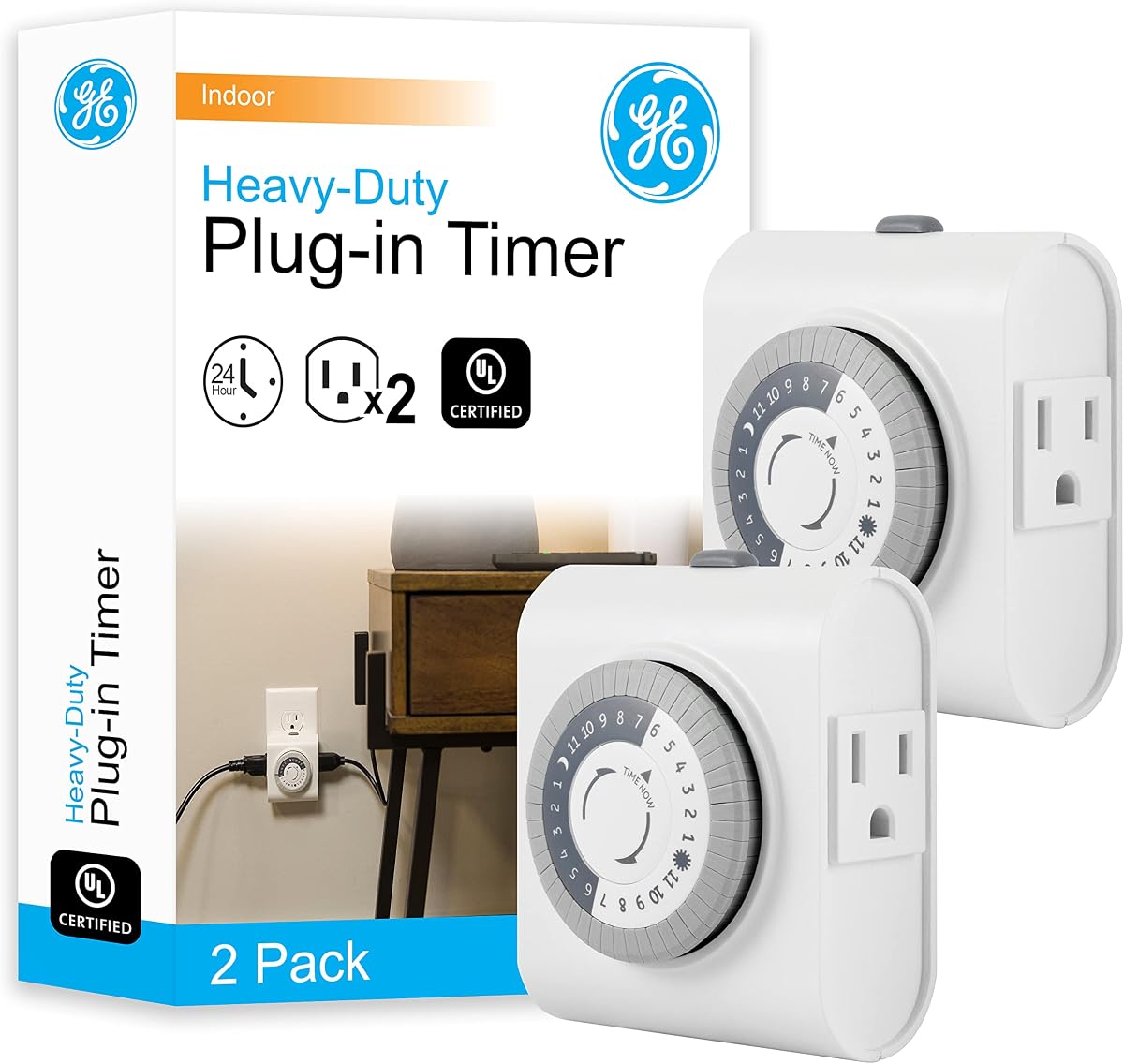
This mechanical timer provides dual outlets for controlling two lights together. Its sleek design blends into living spaces discreetly. The pushpin system remains a popular simple method for scheduling.
We may earn a commission when you buy through this link, at no additional cost to you.
Each unit handles two grounded plugs simultaneously saving wall space. The white finish matches most home decors. Overriding the schedule is simple with a flip switch.
You cannot program different days beyond the daily cycle. The override switch might be hard to see in dim light. Overall it remains a trusted choice for basic automation.
Best for controlling pairs of lights with one device. Its compact design helps maintain a tidy grow area.
Control two grow lights simultaneously with a single timer to save outlet space.
The white finish blends easily into home spaces without drawing attention.
We may earn a commission when you buy through this link, at no additional cost to you.
This digital timer runs without audible clicks making it bedroom-friendly. It retains settings for up to three months during power outages. The interface is straightforward for setting daily schedules.
We may earn a commission when you buy through this link, at no additional cost to you.
Silent operation ensures no mechanical noise during the night. The display is clear without backlight glare. It offers three daily repeat programs to vary timing easily.
It lacks advanced features like random modes or remote control. One outlet limits versatility compared to dual outlet options. However its reliability makes up for simplicity.
Ideal for noise-sensitive environments needing digital precision. Its memory function ensures you never lose programming.
Silent switching ensures the timer does not disturb sleep in bedrooms.
Settings are preserved for months so you need not reprogram after outages.
We may earn a commission when you buy through this link, at no additional cost to you.
A robust mechanical timer designed to handle high loads reliably. It offers dual outlets to simplify control over multiple devices. The bypass switch allows continuous power when needed.
We may earn a commission when you buy through this link, at no additional cost to you.
The build quality ensures longevity even with frequent use. Pin dials are durable and easy to push. UL listing adds a layer of safety assurance for home use.
Its size might block adjacent outlets in crowded sockets. The programming is limited to one daily cycle without daily variations. Still it remains a strong workhorse.
Best for high-power setups needing dual outlet control. Its robustness makes it suitable for demanding environments.
A bypass switch allows you to turn off the timer function completely.
Manage two heavy-duty devices simultaneously through one grounded outlet.
We may earn a commission when you buy through this link, at no additional cost to you.
This outdoor timer is built to withstand weather exposure. It features dual outlets for controlling yard lights or equipment safely. Mechanical controls are easy to set even in the rain.
We may earn a commission when you buy through this link, at no additional cost to you.
The casing protects internal parts from moisture. It can be mounted to withstand outdoor conditions. Pin settings remain stable even if power is lost temporarily.
It requires mounting upright which might limit placement options. Indoor use is possible but the bulky casing takes space. For outdoor it is a reliable choice.
Perfect for automating outdoor grow lights safely. Its weather resistance ensures durability in various conditions.
The casing protects internal mechanisms from moisture and weather exposure.
Mounting options ensure the timer stays stable in outdoor environments.
We may earn a commission when you buy through this link, at no additional cost to you.
This timer offers advanced cycling modes beyond standard daily schedules. It includes countdown and delay features ideal for sensitive equipment. The build prioritizes safety with fireproof materials.
We may earn a commission when you buy through this link, at no additional cost to you.
The infinite repeat cycle allows custom on-off intervals continuously. Countdown mode protects electronics from prolonged use. The screen is large and easy to read in low light.
The interface takes time to learn fully. It is pricier than basic mechanical timers. However the extra control justifies the investment for tech-savvy users.
Best for advanced needs requiring custom intervals. It offers premium control for precise plant care.
Set specific on and off durations to repeat indefinitely for specialized plants.
V0 fireproof housing and child lock features ensure safe operation around children.
We may earn a commission when you buy through this link, at no additional cost to you.
This unit excels at short interval cycling for humidity systems. It includes a photocell for light-triggered automation. The intervals are adjustable down to seconds for precise control.
We may earn a commission when you buy through this link, at no additional cost to you.
You can set short bursts of on and off cycles continuously. This is perfect for misters or fans needing frequent cycling. The day/night modes offer flexibility based on ambient light.
It may be overkill for standard lighting cycles. The price reflects its specialized functionality. Users needing basic daily schedules might find it complex.
Best for hydroponics needing precise timing. Its specialized features solve unique gardening challenges.
Set intervals as short as five seconds for fine-tuned humidity control.
The photocell sensor allows automatic switching based on environmental light levels.
We may earn a commission when you buy through this link, at no additional cost to you.
Choosing the right timer involves assessing your specific gardening needs and technical requirements.
Mechanical timers use physical pins to set daily cycles and generally cost less. They are easier to use but lack daily customization. Digital timers offer advanced programming for specific days and times but require more setup.
Choose mechanical for simplicity and digital for detailed schedules.
Check how many outlets the timer controls. Single outlet timers work for one light while dual outlets manage two. Multiple timers may be needed for larger setups requiring individual control.
Select the outlet count matching your device count.
Ensure the timer handles your light's wattage. Most timers support 15 amps but high-wattage lamps may need heavy-duty models. Exceeding limits risks damage or safety hazards.
Verify wattage limits before purchasing.
Digital timers often include battery backup to preserve settings during outages. Without this you may lose schedules after power cuts. Mechanical timers do not require batteries but may lose timing if unplugged.
Prioritize battery backup for digital reliability.
Interfaces vary widely from simple dials to complex menus. Consider your comfort with buttons and screens. Some units offer quick setup for common patterns.
Opt for intuitive controls if tech-savvy.
Look for certifications like ETL or UL to ensure safe operation. These verify the timer meets electrical standards. Avoid uncertified units to prevent risks.
Always verify safety certifications.
Outdoor timers require weather resistance to withstand elements. Indoor models should have fireproof materials. Robust construction extends lifespan and ensures reliability.
Match build quality to environment conditions.
Consider features like countdowns or photocells for specific needs. These add value for specialized systems like hydroponics. Standard users may not benefit from extra costs.
Focus on features relevant to your setup.
Set the current time first before programming cycles to ensure accuracy. For mechanical timers push pins down for on periods and leave up for off. Digital units require navigating menus to set start and end times.
Connect the timer to a grounded outlet and plug your grow light into it. Ensure the wiring is secure to avoid disconnection. Test the cycle manually to verify operation before leaving unattended.
Clean the timer regularly to remove dust that can affect buttons or dials. Check for signs of wear like cracked casings or loose pins. Replace batteries promptly in digital units to maintain settings.
Most timers handle up to 15 amps which covers standard bulbs. Always check the specific wattage rating on the device. High-wattage setups may require heavy-duty models designed for higher loads.
Yes if it has a backup battery feature. These preserve settings so schedules resume after power returns. Mechanical timers do not require batteries but may reset if unplugged.
Daily timers follow a set cycle every 24 hours. Interval timers allow custom on-off patterns repeating continuously. Interval timers are better for humidity systems needing short bursts.
They are safe but often larger and bulkier than indoor models. The weather resistance is unnecessary indoors but does not harm operation. Choose indoor units for compactness and aesthetic blend.
Most have reset buttons or menu options to clear programs. Refer to the manual for specific steps. Removing the battery can also reset many units if needed.
Yes they work with any standard plug-in device. Ensure the load matches the timer's capacity. LEDs often have lower wattage making them easy to control.
This guide reviewed ten reliable timers offering diverse options for every grower. Whether you need simple mechanical pins or complex digital cycles there is a suitable choice here.
Prioritize safety ratings and power capacity to ensure reliable operation. Consider the complexity of programming based on your technical comfort level for long-term use.
Prices and availability change so verify current listings before purchasing. This guide helps you make an informed decision for automated plant care.