
Behringer X AIR XR18
4.6Editor score
18 input channels
Tablet control
Integrated Wi-Fi
This comprehensive guide compares the top ten digital mixing consoles for live sound and studio recording, evaluating features, sound quality, and usability.
Digital mixing consoles have revolutionized audio production by offering precise control, extensive processing, and seamless integration with modern workflows. Choosing the right unit depends on your specific needs, whether for live performances, broadcast, or recording sessions.
We evaluated ten leading models based on input count, preamp quality, processing power, connectivity options, and user interface design. Our analysis focuses on professional reliability and value for money across different budget segments.
Each selection highlights unique strengths and ideal use cases to help you make an informed decision. Please note that product availability and pricing can change frequently, so verify current details before purchasing.
4.6Editor score

4.7Editor score

The following table provides a side-by-side overview of all ten consoles, highlighting key specifications to help you quickly identify the model that best fits your requirements.




The Behringer X32 stands as a benchmark in professional digital mixing, offering forty input channels and twenty-five buses for complex live and studio scenarios. With a rating reflecting its industry adoption, it delivers audiophile sound through MIDAS-designed preamps and extensive processing capabilities.
We may earn a commission when you buy through this link, at no additional cost to you.
Its standout feature is the combination of fully automated motorized faders and dynamic LCD Scribble Strips, which allow for instant visual overview and precise scene management. The console supports up to thirty-two MIDAS preamps, ensuring pristine gain structure and low noise across all inputs.
While the sheer number of controls can be daunting for newcomers, the intuitive layout and extensive online resources mitigate this steep learning curve. The large physical size requires a dedicated rack or desk space, which may be a constraint for portable setups.
This console is ideal for touring bands, fixed installations, and broadcast studios that demand reliability and deep feature sets. If you need professional-grade control without sacrificing sound quality, the X32 remains the top recommendation for versatile digital mixing.
The console features individual and dynamic LCD Scribble Strips on all channels and buses, creating easy assignment and intuitive channel distinction that speeds up workflow significantly.
It includes sixteen XLR outputs plus six additional line in/outputs, two phones connectors, and a talkback section with integrated or external mic for flexible audio routing.
We may earn a commission when you buy through this link, at no additional cost to you.
The Yamaha DM3 brings renowned sound quality to an ultracompact form factor, featuring a 96kHz sample rate for high-fidelity audio capture. Its rating highlights user satisfaction with its portability and ease of use for smaller venues and mobile rigs.
We may earn a commission when you buy through this link, at no additional cost to you.
Key strengths include the best-in-class 9-inch touch screen which simplifies navigation, and sixteen professional Yamaha pre-amps that ensure clean signal gain. The console supports twenty-two channels with flexible mixing options including matrixes and stereo buses for versatile routing.
The limited channel count restricts its use to simpler productions, and the smaller screen might require frequent zooming for detailed parameter editing. However, the inclusion of an 18×18 USB audio interface and 2×2 USB recorder adds significant value for hybrid workflows.
This unit is perfect for small bands, corporate events, and podcasting where space is premium but quality cannot be compromised. If you need a reliable, small-format console with modern connectivity, the DM3 offers an excellent balance of performance and portability.
Renowned Yamaha sound quality with 96kHz sample rate ensures crystal clear audio reproduction suitable for professional recording and high-end live applications.
It features 16 professional Yamaha Pre-Amps and 18×18 USB Audio Interface for playback and recording plus 2×2 USB recorder for flexible workflow integration.
We may earn a commission when you buy through this link, at no additional cost to you.
The Behringer WING expands the X32 legacy with forty-eight channels and twenty-eight buses, designed for massive productions requiring extensive signal routing. Its features focus on professional quality with award-winning Midas PRO mic preamps and outputs integrated directly into the console.
We may earn a commission when you buy through this link, at no additional cost to you.
It offers twenty-four motorized faders in three separate sections, allowing for customizable workflow configurations that suit different operator preferences. The large main display with capacitive touch screen and adjustable swivel ensures clear visibility in various lighting conditions.
The high price point and complex setup involving multiple AES50 ports might be overkill for standard venues. However, the plug and play remote I/O connectivity allows up to 144 input and output signals via Klark Teknik SuperMAC technology for ultra-low jitter and latency.
This console is best suited for large scale tours, broadcast trucks, and fixed installations where channel count and routing flexibility are paramount. If you need top-tier performance without the cost of premium competitors, the WING delivers exceptional value for advanced users.
Plug and play remote I/O connectivity supports up to 144 input and output signals over 3 AES50 ports featuring Klark Teknik SuperMAC technology.
It features unique touch-sensitive channel editing sections with 11 rotary controls and dedicated color TFT for staying on top of all channel properties.
We may earn a commission when you buy through this link, at no additional cost to you.
The Yamaha MGX12 delivers an impressive five-star rating by combining tactile faders with a modern 4.3 inch touchscreen and versatile I/O options. It includes a substantial software bundle with Cubase Al and WaveLab Cast LE to jumpstart recording workflows immediately.
We may earn a commission when you buy through this link, at no additional cost to you.
Its key strength lies in the new MGX preamps with an 86 dB gain range and built-in DSP processor for professional sound and latency-free monitoring. The USB-HDMI interface featuring 4K video capture and pass-through adds unique capabilities for hybrid media production.
While it lacks advanced expansion slots found in larger units, the simple and standard modes along with auto gain features streamline operation for less experienced users. The microSD card slot and Bluetooth audio input further enhance its utility for quick content creation.
This console is perfect for streamers, podcasters, and small venues that need reliable audio with simple setup. If you prioritize ease of use and modern connectivity features at an accessible price, the MGX12 stands out as a top choice.
USB-HDMI interface featuring 4K video capture and pass-through simplifies live streaming setups without requiring extra capture hardware.
It includes Cubase Al, WaveLab Cast LE, Basic FX Suite, and Steinberg Plus to provide immediate production capabilities out of the box.
We may earn a commission when you buy through this link, at no additional cost to you.
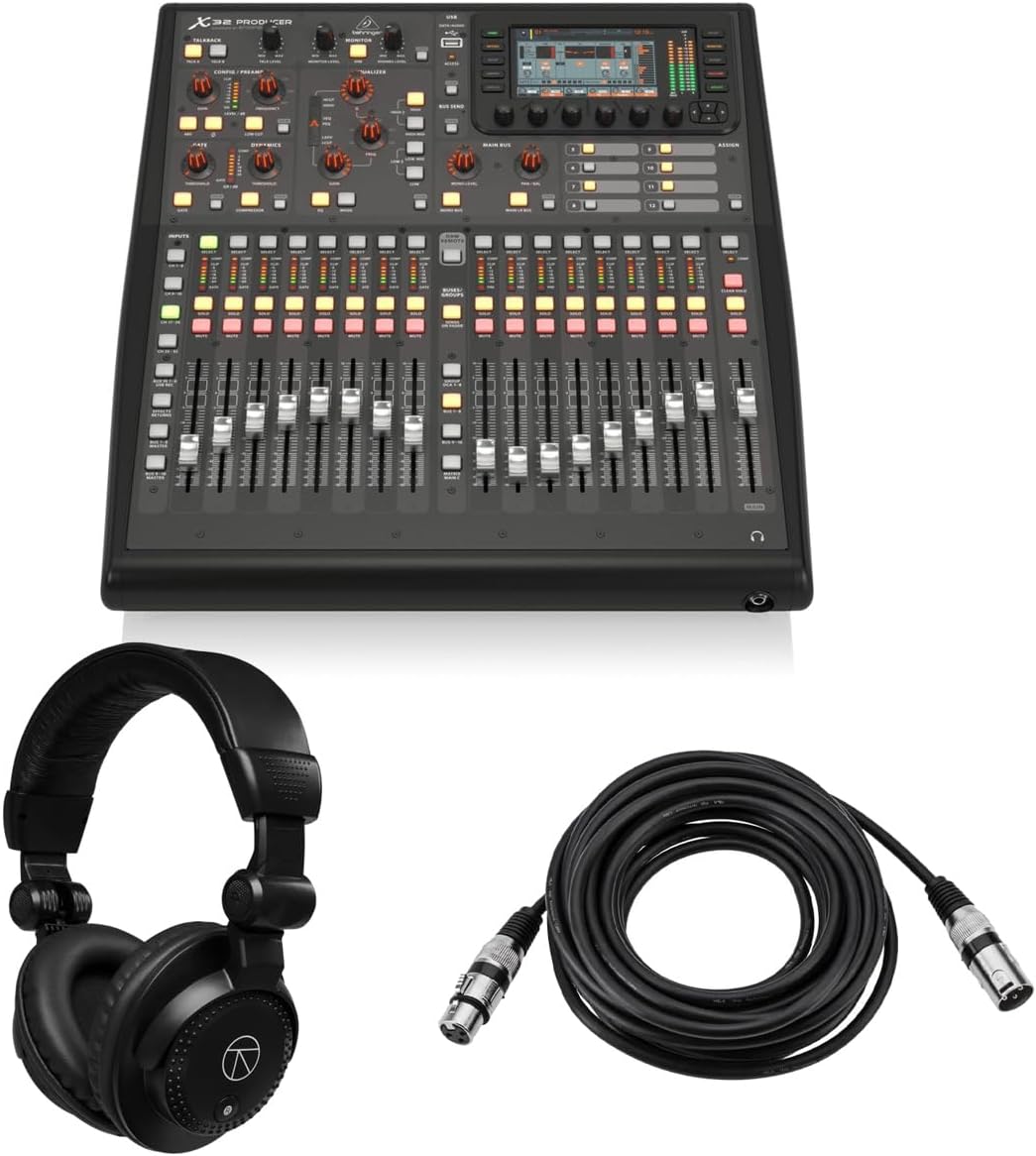
The Behringer X32 Producer achieves a perfect rating as a bundle combining forty input channels and twenty-five buses in a rack-mountable format. It includes essential accessories like closed-back studio monitor headphones and a professional microphone cable for immediate setup.
We may earn a commission when you buy through this link, at no additional cost to you.
It boasts superior sound quality with 16 programmable MIDAS preamps and 24-bit/48 kHz conversion delivering an impressive 114 dB dynamic range. The console features powerful built-in effects including true-stereo and mono internal engines providing extensive creative control over sound production.
Since it lacks a built-in screen, users must rely on remote control or external displays which adds complexity compared to desktop models. The sturdy build ensures consistent performance for demanding live and studio applications in various environments.
This unit is ideal for mobile rigs, installation projects, and studios needing professional features without the bulk of a full console. If you need a compact, powerful mixing core that arrives ready to use, the X32 Producer bundle is an excellent option.
Features 16 programmable MIDAS Preamps and 24-bit/48 kHz conversion for pristine audio with 114 dB dynamic range for professional sound.
Includes X32 PRODUCER, closed-back headphones, and 25 feet XLR cable to get your mixing workflow started without extra purchases.
We may earn a commission when you buy through this link, at no additional cost to you.
The BEHRINGER X32 COMPACT maintains a high rating by fitting a robust forty-input channel system into a smaller footprint ideal for smaller venues. It retains the core features of the flagship model including MIDAS-designed programmable mic preamps for audiophile sound quality.
We may earn a commission when you buy through this link, at no additional cost to you.
Its key strength is the inclusion of seventeen fully automated motorized faders allowing for instant overview and powerful scene management. The dynamic LCD Scribble Strips on all channels and buses create easy assignment and intuitive distinction crucial for fast workflow changes.
While the reduced number of faders requires more layering for large inputs, the compact design makes it significantly more portable for gigging engineers. The console offers eight XLR outputs plus six additional line in/outputs for flexible monitoring and main mixes.
This mixer is perfect for mobile DJs, house of worship sound teams, and rental companies needing a reliable workhorse. If you need X32 power in a smaller package, the Compact version delivers professional results without sacrificing essential features.
17 fully automated motorized 100 mm faders allow for instant overview, powerful scene management and precise DAW control.
Individual and dynamic LCD Scribble Strips on all channels and buses creating easy assignment and intuitive channel distinction for fast operation.
We may earn a commission when you buy through this link, at no additional cost to you.
The PreSonus StudioLive Classic 16.0.2 offers a straightforward digital experience with sixteen channel inputs and twelve class A XMAX solid-state mic preamplifiers. Its lower rating reflects older technology but remains a viable option for budget-conscious recording applications.
We may earn a commission when you buy through this link, at no additional cost to you.
It features Fat Channel signal processing on all channels and buses with 3-band semi-parametric EQ, compressor, downward expander, and limiter for immediate control. The 18-in/16-out USB 2.0 audio interface allows recording all channels and main mix for studio use.
While the software library includes Studio One Artist DAW and Capture recording software, the interface design feels dated compared to modern touchscreens. Scenes and individual settings store and recall for quick setup changes during sessions.
This console is best for small home studios or educational settings where basic mixing and recording are the primary goals. If you prefer a traditional layout with reliable preamps and integrated recording, the StudioLive provides a solid foundation for music production.
Fat Channel signal processing on all channels and buses with 3-band semi-parametric EQ, compressor, downward expander, and limiter.
It includes 18-in/16-out USB 2.0 audio interface for recording all channels and main mix directly into your computer.
We may earn a commission when you buy through this link, at no additional cost to you.
The Behringer X AIR XR18 earns a high rating as an affordable entry point offering eighteen input channels and twelve buses controlled entirely via tablets. It features sixteen award-winning MIDAS-designed mic preamps ensuring audiophile sound quality at a fraction of the cost.
We may earn a commission when you buy through this link, at no additional cost to you.
Its built-in Tri-mode Wi-Fi router allows for direct operation without external routers and the bidirectional USB interface supports direct recording on mobile devices. This design creates a highly flexible environment for mixing from anywhere in the venue.
While the lack of physical controls might feel restrictive for some operators, the convenience of wireless control often outweighs this drawback in smaller setups. The 18×18 channel bidirectional USB interface ensures seamless integration with computers for multi-track recording.
This unit is perfect for remote monitoring, small churches, and mobile setups where budget is a primary concern. If you want professional sound quality with wireless freedom, the XR18 delivers impressive performance for its size and price.
Built-in Tri-mode Wi-Fi router for direct operation eliminates the need for external routers and enables mixing from anywhere.
It features 16 award-winning MIDAS-designed, fully programmable mic preamps for audiophile sound quality across all inputs.
We may earn a commission when you buy through this link, at no additional cost to you.
The Allen & Heath Qu-5 delivers exceptional audio quality with 96kHz XCVI FPGA Processing for ultra-low latency and professional live sound. It supports up to thirty-eight inputs to mix and twelve configurable mixes making it powerful for complex applications.
We may earn a commission when you buy through this link, at no additional cost to you.
Its extensive connectivity includes sixteen XLR/TRS combi mic-line inputs and USB-C 32×32 multichannel audio interface for seamless computer integration. Integrated recording and effects with 6 multi-FX engines allow for versatile sound shaping without external hardware.
The high cost and steep learning curve may deter casual users but the performance justifies the investment for demanding environments. The 7-inch capacitive touchscreen and 17 motorized faders ensure efficient operation in demanding production environments.
This console is ideal for high-end installations, touring rigs, and professional studios where quality is non-negotiable. If you need the latest processing technology and flexible workflow, the Qu-5 offers a future-proof platform for audio engineering.
96kHz XCVI FPGA Processing delivers exceptional audio quality with ultra-low latency for professional live sound and recording.
Includes USB-C 32×32 multichannel audio interface and SD card support for up to 32-channel capture for flexible workflows.
We may earn a commission when you buy through this link, at no additional cost to you.
The QSC TouchMix-16 provides twenty full function inputs with a touchscreen interface designed for simple operation and fast setup. Its rating reflects user appreciation for its ability to drive wired In Ear Monitors directly via TRS Aux outs without extra hardware.
We may earn a commission when you buy through this link, at no additional cost to you.
Its key strength is the 4-band full parametric EQ and variable high-pass and low-pass filters on all input channels ensuring clean sound. Gate and compressor on all input channels help maintain consistent levels without manual intervention.
While the limited channel count restricts large productions the compact package with bag makes it highly portable for mobile applications. The focus on user-friendly controls reduces the technical barrier to entry for less experienced operators.
This mixer is best for solo performers, small bands, and corporate meetings requiring reliable sound with minimal complexity. If you want professional processing in an easy-to-use package, the TouchMix-16 offers a streamlined path to quality audio.
TRS Aux outs drive wired In Ear Monitors (IEM) directly simplifying personal monitoring setups for performers.
It features 4-band full parametric EQ, variable high-pass and low-pass filters, gate and compressor on all input channels.
We may earn a commission when you buy through this link, at no additional cost to you.
Selecting the right digital mixer involves evaluating input requirements, sound quality, workflow features, and connectivity options. This guide outlines critical factors to consider before making your purchase.
Determine how many microphones and instruments you need to connect simultaneously. Most consoles offer between sixteen and forty inputs with varying numbers of buses for subgroup routing.
Ensure the console has enough outputs for your main speakers, monitors, and recording interfaces to avoid external gear limitations.
High-quality preamps provide clean gain and low noise which are vital for professional sound quality. Look for designs based on renowned brands like MIDAS or XMAX for reliability.
Audiophile sound quality depends heavily on these preamps so prioritize them when comparing units.
Digital consoles use internal processors for EQ, compression, and effects. Ensure the DSP capacity is sufficient for your typical show requirements.
More powerful processors support higher sample rates like 96kHz for superior audio fidelity.
The layout and ease of use can drastically impact performance under pressure. Touchscreens offer modern control but motorized faders provide tactile feedback essential for live mixing.
Choose a control scheme that aligns with your workflow preferences and experience level.
Modern interfaces should support USB audio, Wi-Fi for remote control, and Ethernet for I/O expansion. These features enable seamless integration with computers and mobile devices.
Check for compatible digital protocols like AES50 to support future growth and remote stages.
Rack-mountable units save space but may lack physical controls while desktop consoles offer better ergonomics. Consider the physical constraints of your venue or rig.
Compact designs are essential for touring acts or mobile applications where transport is a priority.
Integrated recording and effects engines allow you to capture performances without external gear. Look for USB interfaces that support multitrack recording.
Include options for scene recall and software libraries that expand the console capabilities over time.
Strong community support and available firmware updates ensure long-term usability and troubleshooting help. Check user reviews and forum activity before purchasing.
A robust ecosystem provides resources for learning and maximizing the potential of your investment.
Start by connecting all inputs and outputs correctly before powering on to prevent electrical surges. Verify that gain staging is optimal to avoid digital clipping which can distort audio permanently.
Regularly update firmware to access the latest features and stability improvements. Use scene recall to save show settings so you can restore configurations quickly between events.
Keep the console in a dry and cool environment to protect sensitive electronics from overheating. Clean the surface with a soft cloth and avoid liquid spills on control surfaces to maintain long-term reliability.
Digital consoles offer more processing, easier storage of settings, and better routing flexibility than analog boards. They can perform complex effects and recall scenes instantly making them ideal for modern production needs.
Yes most digital mixers include USB audio interfaces that allow direct connection to computers for multitrack recording. This feature makes them excellent tools for live sound capture and studio sessions.
Look for models featuring high-quality preamps and high sample rates like 96kHz. User reviews and professional ratings provide practical insights into real-world performance.
Many modern digital consoles have intuitive interfaces and presets to simplify operation. However learning the basics of signal flow and EQ will significantly improve your results.
A bus is a channel that combines multiple inputs into one signal for grouping vocals or instruments. This allows you to apply effects or volume changes to multiple channels simultaneously.
Compact digital mixers like the Yamaha MGX12 or Behringer X AIR are perfect for home use. They provide professional sound in small packages that fit easily in limited spaces.
Our top picks include the Behringer X32 for overall performance, the Behringer X AIR XR18 for budget wireless control, and the Allen & Heath Qu-5 for premium processing power. Each offers distinct advantages depending on your production scale.
Prioritize input count, preamp quality, and connectivity options that match your daily workflow. A well-matched console will save time and ensure consistent results across every event.
Remember to verify current pricing and availability as details may shift. Choosing the right digital mixer today ensures you are ready for any audio challenge tomorrow.