
Audio Effects Processor, 24 Bit Digital Signal Rackmount Unit
5.0Editor score
24 Bit signal processing
199 preset effects modes
Standard 19 inch rackmount
Compare the top hardware reverb units for studio and live sound. This guide reviews ten models with unique features to help you choose the right reverb
Hardware reverb units bring depth and space to your audio. Whether mixing vocals or crafting guitar tones, the right unit transforms dry signals into immersive soundscapes that elevate your recordings and live performances significantly.
We evaluated ten top units based on sound quality, features, and value. Each product offers unique capabilities, from spring reverbs to digital algorithms. Our comparison helps you find the perfect match for your specific musical setup and needs.
Each pick highlights key strengths and ideal use cases. Note that prices fluctuate often. Check current listings before buying to ensure you get the best deal on the hardware reverb unit that fits your workflow and budget perfectly.
5.0Editor score

4.9Editor score

4.8Editor score
This side-by-side comparison showcases ten distinct hardware reverb units. From rackmount processors to guitar pedals, each entry lists key specifications to help you visualize differences in processing power, connectivity, and form factor across the board.




The Strymon blueSky V2 Reverberator Pedal stands out as a top choice for musicians seeking pristine reverb tones. With a 4.9 rating, it delivers digital stereo reverb with mod switches and shimmer controls that add depth to any performance setup.
We may earn a commission when you buy through this link, at no additional cost to you.
Its standout features include precise pre-delay adjustments and high low tilt controls. These allow for nuanced shaping of reverb tails and early reflections. The pedal ensures your signal remains clear while adding spaciousness.
While the price reflects its premium status, the sound quality justifies the investment for professionals. Some users may find it specialized for guitar only, but within that scope, it performs flawlessly without introducing noise or coloration.
Musicians needing a reliable, high-fidelity reverb unit will appreciate this pedal. Whether recording or performing live, the blueSky V2 offers the sonic excellence required to elevate your guitar tone significantly.
The digital stereo processing ensures every note retains clarity even with long decay times.
Mod switches and shimmer controls let you craft atmospheric textures easily without complex menus.
We may earn a commission when you buy through this link, at no additional cost to you.
The Strymon BigSky Multidimensional Reverb Pedal is widely recognized for its expansive sonic palette. Rated 4.8 stars, it features 60 studio-quality algorithms that cover everything from traditional rooms to expansive multidimensional soundscapes.
We may earn a commission when you buy through this link, at no additional cost to you.
Its deep parameter controls allow musicians to tailor every aspect of the reverb. The high-resolution LCD screen helps visualize settings, making complex adjustments manageable. This level of control is rare in compact pedals.
However, the complexity can be overwhelming for beginners. The high price tag also places it out of reach for hobbyists. Yet for those needing the ultimate reverb tool, the flexibility is worth the cost.
Professional guitarists and producers looking for the absolute best reverb capabilities should consider this pedal. It provides a level of sonic manipulation that bridges the gap between hardware and software processing power effectively.
With 60 algorithms, you can find the perfect reverb for any genre or mood instantly.
The chassis and electronics are built to withstand years of rigorous touring and studio use.
We may earn a commission when you buy through this link, at no additional cost to you.
This Audio Effects Processor offers exceptional value with a perfect 5.0 rating. It combines 24-bit digital processing with 199 preset effects, making it a powerhouse for live and studio environments without breaking the bank.
We may earn a commission when you buy through this link, at no additional cost to you.
The dual-channel design allows flexible routing for complex setups. Its standard 19-inch chassis fits any professional rack. The low noise floor ensures clear audio reproduction even at high gain levels during live performances.
While it lacks the advanced modulation of premium units, it covers essential needs thoroughly. The interface is straightforward, though basic. For budget-conscious users, the feature set here is impressive and reliable.
Anyone needing a versatile, affordable rackmount unit will find this ideal. It serves vocalists, bands, and karaoke setups well. The combination of price and performance makes it a top budget choice.
With 199 presets, you have immediate access to a wide range of soundscapes and effects.
Built with sturdy metal, this unit withstands the rigors of live touring and daily studio use.
We may earn a commission when you buy through this link, at no additional cost to you.
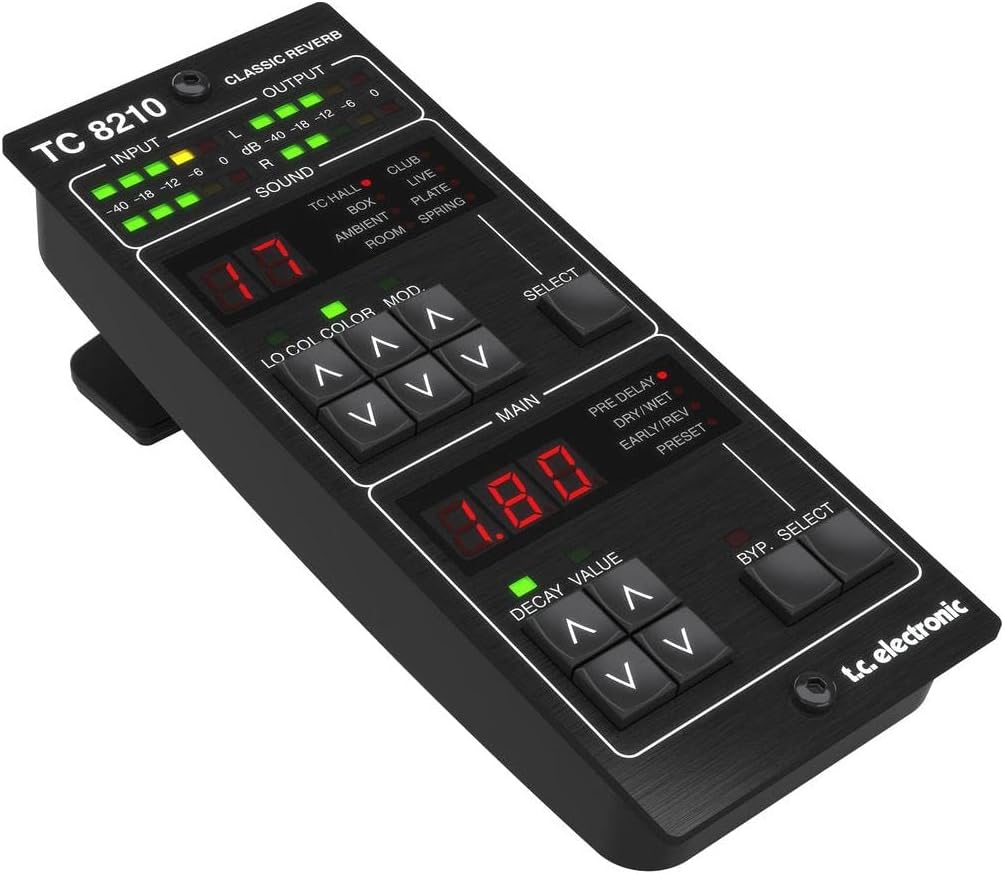
The TC Electronic TC8210-DT brings classic reverb sound into your DAW workflow. Rated 4.7 stars, it uses a desktop interface to provide hands-on control over a huge variety of reverb types for diverse musical needs.
We may earn a commission when you buy through this link, at no additional cost to you.
Its standout quality is the preservation of natural source characteristics. Custom-built signature presets from favorite artists help you achieve professional tones quickly. This approach saves time compared to starting from scratch.
The need for DAW integration may limit standalone use. Additionally, the hardware controller is optional. However, for producers mixing within a computer environment, the combination of analog warmth and digital control is highly effective.
Producers looking to streamline their mixing process will appreciate this unit. The ability to tweak parameters via desktop interface enhances workflow efficiency. It balances classic sound with modern convenience well.
Bring the legendary TC reverb sound into your modern digital production environment seamlessly.
Access custom presets from top artists to jumpstart your mixing sessions with professional results.
We may earn a commission when you buy through this link, at no additional cost to you.
This Behringer module brings analog warmth with its dual-spring reverb system. Rated 4.0 stars, it fits into standard Eurorack cases. It provides authentic spring reverb tones without needing digital emulation algorithms.
We may earn a commission when you buy through this link, at no additional cost to you.
Its dual spring design offers rich, organic texture. The 72HP size fits typical setups. Mute footswitch jacks allow hands-free control during live performances. This makes it suitable for modular synth users seeking tactile control.
Limitations include the need for Eurorack power and lack of digital features. It is strictly for spring sound lovers. However, the analog authenticity makes it a unique addition to any analog modular signal chain effectively.
Modular synth enthusiasts wanting genuine spring tones will love this unit. The organic movement of springs adds character that digital plugins often struggle to replicate. It is a niche but valuable tool for purists.
The dual springs create a unique, organic texture that digital emulation cannot fully capture.
Designed for Eurorack, it integrates smoothly into modular synth environments with standard power.
We may earn a commission when you buy through this link, at no additional cost to you.
The Donner Reverb Guitar Pedal offers seven modes in a compact package. With a 4.3 rating, it features true bypass design for a transparent tone. The mini size makes it ideal for tight pedalboard spaces.
We may earn a commission when you buy through this link, at no additional cost to you.
Its whole aluminum-alloy body ensures stability and durability. The LED indicator shows the working state clearly. This simplicity allows for easy integration without cluttering your board with large units.
The power supply is not included, which is an extra cost. The knob control is straightforward but limited. For beginners or players with space constraints, the balance of features and size is excellent value.
Guitarists needing a reliable, compact reverb should consider this pedal. It covers essential modes from room to mod. The price point makes it accessible for those starting their pedal journey.
The mini size ensures this pedal fits easily on crowded pedalboards without sacrificing tone.
True bypass design guarantees your guitar signal remains untouched when the effect is disengaged.
We may earn a commission when you buy through this link, at no additional cost to you.
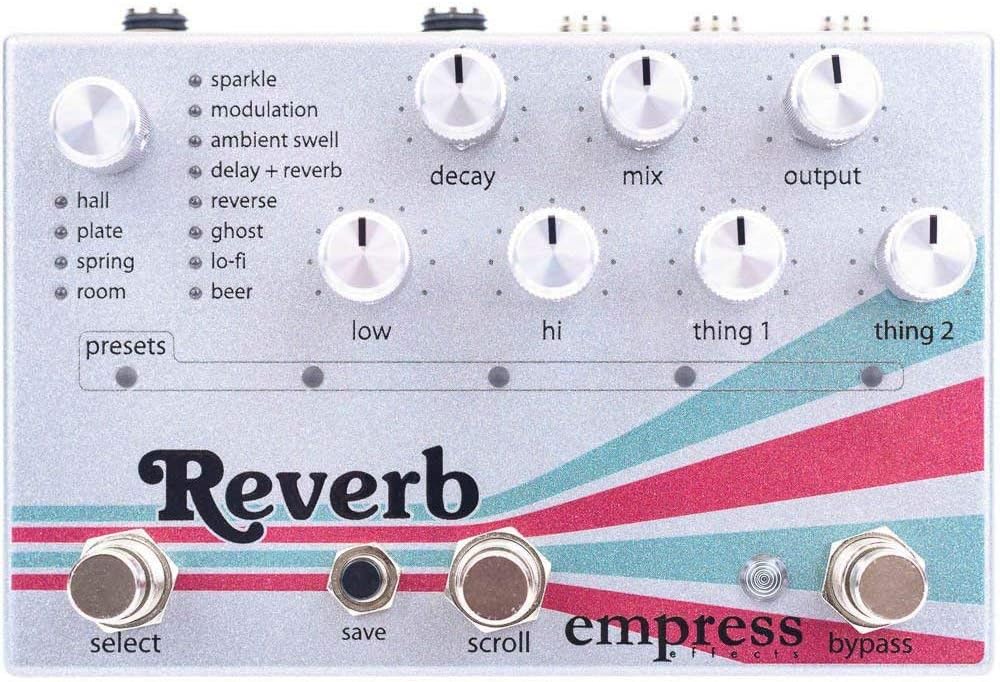
Empress Effects Reverb boasts 24 studio quality algorithms that are constantly counted. Rated 4.4 stars, it offers pristine classic sounds and ambient options. Its easy-to-use interface lets users dial in tones quickly.
We may earn a commission when you buy through this link, at no additional cost to you.
The tap functions simplify rhythm synchronization. Ambient sounds create unique atmospheric textures. The quality of processing is high, ensuring detailed sound reproduction. This makes it a favorite for creative musicians.
However, the price tag is higher than average. Menu navigation can be complex for beginners. Yet for those seeking a wide range of high-quality sounds, the investment provides significant flexibility and depth.
Musicians prioritizing algorithm variety and sound quality will appreciate this unit. It bridges the gap between simple pedals and complex processors. The inclusion of ambient options adds creative depth to any setup.
With 24 algorithms, you have access to every reverb type from classic halls to modern ambience.
Tap functions and intuitive knobs let you adjust parameters rapidly during live performance settings.
We may earn a commission when you buy through this link, at no additional cost to you.
The Walrus Audio Mako R1 High-Fidelity Reverb features all six programs rebuilt for vast tonal improvement. Rated 4.3 stars, it includes size and diffuse controls for each program. Ducking and swelling features add dynamic movement.
We may earn a commission when you buy through this link, at no additional cost to you.
Access to 128 on-board presets via menu is convenient. The menu screen ensures simple navigation. This unit provides high-fidelity sound that adapts to various musical contexts and environments effectively.
The menu screen might distract from pure knob control. Users must adjust settings through digital menus rather than dedicated pots. For those who prefer digital control, this is an acceptable trade-off for versatility.
Musicians wanting deep customization within a pedal format should choose this unit. The combination of presets and dynamic effects like ducking offers unique capabilities. It is a strong contender for detailed sound sculptors.
The ducking feature automatically lowers reverb levels when you play notes for clarity.
Size and diffuse controls let you fine-tune the spatial characteristics of the reverb tail.
We may earn a commission when you buy through this link, at no additional cost to you.
Universal Audio Galaxy '74 offers authentic emulation of a classic mid-'70s Japanese ambience device. Rated 4.3 stars, it includes full modeling of tape delay and spring reverb. It captures the analog preamp section definitively.
We may earn a commission when you buy through this link, at no additional cost to you.
Doubled delay times extend beyond original limits. USB Type-C allows updates via computer. Silent switching and buffered bypass maintain signal integrity. This unit brings vintage warmth into modern pedal workflows seamlessly.
Power requirements include isolated 9VDC and 400 mA minimum. The cost is higher due to complex modeling technology. However, the sonic accuracy justifies the price for vintage tone enthusiasts needing reliable emulation.
Tone seekers prioritizing vintage authenticity will value this unit. The combination of tape echo and spring reverb provides unique textures. It is a robust choice for players needing classic analog characteristics.
The emulation captures the subtle imperfections of classic hardware for a truly retro sound.
USB Type-C ensures easy updates, keeping the unit current with the latest sound improvements.
We may earn a commission when you buy through this link, at no additional cost to you.
JHS Pedals 3 Series Reverb is an extremely versatile unit made in Kansas City USA. With a 4.7 rating, it allows you to achieve any reverberation effect from small room to endless ambiance. EQ adjusts texture directly.
We may earn a commission when you buy through this link, at no additional cost to you.
Pre-delay knob allows for slap-like to spacey sounds. Runs on standard 9V DC Negative Center power. The simple design ensures ease of use. It balances quality and simplicity for practical daily musical use.
The lack of advanced controls like MIDI might limit complex setups. But for most users, the simple 3-knob layout covers the essentials. This simplicity makes it intuitive and reliable for gigging musicians.
Players valuing USA craftsmanship and reliability should choose this unit. It offers a broad range of tones in a compact package. The quality of build and sound ensures it remains relevant for years.
EQ controls let you tailor the reverb tone to match any instrument or room acoustic.
Built in Kansas City, this pedal reflects the high standards of US-made audio equipment.
We may earn a commission when you buy through this link, at no additional cost to you.
Choosing the right hardware reverb unit depends on several factors including sound quality, features, and budget. This guide breaks down the essential elements to consider before making a purchase decision.
High-quality units offer detailed sound reproduction with minimal noise. Look for 24-bit processing and diverse algorithms that match your musical style. Whether you prefer analog warmth or digital precision, the algorithm type defines the character.
Prioritize units with high fidelity to ensure your audio remains clear and professional.
Consider how you interact with the device. Knobs offer quick access, while menus provide deep customization. Decide if you need simple controls or complex parameter adjustments for your workflow. Hands-on control helps during live performance.
Choose an interface that fits your workflow style to maximize efficiency and creativity.
Check input and output options. Stereo capabilities allow for wider soundscapes, while balanced connections reduce noise. Ensure the unit fits your existing rack or pedalboard. USB support is useful for future updates.
Verify connections match your setup to avoid additional adapters or signal loss.
Decide between rackmount units, pedals, or desktop controllers. Pedals save space for guitarists, while rack units offer power for studios. Consider weight and size for touring needs. Portable units are essential for traveling musicians.
Select a form factor that aligns with where you will use the unit most often.
Power consumption varies by model. Some units need specific voltage or current. Ensure you have compatible power supplies or batteries. Efficient power usage extends battery life for mobile applications.
Check power specs before buying to ensure you have compatible supplies available.
A large library of presets saves time. Look for features like modulation, delay, or ducking that add versatility. Advanced features may cost more but offer unique sounds. Assess your need for specific sonic tools.
Evaluate presets and features to ensure the unit meets your creative needs.
Durability is crucial for live performance. Aluminum chassis withstands rigors better than plastic. Touring gear needs robust construction. Check user reviews regarding longevity and reliability over time.
Invest in a sturdy unit to avoid repairs or replacement due to wear.
Prices range widely from affordable to premium. Balance cost with needed features. A higher price may not always mean better sound if features go unused. Look for value in terms of quality and versatility.
Set a budget and prioritize features that matter most to your specific musical goals.
Store your unit in a dry environment to prevent corrosion. Use a surge protector to avoid power spikes. Regularly check cables and connections for wear. Proper care extends the life and performance of your hardware.
Analog units use physical components like springs to create reverb, offering warm, organic tones. Digital units use algorithms to simulate reverb, providing versatility and precision. Analog is preferred for vintage tones while digital suits modern needs.
Most hardware units require specific DC power supplies. Check the specs for voltage and current. Using the correct power ensures stability and prevents noise. Some pedals run on standard supplies, but always verify the requirements.
Yes, many hardware reverb units are versatile enough for both vocals and instruments. Look for units with multiple inputs or balanced connections. Adjust the mix to avoid masking the main signal. Universal units cover diverse audio needs effectively.
Refer to the user manual for specific steps as methods vary by brand. Most units allow saving through a sequence of button presses. Once saved, use footswitches to recall presets instantly. Regular backups help avoid data loss.
Pre-delay sets the time between the dry signal and the start of the reverb tail. It helps maintain clarity by preventing the reverb from blurring the initial note. Adjusting pre-delay allows for slapback or spacious textures.
Hardware offers tactile control and independence from computers. Software offers more algorithms and updates. Both produce high-quality results. Hardware is preferred for live use, while software suits home studios with computer access.
Analog spring reverb units need minimal maintenance. Avoid physical shocks that could displace springs. Dusting the exterior is usually enough. If issues arise, professional servicing is recommended to avoid damage.
Focus on sound quality, ease of use, and reliable construction. Avoid units with too many unused features. Check reviews for durability and performance. A budget unit should offer core functionality without unnecessary complexity.
Remember to check current prices and availability before purchasing. Technology and deals change quickly so staying updated helps you get the best value today.