
Cubilux CB5 USB Audio Interface
4.4Editor score
Portable 5-in-1 design
Supports Mac and Windows
High-resolution 96 kHz recording
Compare the best external sound cards for guitar to find high-quality audio interfaces that enhance your recording and streaming setup today.
External sound cards for guitar help musicians capture clear tones and connect instruments to computers easily. Choosing the right interface ensures low latency and professional audio quality for home studios.
This guide compares ten top-rated models based on features like input types, software bundles, and build quality. We evaluate each option to help you find the perfect match for your workflow.
Each pick highlights key strengths and ideal use cases for recording or live performance. Please note that product availability and pricing may change over time, so check current listings before buying.
4.4Editor score
4.6Editor score

4.8Editor score
This comparison table lists all ten products side by side with key specifications to help you evaluate options quickly before making a purchase decision.


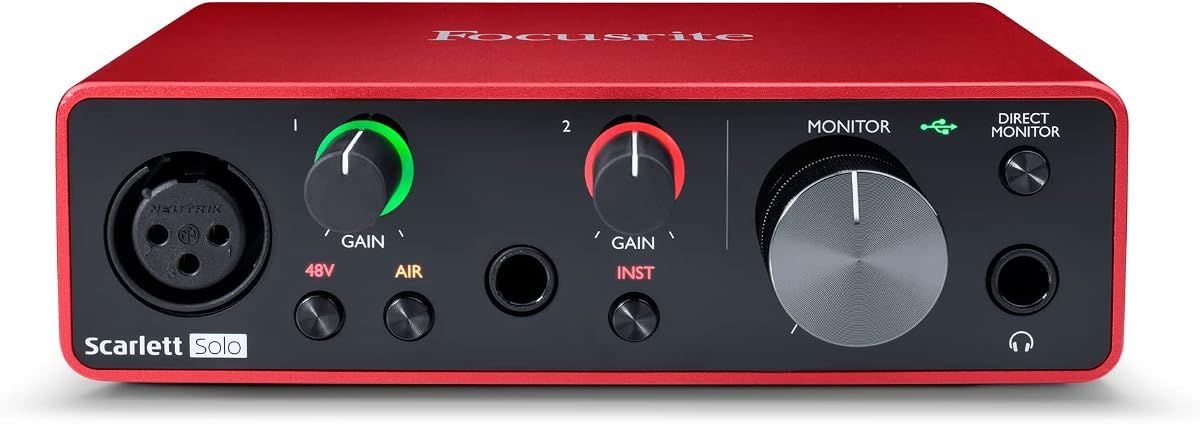
This interface delivers professional sound quality with a high rating of 4.6 stars. It is widely recognized for its clean pre-amps and reliability in home studio settings.
We may earn a commission when you buy through this link, at no additional cost to you.
The Air mode adds clarity to acoustic tones while the Gain Halos help you set levels without distortion. High-headroom inputs ensure your guitar signal shines through clearly.
It does not offer as many channels as larger units but remains focused on simplicity and quality. This trade-off makes it ideal for solo artists and podcasters.
Musicians starting their recording journey should consider this model first. It provides a solid foundation for professional results without complex setup.
High-performance converters preserve sonic nuances for mix-ready recordings.
Included suite offers effects and mastering tools to enhance your workflow.
We may earn a commission when you buy through this link, at no additional cost to you.
This premium interface stands out with authentic Fender amp modeling and pristine audio capture. It aims to satisfy professional producers and guitarists seeking top-tier gear.
We may earn a commission when you buy through this link, at no additional cost to you.
Front inputs optimize guitar recording while Auto Gain simplifies setup. ADAT expansion allows future growth for complex studio environments.
While expensive, it justifies cost with professional converters and software integration. Users valuing brand authenticity will appreciate the unique FX pack.
Buyers needing studio grade tools should invest here. It offers a comprehensive path for serious music production.
Access classic Fender sounds directly within your DAW workflow.
DSP mixer supports streaming and latency-free performance tracking.
We may earn a commission when you buy through this link, at no additional cost to you.
This device provides versatile recording capabilities at an affordable price point. It supports both instruments and mics with transparent preamps suitable for home use.
We may earn a commission when you buy through this link, at no additional cost to you.
The USB/Direct switch ensures you hear your playing instantly without delay. Phantom power allows condenser mic integration for vocal tracking.
It lacks advanced features found in premium units but covers essential needs well. The design prioritizes function over flashy aesthetics.
Beginners looking for value should consider this model. It delivers reliable performance for budget-conscious creators.
Plug-and-play functionality gets you recording quickly with any DAW.
We may earn a commission when you buy through this link, at no additional cost to you.
This compact interface is designed for mobile musicians needing studio quality on the go. It features high resolution converters and Fender software to craft tones instantly.
We may earn a commission when you buy through this link, at no additional cost to you.
The dedicated instrument input is optimized specifically for guitar signals. Zero latency monitoring helps you track performances without distractions.
It may lack some ports for complex setups but excels in simplicity. Ideal for travelers or dorm room recording.
Buyers prioritizing portability should choose this option. It balances size and quality effectively.
Compact design fits easily into bags without extra power adapters.
We may earn a commission when you buy through this link, at no additional cost to you.
Designed for streamers and podcasters, this interface offers robust routing and clear audio. Its dynamic range ensures every detail of your voice and guitar is captured.
We may earn a commission when you buy through this link, at no additional cost to you.
ProStudio software gives you control over virtual channels and monitoring. ASIO support keeps your output smooth during live broadcasts.
The light body is easy to carry but might feel less rugged than metal models. However it remains functional for standard desk setups.
Content creators needing a flexible streaming hub should consider this. It handles multi-device input well.
Loopback lets you mix chat audio with your performance seamlessly.
We may earn a commission when you buy through this link, at no additional cost to you.
This adapter is great for basic audio output needs without complex installation. It works instantly with any headset and provides decent audio enhancement profiles.
We may earn a commission when you buy through this link, at no additional cost to you.
While not built for instruments it can serve for playback in simple setups. Software allows basic control over sound characteristics.
It lacks input capabilities for recording guitars directly. Best used as an output device only.
Casual users needing better headphone audio should look here. It is an easy upgrade for laptops.
Connect and start using without any driver downloads or configurations.
We may earn a commission when you buy through this link, at no additional cost to you.
This external card adds surround audio capabilities to desktops via USB. It supports various output formats for gaming and media consumption.
We may earn a commission when you buy through this link, at no additional cost to you.
Recording options are limited compared to dedicated music interfaces. It is designed mostly for listening and playback rather than creation.
The build is functional with easy volume controls. It serves well for general computer audio upgrades.
Users wanting immersive sound on a budget might find this useful. It is not ideal for recording.
Delivers multi-channel sound for movies and games effectively.
We may earn a commission when you buy through this link, at no additional cost to you.
This interface offers a unique wireless backing track feature for mobile practice. It allows seamless integration between devices without extra cables.
We may earn a commission when you buy through this link, at no additional cost to you.
The sturdy aluminum case ensures durability during travel. Independent volume buttons help you balance levels accurately.
It is not as advanced as large studio gear but excels in mobility. The wireless capability sets it apart from competitors.
Musicians practicing on the go should find this appealing. It simplifies practice sessions significantly.
Stream backing tracks from a phone to another device effortlessly.
We may earn a commission when you buy through this link, at no additional cost to you.
This interface converts your laptop into a versatile recording station quickly. It offers multiple inputs for mics and instruments in a small package.
We may earn a commission when you buy through this link, at no additional cost to you.
Studio quality is decent with high-resolution DACs built in. It is easy to carry and requires no external power source.
Some output jacks cannot be used simultaneously which limits flexibility. However it remains a strong starter choice.
Beginners needing multiple inputs on a budget should try this. It handles basic recording tasks well.
Five ports allow simultaneous mic and instrument connections.
We may earn a commission when you buy through this link, at no additional cost to you.
This card is designed for high-resolution playback and surround sound immersion. It supports a wide range of sample rates for audiophiles.
We may earn a commission when you buy through this link, at no additional cost to you.
The aluminum case reduces interference for clean audio transmission. It works seamlessly with PCs and MacBooks lacking built-in options.
It focuses on output quality rather than input recording capabilities. Not recommended for creating music tracks directly.
Listeners wanting improved audio fidelity should consider this option. It provides excellent playback features.
Supports up to 384KHz for detailed music listening experiences.
We may earn a commission when you buy through this link, at no additional cost to you.
Choosing the right interface requires understanding your recording needs and budget constraints.
Ensure the interface has dedicated instrument inputs for your guitar. Combo jacks allow you to use microphones as well.
Look for high impedance inputs to get the best tone from your instrument.
Many interfaces include DAW software or amp simulators. Check what is included to save money on subscriptions.
A good software suite helps you start recording immediately without extra purchases.
Low latency monitoring is essential for real-time playing. Interfaces with DSP mixers provide zero-delay sound.
Check driver support like ASIO to ensure smooth performance in your DAW.
Metal casing helps with heat dissipation and durability. Plastic bodies are lighter but may be less robust.
Choose a build that suits your portability needs and environment.
Small devices are easier to carry for mobile recording. Bus-powered units save you from needing extra cables.
Consider the weight and size if you travel frequently with your gear.
USB-C offers faster data transfer and better reliability. Older USB-A connections are still common but slower.
Ensure your computer has compatible ports for the interface you select.
Connect your guitar to the dedicated instrument input using a standard cable. Set the gain knob while playing to avoid clipping.
Install the necessary drivers and software provided with the device. Open your DAW and select the interface as the audio device.
Keep the device in a dry place when not in use to prevent moisture damage. Regularly check cables and connections for wear and tear.
Yes if you want to record your guitar directly into a computer. A sound card converts analog signals to digital format your software can process. It also provides clean inputs that standard jacks lack.
Most home studios use 44.1kHz or 48kHz. Higher rates like 96kHz offer better resolution but use more storage. Choose based on your project needs and computer power.
Most modern interfaces support both macOS and Windows. Always check the manufacturer specs for specific version requirements. Some require driver installation on certain systems.
Yes you can place pedals between your guitar and the interface input. This lets you record with hardware effects directly. It is a common method for guitarists.
Open your DAW settings and look for buffer size. Lower buffers reduce delay but might cause glitches. Use direct monitoring if available for zero latency.
You can use a USB hub to add connections but ensure it is powered. Some interfaces offer Thunderbolt options for newer computers. Check compatibility before buying.
This guide reviewed ten excellent options ranging from portable budget units to premium studio gear. The Fender Quantum HD stands out for pros while the M-AUDIO is great for beginners.
Prioritize input quality and software support when making your choice. These factors impact your workflow and sound quality more than price alone.
Always check the latest product listings for current deals and availability. Prices can vary so comparing online stores is recommended before purchasing.