
Canon EF 50mm f/1.8 STM Lens
4.8Editor score
Affordable 50mm prime lens
f/1.8 maximum aperture
STM motor for quiet AF
This guide compares the top camera lenses for product photography across budget and professional tiers to help you choose the right optics for sharp, consistent
Choosing the right camera lens for product photography is essential for capturing sharp, detailed images that highlight the unique features of your items. Whether you are shooting jewelry, electronics, or apparel, the lens you select determines clarity, depth of field, and color accuracy in every shot you take.
We evaluated ten top-rated lenses based on optical performance, build quality, autofocus speed, and compatibility with popular camera systems. Our analysis focuses on real-world usability for e-commerce sellers and professional photographers who need reliable tools to produce high-quality product imagery consistently.
Each pick in this guide showcases specific strengths like wide apertures for blur, zoom ranges for versatility, and macro capabilities for close-up details. Please note that prices and availability can change frequently, so always check the latest listings before making your final purchase decision today.
4.8Editor score

4.8Editor score

4.5Editor score
This comparison table provides a side-by-side overview of all ten lenses analyzed in this guide. You can quickly see key specifications like focal length, aperture range, and stabilization features to help narrow down your options based on your specific shooting needs.




The Canon RF24-70mm F2.8 L IS USM is the top choice for product photography due to its exceptional sharpness and versatile focal length. With a constant f/2.8 aperture, it delivers consistent exposure and depth of field across the entire zoom range from 24mm to 70mm.
We may earn a commission when you buy through this link, at no additional cost to you.
Its optical image stabilization provides up to 5 stops of shake correction, which is invaluable when shooting handheld or in lower light conditions. The Nano USM autofocus ensures high speed smooth and quiet focusing, allowing you to capture crisp images of moving subjects or quick adjustments on set.
While this lens is relatively expensive compared to other options, the build quality justifies the investment for professionals who demand reliability. The weather-sealed construction protects against dust and moisture, making it suitable for challenging environments where product shoots might take place.
This lens is ideal for photographers who need a single versatile lens to cover a wide range of product shots. Whether you are shooting group displays, individual items, or detailed textures, this lens delivers the quality and flexibility required for high-end e-commerce imagery.
Advanced optical design minimizes aberrations and ensures edge to-edge sharpness for professional results.
The 24 to 70mm range covers wide product shots and tighter compositions without needing lens changes.
We may earn a commission when you buy through this link, at no additional cost to you.
The Canon EF 50mm f/1.8 STM is a budget-friendly option that delivers remarkable optical performance for its price. It is widely known as the kit prime because it offers professional-level image quality at an entry-level cost point.
We may earn a commission when you buy through this link, at no additional cost to you.
The large f/1.8 aperture allows for excellent light gathering in dim environments and creates a pleasing shallow depth of field to isolate products from distracting backgrounds. This is particularly useful for highlighting specific product features or textures in a photograph.
While the lens body is made of plastic, it remains lightweight and durable enough for regular studio use. The STM motor provides smooth and quiet autofocus, which is beneficial when recording video content alongside still product photography.
Photographers on a tight budget will find this lens an excellent starting point for building a product photography kit. It is compatible with a wide range of Canon DSLR cameras and offers great value without compromising on image sharpness or color accuracy.
Its compact size makes it easy to carry around for location shoots or small studio setups.
The 50mm focal length provides a field of view close to human vision for realistic product representation.
We may earn a commission when you buy through this link, at no additional cost to you.
The Sigma 135mm F1.8 DG HSM ART is a professional-grade prime lens designed for high-end product photography that demands extreme clarity and detail. It is handcrafted in Japan and undergoes rigorous testing to ensure individual performance meets high standards.
We may earn a commission when you buy through this link, at no additional cost to you.
Its large f/1.8 aperture combined with the 135mm focal length creates stunning compression effects and background blur, making it perfect for isolating product details or creating artistic imagery. The optical design ensures minimal aberrations and maximum resolution across the frame.
While it is heavier and more expensive than other options, the build quality is exceptional with dust and splash-proofing for added durability. The Hyper Sonic motor delivers ample torque and stable performance even at lower speeds for precise focusing control.
This lens is best suited for photographers who prioritize ultimate image quality and are willing to invest in premium glass. It is ideal for close-up work where detail is paramount, offering a level of clarity that enhances the perceived value of the product being shot.
The aperture design creates smooth circular out-of-focus areas that make products pop against backgrounds.
Dust and splash proofing ensures reliable performance even in humid or dusty environments.
We may earn a commission when you buy through this link, at no additional cost to you.
The Canon EF 75-300mm f/4-5.6 III is a versatile telephoto zoom lens that allows for a wide range of focal lengths at a budget price. It is available as a renewed model, offering cost savings while maintaining essential features for product shoots.
We may earn a commission when you buy through this link, at no additional cost to you.
With a zoom range extending to 300mm, this lens enables you to capture distant subjects or compress perspective when photographing large products. The DC autofocus motor provides basic focusing capabilities, though it is not as fast as more advanced motors in other models.
The variable aperture of f/4 to f/5.6 means light transmission changes as you zoom, which requires careful exposure management. However, for well-lit studio environments, this lens offers sufficient flexibility to frame products without needing to move the camera constantly.
Photographers looking for an affordable way to explore longer focal lengths will appreciate this lens. While it may not match the sharpness of prime lenses, it is a practical choice for hobbyists or those needing a flexible telephoto option without a high price tag.
Zooming from 75mm to 300mm gives you flexibility to frame products from various distances.
As a renewed product, it offers significant savings while providing reliable telephoto capabilities.
We may earn a commission when you buy through this link, at no additional cost to you.
The Lightdow 85mm f/1.8 Manual Focus Lens is designed for photographers who want full creative control over their images. It features a fixed focal length of 85mm and a wide aperture that allows for stunning background blur in product shots.
We may earn a commission when you buy through this link, at no additional cost to you.
Since this lens lacks autofocus, you must manually adjust focus using the smooth focus ring. This process enhances your skills and allows for precise focusing on specific product details that autofocus might miss. It requires switching to manual mode on your camera.
The optical construction includes hybrid aspherical elements and ultra multi-coating to reduce glare and aberrations. This ensures high image quality and clear results despite the lower price point compared to branded autofocus lenses from major manufacturers.
This lens is perfect for static product photography where focus adjustments can be made deliberately. It is an excellent choice for beginners wanting to learn manual focusing or professionals who need a backup lens with specific focal characteristics without high costs.
Manual focus allows you to lock focus exactly on the most important part of your product image.
Advanced coating technology minimizes flare and ensures clear images even in bright lighting conditions.
We may earn a commission when you buy through this link, at no additional cost to you.
The Canon RF50mm F1.8 STM is a compact prime lens tailored for the EOS R mirrorless system. It offers a standard focal length that is natural for product photography and provides a fast aperture for creative control over depth of field.
We may earn a commission when you buy through this link, at no additional cost to you.
The gear-type stepping motor ensures smooth and quiet continuous autofocus, which is particularly useful when shooting video content alongside still images. The control ring allows for direct setting changes, making it easy to adjust aperture or ISO quickly without reaching for menus.
Optimized lens placement and coatings help deliver outstanding color balance while minimizing ghosting and flare. This ensures that the colors of your products are rendered accurately, which is crucial for e-commerce listings where color fidelity is expected by customers.
Photographers using Canon mirrorless cameras will find this lens an essential addition to their kit. Its light weight makes it easy to handle for long shooting sessions, and the fast aperture allows for sharp results even in conditions with limited available light.
The control ring allows quick adjustments to settings without diving into camera menus during shoots.
Advanced coatings reduce flare and ghosting for clearer images in challenging lighting setups.
We may earn a commission when you buy through this link, at no additional cost to you.
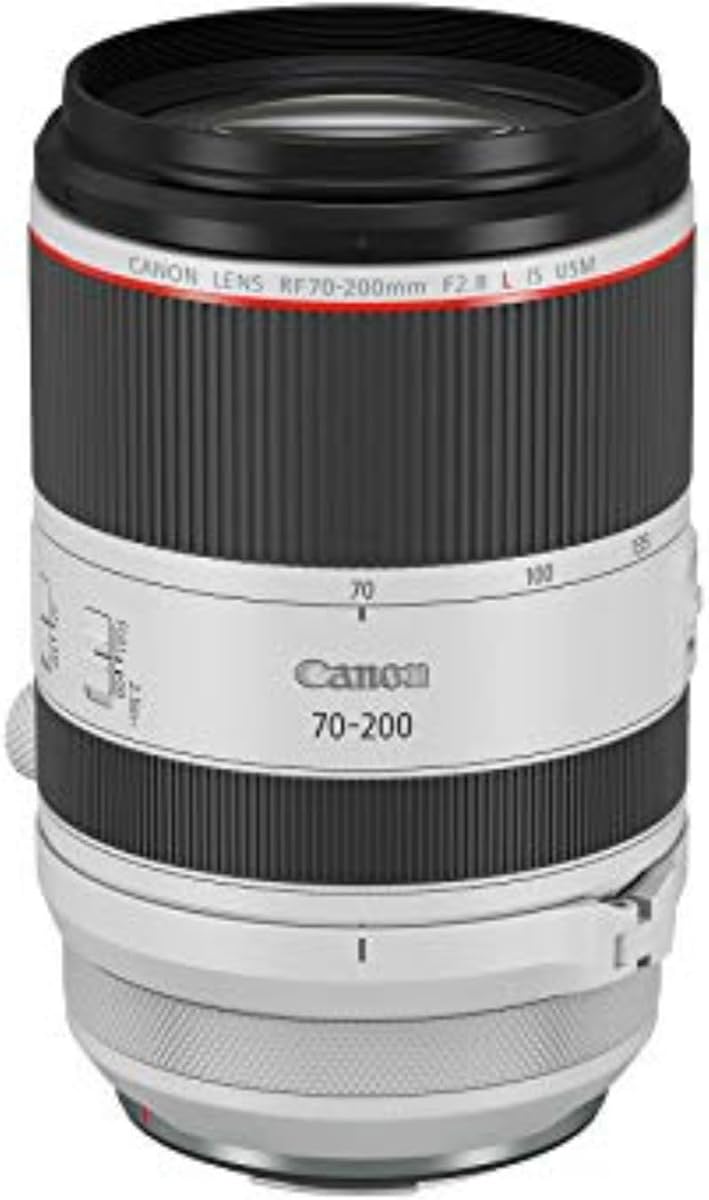
The Canon RF70-200mm F2.8 L IS USM is a premium telephoto zoom lens designed for professional product photography that requires high quality and versatility. Its constant f/2.8 aperture ensures consistent exposure across the entire zoom range.
We may earn a commission when you buy through this link, at no additional cost to you.
With optical image stabilization providing up to 5 stops of shake correction, this lens allows for sharp handheld shots even at longer focal lengths. The dual Nano USM autofocus is high speed and silent, enabling quick adjustments for dynamic shoots or moving subjects.
The lens is compact and lightweight for a telephoto zoom, making it easier to handle during long sessions. It is compatible with full-frame mirrorless cameras in the EOS R series, offering high image quality and reliability for serious photographers and professionals.
This lens is ideal for photographers who need a versatile tool for a variety of shooting scenarios. Whether capturing detailed product shots or larger setups, the combination of sharpness and flexibility makes it a top choice for those who need professional results.
Maintaining f/2.8 throughout the zoom range ensures reliable light gathering for consistent shots.
Five stops of shake correction allow for sharp images even when handheld at longer distances.
We may earn a commission when you buy through this link, at no additional cost to you.
The Xenvo Pro Lens Kit offers an affordable solution for smartphone product photography, including a wide angle lens and a macro lens for close-ups. It is compatible with a wide range of smartphones and tablets, making it accessible for beginners.
We may earn a commission when you buy through this link, at no additional cost to you.
The 15x macro lens allows you to capture intricate details and textures on your products with precision. The 0.45x wide angle lens lets you capture more of the scene, which is helpful when shooting multiple items together in a single frame.
Included in the kit is a rechargeable LED fill light that clips onto your phone to provide consistent illumination. This is particularly useful for reducing shadows and ensuring your product is evenly lit in low light conditions without using harsh flash.
Photographers looking for a budget-friendly way to shoot with their phone will appreciate this kit. While it does not match the quality of dedicated camera lenses, it provides decent results for social media content or small business listings without a large investment.
The macro lens lets you get close to capture small details on jewelry or textures effectively.
The built-in LED light ensures your subject is well illuminated even in dim indoor settings.
We may earn a commission when you buy through this link, at no additional cost to you.
The Canon EOS Rebel T7 DSLR Camera Double Zoom Lens Kit provides an all-in-one solution for beginners entering product photography. It includes a camera body and two lenses, offering a range of focal lengths for different shooting scenarios.
We may earn a commission when you buy through this link, at no additional cost to you.
With a 24.1 megapixel APS-C sensor, this camera delivers high resolution images suitable for print and online use. The included lenses cover wide to telephoto ranges, giving you flexibility to frame products from various angles and distances.
Built-in Wi-Fi and NFC allow for easy transfer of images to smartphones for quick editing and sharing. This is useful for small businesses that need to upload product photos to online stores quickly without needing a computer connection.
Photographers starting out with photography will find this kit an excellent value. It offers essential features to learn the basics of exposure and composition without overwhelming complexity, making it a practical first step into professional product photography.
The included 18-55mm and 75-300mm lenses cover a wide range of focal lengths for different needs.
Wi-Fi allows for quick image transfer to mobile devices for faster workflow and sharing.
We may earn a commission when you buy through this link, at no additional cost to you.
The Canon EF 200mm f/2.8L II USM is a fixed telephoto lens known for its exceptional sharpness and bright aperture. It is designed for professionals who require high-quality optics for detailed product photography or other specialized applications.
We may earn a commission when you buy through this link, at no additional cost to you.
At f/2.8, the lens allows for significant light gathering and background separation. The optical construction includes nine elements in seven groups, ensuring minimal aberrations and superior image quality across the frame. It is durable and resistant to wear over time.
While it is heavier than some options, it remains lightweight for a telephoto lens. The USM motor provides fast and quiet autofocus, making it easy to maintain sharp focus on moving or stationary products. It is a reliable tool for consistent results.
Photographers seeking a dedicated telephoto option will appreciate its optical prowess. While the price is higher, the image quality and durability make it a valuable asset for those who need to capture fine details at a distance with precision and clarity.
Nine elements in seven groups ensure high resolution and minimal color fringing in all shots.
Built as an L-series lens, it offers robust construction that withstands regular use in studios.
We may earn a commission when you buy through this link, at no additional cost to you.
Selecting the right lens requires understanding your specific needs and the type of products you shoot. This section outlines key factors to consider to ensure you make an informed purchase that aligns with your goals.
Focal length determines the field of view and magnification of your lens. For product photography, a standard 50mm to 85mm is often ideal because it offers a natural perspective without distortion. Longer focal lengths like 135mm or 200mm can be useful for isolating details without getting too close to the subject, while wide angles may distort product shapes and should be used cautiously.
Choose a focal length that matches your studio space and desired framing to avoid distortion or perspective issues.
The maximum aperture of a lens affects how much light it can gather and your control over depth of field. A wider aperture like f/1.8 or f/2.8 allows for better performance in low light and creates a pleasing blur to separate the product from the background. This is crucial for highlighting specific features and ensuring your subject stands out clearly.
Look for a lens with a wide maximum aperture to gain flexibility in lighting conditions and creative control over focus.
Prime lenses have a fixed focal length and often offer superior sharpness and wider apertures, while zoom lenses provide versatility with multiple focal lengths in one package. Primes are excellent for achieving high image quality and consistent depth of field, whereas zooms allow you to quickly change framing without moving your camera or tripod setup.
Decide between primes for image quality and zooms for convenience based on your shooting style and budget constraints.
Ensure the lens is compatible with your camera body's mount system. Canon uses EF for DSLRs and RF for mirrorless cameras. Using the wrong mount may require adapters that can affect performance or compatibility. Always check the specific mount type of your camera before purchasing to avoid unnecessary complications.
Verify the lens mount matches your camera system to ensure proper fit and full functionality.
Modern autofocus motors like USM or STM provide fast, quiet, and accurate focusing which is essential for sharp images. Manual focus lenses are great for static setups but can be challenging for quick shoots. If you shoot moving products or need to focus quickly, a reliable autofocus system will save you time and reduce missed shots.
Prioritize lenses with advanced autofocus motors if you need speed and precision in your workflow.
Optical image stabilization helps counteract camera shake, allowing you to shoot at slower shutter speeds without blur. This is particularly useful when shooting handheld or in low light conditions. While not strictly necessary for studio work where tripods are used, it adds versatility for location shoots or less controlled environments.
Consider stabilization if you plan to shoot handheld or in varying lighting conditions for sharper results.
Professional lenses often feature weather-sealing and robust materials that withstand dust and moisture. This is important if you shoot in less controlled environments or expect heavy daily use. Cheaper lenses may use plastic bodies which are lighter but less durable over time. Investing in a well-built lens ensures longevity and reliability.
Choose a lens with durable construction if you anticipate heavy use or variable environmental conditions during shoots.
Budget plays a major role in your choice. Entry-level lenses offer great value for beginners, while high-end optics provide professional results. Consider your specific needs and how much you are willing to invest. Sometimes a combination of affordable lenses can achieve the same results as a single expensive one if chosen wisely.
Set a realistic budget and compare options to find the best balance between cost and performance for your needs.
To get the best results, mount your lens securely and check that the camera is set to manual or aperture priority mode for consistent exposure. Clean the lens front element with a microfiber cloth before shooting to avoid dust spots in your images that can distract from the product.
When shooting, position your product to avoid direct reflections and use a tripod to keep the camera steady. Adjust your aperture to get the desired depth of field; a higher number like f/8 provides more overall sharpness, while lower numbers like f/2.8 create more background blur.
After use, remove the lens from the camera and replace both front and rear caps to protect the glass. Store the lens in a dry, cool place to prevent moisture damage. Regular cleaning of the mount contacts ensures good communication between the lens and camera body.
For most products, a focal length between 50mm and 100mm is ideal as it minimizes distortion and provides a natural perspective. This range allows you to frame products effectively without stretching their shape.
While prime lenses offer better sharpness, zoom lenses provide convenience by covering multiple focal lengths. If you shoot varied products in one session, a zoom can save time, but for ultimate quality, primes are preferred.
Image stabilization is less critical if you use a tripod, which is standard for product work. However, it is beneficial for handheld shots or when lighting conditions are poor and you cannot use a tripod.
Smartphone lens kits are useful for beginners or social media content but lack the optical quality and control needed for professional e-commerce photography. They can be a starting point but have limitations.
Using an aperture around f/8 provides a good balance between sharpness and depth of field, ensuring your product is clear from front to back. Lower apertures like f/2.8 are better for isolating specific details.
Manual focus lenses allow precise control which is useful for static setups, but they are slower to use. They are best when you have plenty of time and want exact focus on specific product details.
Selecting the best lens for product photography depends on your budget, camera system, and the specific needs of your shoot. Whether you choose a versatile zoom like the Canon RF24-70mm or a sharp prime like the Sigma 135mm, the right tool will elevate the quality of your imagery.
Focus on lenses that offer excellent sharpness and reliable autofocus to ensure you capture the details that customers expect. Prioritize options that match your camera mount and give you the flexibility to work efficiently in your studio or on location.
Always check current prices and availability before purchasing since deals can change quickly. With the right lens, you can produce professional product photos that build trust with customers and enhance your brand's online presence.