
Vogzone for MCX4121A-ACAT ConnectX-4 Lx 25GbE Dual SFP28 PCIe 3.0 x8 NIC
4.7Editor score
Original Mellanox controller
Dual SFP28 ports
RDMA RoCE support
This guide compares the top ten 25GbE Network Cards for enterprise and home labs, evaluating performance, compatibility, and features to help you choose the
Selecting the right network adapter is crucial for modern infrastructure. High-speed connectivity ensures seamless data transfer, low latency, and robust performance for demanding applications in enterprise environments.
We evaluated ten leading 25GbE Network Cards based on controller quality, port flexibility, and system compatibility. Our analysis focuses on real-world performance metrics and support across diverse operating systems.
Each pick highlights specific strengths and ideal use cases for various users. Remember that availability and technical specifications may shift, so always verify current details before finalizing your purchase decision.
4.7Editor score

5.0Editor score

5.0Editor score
The following table provides a side-by-side comparison of all ten network adapters reviewed in this guide, highlighting their key specifications and primary strengths.


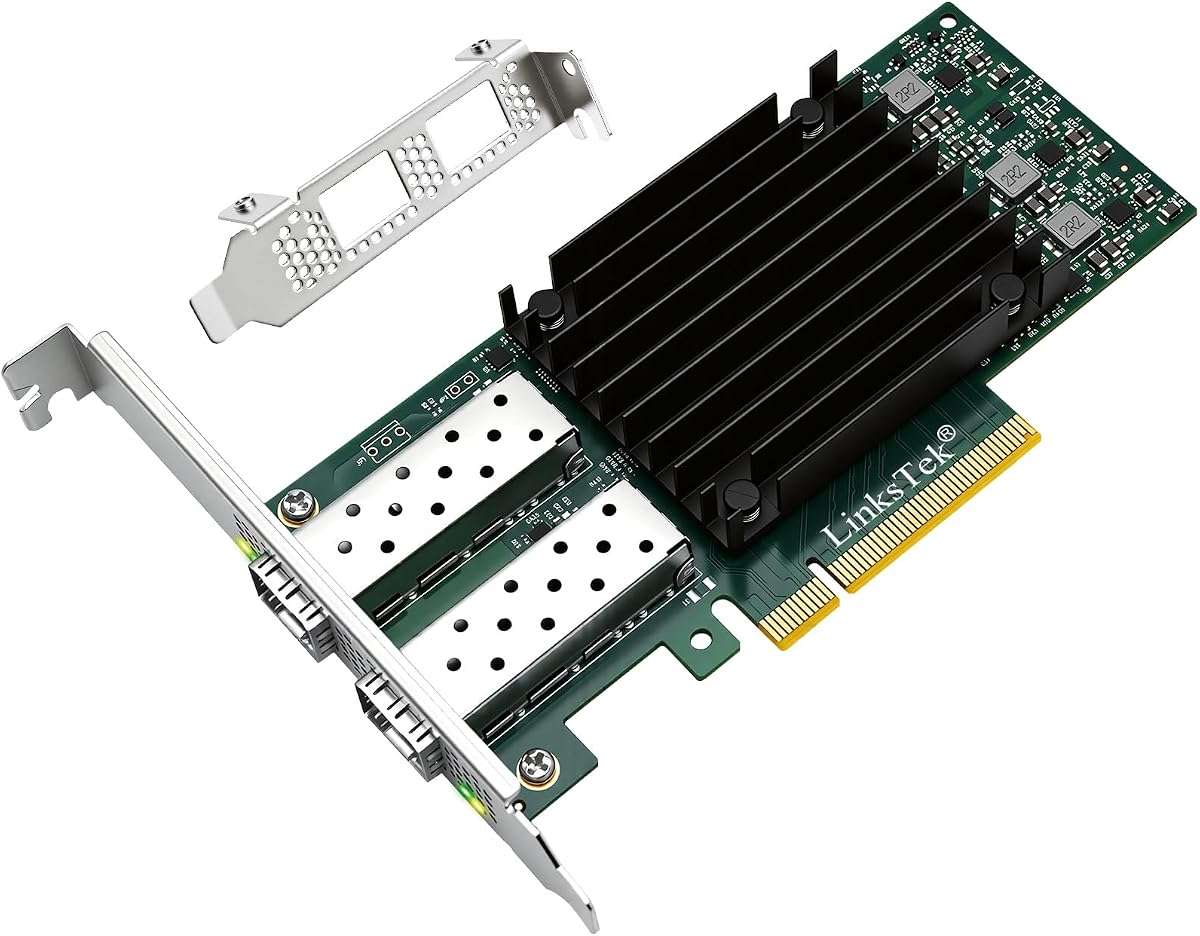


This network card stands out as the Editor's Choice due to its robust Intel E810 controller and reliable data transfer capabilities ensured by Forward Error Correction. It offers dual 25GbE ports that can be trunked for even higher speeds.
We may earn a commission when you buy through this link, at no additional cost to you.
The ability to connect to multiple high-speed networking devices makes it versatile for enterprise setups. Support for QNAP's QTS and other major operating systems ensures broad compatibility across your infrastructure.
While it operates on PCIe Gen 3, the combined throughput is sufficient for most high-demand applications. The included low-profile bracket adds value by making installation easier in smaller chassis.
Anyone looking to upgrade their NAS or server connectivity should strongly consider this card. It balances performance, reliability, and ease of use better than many competitors in this category.
Forward Error Correction ensures data integrity during transfer, which is critical for enterprise-level network stability.
Combining both ports allows for up to 50 Gbps transfer speeds, accelerating file sharing and intensive data tasks.
We may earn a commission when you buy through this link, at no additional cost to you.
Designed specifically for Synology systems, this adapter offers seamless integration and high-performance storage applications. It supports two 25GbE ports that enable higher simultaneous throughput and load balancing.
We may earn a commission when you buy through this link, at no additional cost to you.
The card allows for port failover, ensuring network stability if one link goes down. It is purpose-built to work with Synology's DSM operating system, simplifying the setup process significantly.
One consideration is the hardware compatibility list requirement. Users must ensure their system meets the DSM version needs to avoid any potential issues during installation or operation.
This product is ideal for existing Synology users who need to upgrade to faster network speeds without compromising system integrity. The five-year warranty provides additional peace of mind.
Dual ports allow for greater bandwidth usage, which is essential for heavy file transfers and multi-user environments.
The extended warranty period reflects the manufacturer's confidence in the durability and reliability of the adapter.
We may earn a commission when you buy through this link, at no additional cost to you.
This adapter offers a cost-effective solution for those needing true hardware-based I/O isolation. It features the original Mellanox ConnectX-4 Lx controller which provides unmatched scalability and efficiency.
We may earn a commission when you buy through this link, at no additional cost to you.
Support for a wide range of operating systems including Windows, Linux, and various virtualization platforms makes it highly versatile. The dual SFP28 ports allow for flexible connectivity to network cables.
Although it is a budget option, it supports advanced features like RDMA and SR-IOV. These capabilities ensure it can handle demanding workloads without compromising on performance.
Budget-conscious users building a home lab or small office network will find this card invaluable. It delivers enterprise-level features at a fraction of the typical cost.
This isolation ensures efficient resource management and improves overall system performance and reliability.
Designed for Web 2.0, cloud, and analytics platforms, it can scale with your growing infrastructure needs.
We may earn a commission when you buy through this link, at no additional cost to you.
This network card leverages the Intel E810 controller on a PCIe 4.0 interface for maximum throughput potential. It supports a wide range of operating systems including Windows Server, Linux, and VMware ESXi.
We may earn a commission when you buy through this link, at no additional cost to you.
The two SFP28 ports are compatible with DAC, Optics, and AOC cables, giving you flexibility in cabling. It supports advanced features like RDMA and PXE which are vital for modern server environments.
While it lacks Mac OS support, it is an excellent choice for Windows and Linux-based servers. The 16 GT/s speed ensures that the bandwidth can handle heavy data loads efficiently.
Users looking for a high-performance card without spending a fortune should consider this option. The inclusion of a low profile bracket also makes it suitable for compact server cases.
The newer interface standard allows for faster data transfer rates between the adapter and the system.
Compatibility with various cable types means you can choose the most cost-effective connection method available.
We may earn a commission when you buy through this link, at no additional cost to you.
This adapter provides a cost-effective and flexible Ethernet solution for cloud and data analytics platforms. It is based on the Mellanox ConnectX-4 Lx EN controller which supports advanced networking features.
We may earn a commission when you buy through this link, at no additional cost to you.
Support for overlay networks including NVGRE, VXLAN, and GENEVE makes it perfect for virtualized environments. The card supports RDMA over RoCE which significantly reduces latency during data transfers.
It is designed to be plug and play on Windows and Linux systems. This ease of use makes it accessible even for administrators who are not network specialists.
For users needing robust virtualization capabilities, this adapter offers a powerful toolset. Its ability to handle storage and analytics workloads ensures your servers run efficiently.
Support for multiple overlay protocols ensures seamless integration into complex virtualized network architectures.
Easy installation process saves time and reduces the complexity of deploying new network infrastructure.
We may earn a commission when you buy through this link, at no additional cost to you.
This adapter excels with Intel-specific features like Flow Director and Dynamic Device Personalization. These tools enable increased packet processing efficiency for NFV and cloud deployments.
We may earn a commission when you buy through this link, at no additional cost to you.
It is optimized for efficient packet processing with DPDK and offers excellent small packet performance. This makes it ideal for network appliances and functions that require low latency.
The adaptive link establishment ensures interoperability with other 25GbE capable switches. This feature simplifies the integration process when connecting to diverse network hardware.
Systems with Intel Xeon processors will benefit the most from this card's intelligent offloads. If you prioritize network virtualization and processing efficiency, this is a top choice.
Flow Director helps direct traffic efficiently to specific CPU cores for better performance.
Maximum performance in virtualized servers is achieved through advanced I/O virtualization innovations.
We may earn a commission when you buy through this link, at no additional cost to you.
Designed for server applications, this card uses the original Intel E810-XXVAM2 controller to deliver stable throughput. It features a Mezzanine design compatible with OCP 3.0 servers.
We may earn a commission when you buy through this link, at no additional cost to you.
Flexible Port Partitioning and QoS traffic management ensure the card can handle complex cloud and NFV workloads. The unlocked slots work with any MSA-compliant SFP28 module giving you freedom.
Advanced features include IEEE 1588 PTP which is crucial for precise time synchronization in data centers. Support for SR-IOV allows for efficient management of I/O resources across virtual machines.
This adapter is a strong choice for enterprise servers needing reliable connectivity. The auto-negotiation feature allows it to work seamlessly with existing network infrastructure.
FPP allows you to configure port resources to match specific workload needs efficiently.
The OCP 3.0 form factor ensures compatibility with modern server chassis designs.
We may earn a commission when you buy through this link, at no additional cost to you.
This adapter adds two high-speed 25GbE network connections to computers with Thunderbolt 5 or USB4 ports. It is ideal for shared storage and media production environments.
We may earn a commission when you buy through this link, at no additional cost to you.
It includes two 25GBASE-SR SFP28 optical transceivers enabling immediate deployment on compatible fiber networks. This saves you from buying additional components separately.
The compact and nearly noiseless design is ideal for noise-sensitive environments like edit suites. It works seamlessly with macOS ensuring high performance for creative professionals.
For Mac users needing the fastest external connectivity this adapter is unmatched. The full 25GbE performance over Thunderbolt 5 ensures your workflow remains smooth and uninterrupted.
Having optics included in the box simplifies deployment and reduces initial setup costs.
High-speed connections are critical for large file transfers in post-production and AI workflows.
We may earn a commission when you buy through this link, at no additional cost to you.
This card offers a powerful way to add dual optical 25GbE connections to any computer with PCIe slots. It works with Mac, Windows, and Linux making it a versatile choice.
We may earn a commission when you buy through this link, at no additional cost to you.
The adapter includes two 25GBASE SFP28 transceivers so you do not need to purchase them separately. It is backward compatible with 10GbE infrastructure allowing for gradual upgrades.
Note that there are some compatibility issues with the latest macOS versions. Always check the current compatibility list before buying to ensure it works with your system.
Users with desktop computers needing reliable optical connections will appreciate this card. It provides a straightforward path to 25GbE performance without complex setup.
Seamless integration with existing 10GbE switches ensures a smooth upgrade path for your network.
Including transceivers reduces the initial investment and ensures you have everything needed to start.
We may earn a commission when you buy through this link, at no additional cost to you.
This intelligent RDMA-enabled adapter offers advanced application offload capabilities for cloud and storage platforms. It is designed to handle the demands of Web 2.0 and Telco platforms effectively.
We may earn a commission when you buy through this link, at no additional cost to you.
The ConnectX-5 EN controller supports dual-port SFP28 connectivity for high-speed transfers. It ensures that your data transfers are efficient and do not bottleneck your system resources.
Advanced offloads help reduce the burden on the CPU allowing it to focus on other critical tasks. This makes the card suitable for environments where processing power is at a premium.
Organizations looking for reliable performance in cloud and storage scenarios will find this adapter valuable. The dual-port setup ensures redundancy and speed for your critical network connections.
Offloading processing tasks improves overall system performance and reduces latency significantly.
Designed specifically for high-demand cloud and storage workloads to ensure consistent performance.
We may earn a commission when you buy through this link, at no additional cost to you.
Choosing the right network card involves understanding several critical factors that affect performance and compatibility.
The controller chip dictates the card's capabilities and driver support. Intel and Mellanox controllers are industry standards known for reliability and performance. Look for controllers that match your system architecture and offer necessary features like RDMA.
Prioritize established controller brands to ensure long-term driver support and stability across your operating systems.
Most 25GbE cards feature dual SFP28 ports which allow for flexible cabling and redundancy. Ensure the ports support the speeds you need such as 25G or 10G auto-negotiation. This flexibility helps in integrating with existing network infrastructure.
Select cards with multiple ports to enable link aggregation or failover for better network resilience.
Your motherboard must support the PCIe generation of the card. PCIe 3.0 x8 is common for 25GbE cards but PCIe 4.0 offers more bandwidth headroom. Check your system's slot specifications before purchasing.
Ensure your motherboard slot matches the card's interface to avoid bottlenecks that limit data throughput.
Not all cards support every operating system. Some may work well on Linux and Windows Server but lack macOS drivers. Always verify the compatibility list for your specific OS version to avoid issues.
Choose a card explicitly supported by your operating system to ensure smooth installation and updates.
For virtualized environments, look for SR-IOV support which allows sharing the physical card among VMs efficiently. This feature reduces CPU overhead and improves performance in cloud deployments. It is essential for scalable infrastructure.
Verify SR-IOV capabilities if you plan to use the card with virtualization platforms like VMware or KVM.
Cards come in low-profile or full-height brackets to fit different chassis. Some enterprise cards are OCP mezzanine style for specific server designs. Select the bracket that fits your server case properly.
Check your chassis dimensions and bracket type to ensure the card fits without hardware modification.
Features like Forward Error Correction, RDMA, or PTP add value depending on your use case. FEC improves data integrity while RDMA reduces latency. Identify which features are critical for your workflow.
Focus on features that directly benefit your workload to avoid paying for unnecessary capabilities.
Reliable support is crucial for enterprise gear. Some manufacturers offer five-year warranties which indicate confidence in product durability. Check the availability of drivers and technical assistance from the vendor.
Prioritize vendors with strong support reputations to minimize downtime during deployment or troubleshooting.
Install the card in a compatible PCIe slot on your motherboard. Ensure the bracket is secured properly to the chassis to prevent any loose connections that might interrupt data flow.
Once installed, connect the appropriate SFP28 modules or cables to the ports. Ensure the transceivers are compatible with the card to prevent hardware errors or link failures.
Install the latest drivers from the manufacturer's website for optimal performance. Regularly update firmware and drivers to benefit from security patches and performance improvements provided by the vendor.
25GbE offers significantly higher bandwidth than 10GbE allowing for faster data transfers. It is ideal for high-demand workloads like cloud storage and virtualization. The cost per gigabit is often lower with 25GbE making it more efficient for future growth.
You can use DAC (Direct Attach Copper) or AOC (Active Optical Cables) for short distances. For longer runs, standard fiber optics with SFP28 transceivers are required. Ensure the cables support 25G speeds for full performance.
Yes most 25GbE cards are designed for PCIe 3.0 x8 slots. The bandwidth of PCIe 3.0 x8 is sufficient to handle 25GbE throughput per port. Ensure your motherboard supports the slot width required by the card.
SR-IOV is a feature that allows a single PCIe device to appear as multiple separate devices. It enables multiple virtual machines to share one physical NIC with low overhead. This improves virtualization efficiency significantly.
RDMA allows data to be transferred directly between computers without involving the CPU. This reduces latency and overhead for high-speed data transfers. It is often used in storage and cloud computing environments.
Some cards like the Sonnet Twin25G include transceivers in the box. Others require you to purchase compatible SFP28 modules separately. Check the product description to confirm what is included before buying.
Only select cards like the Sonnet Twin25G series support macOS. Most server-focused cards may lack macOS drivers. Always check the compatibility list on the vendor site if you are using a Mac.
Yes many 25GbE cards support auto-negotiation down to 10G speeds. This ensures compatibility with older network switches without needing immediate upgrades. However check specific switch support to ensure stable connections.
We reviewed ten top performing network cards ranging from budget options to high-end adapters. The Intel XXV710-DA2 and Vogzone cards offer excellent value for different needs.
Prioritize compatibility with your existing infrastructure and operating system. Ensure the card supports necessary features like SR-IOV or RDMA if you are building a virtualized environment.
Prices and availability are subject to change so verify details before purchase. Check the current product listings to ensure you get the best fit for your specific requirements.