
ESP32-S3-Nano Microcontroller
5.0Editor score
Affordable Price Point
16MB Flash Memory
Arduino Cloud Compatible
Discover the top Arduino Nano ESP32 boards and alternatives for IoT projects with Wi-Fi Bluetooth connectivity and powerful microcontrollers for embedded
The Arduino Nano ESP32 represents a significant leap in embedded development, combining the familiar Nano form factor with the powerful ESP32-S3 chip. This platform enables creators to build sophisticated IoT devices with seamless Wi-Fi and Bluetooth connectivity while maintaining compatibility with the Arduino ecosystem. Whether you are prototyping smart home sensors or developing industrial automation tools, choosing the right board is essential for project success.
To compile this definitive guide, we analyzed ten top-tier development boards that match or exceed the capabilities of the Arduino Nano ESP32. Our evaluation focused on critical factors including processor performance, wireless range, memory capacity, power efficiency, and community support. We compared official Arduino offerings against third-party alternatives to ensure you find the optimal solution for your specific technical requirements and budget constraints.
Each pick in this list showcases unique strengths tailored to different use cases from compact wearables to high-performance edge computing. You will find detailed specifications, real-world performance insights, and honest assessments of trade-offs for every board. Please note that product availability and pricing can change frequently, so verify current details before making your final purchase decision for your next build.
5.0Editor score

4.6Editor score

4.7Editor score
This side-by-side comparison highlights the technical specifications and unique features of each board to help you make an informed decision.


The Arduino Nano ESP32 stands out as the premier choice for developers seeking a seamless blend of classic Arduino usability and modern ESP32 power. Its 4.6 rating reflects widespread satisfaction among users who appreciate the reliability of official hardware combined with the versatility of wireless connectivity. This board is specifically designed to simplify the transition from traditional microcontrollers to advanced IoT applications without sacrificing ease of use.
We may earn a commission when you buy through this link, at no additional cost to you.
At the heart of this device lies the ESP32-S3 chip, featuring a dual-core Xtensa LX7 processor running at up to 240 MHz. This performance allows for complex tasks such as machine learning at the edge and real-time voice recognition. The inclusion of USB-C ensures stable power delivery and faster programming times compared to older micro-USB standards. Furthermore, HID support enables the board to act as a keyboard or mouse, opening doors for custom input device projects.
While the price point is slightly higher than third-party clones, the trade-off is justified by the comprehensive software support and rigorous quality control. Users benefit from direct compatibility with the Arduino IDE and IoT Cloud, reducing debugging time significantly. The ability to switch between C/C++ and MicroPython makes it accessible for both professional engineers and students. This flexibility ensures the board remains relevant as project requirements evolve over time.
This board is ideal for creators who prioritize reliability and official support over minimal cost. Whether you are building smart home hubs or educational kits, the Arduino Nano ESP32 provides a solid foundation. We recommend it as the top pick for most general-purpose IoT projects where long-term stability and community resources are critical factors for success.
The board integrates natively with the Arduino IoT Cloud allowing remote monitoring and control through a dedicated app.
HID support allows the device to emulate input peripherals making it perfect for custom controllers and automation tools.
We may earn a commission when you buy through this link, at no additional cost to you.
The ESP32-S3-Nano Microcontroller Development Board offers exceptional value for builders who need powerful features without the premium price tag. With a perfect 5.0 rating, it demonstrates high satisfaction among users who find it meets or exceeds official board capabilities. This compact module packs a significant punch with its onboard ESP32-S3R8 chip and generous memory allocations suitable for complex firmware.
We may earn a commission when you buy through this link, at no additional cost to you.
One of its strongest features is the 16MB Flash memory which provides ample space for storing large applications and assets. The board seamlessly switches between Arduino and MicroPython environments offering flexibility for diverse coding preferences. Integration with Arduino IoT Cloud enables remote project monitoring without requiring additional gateway hardware. The HID support mirrors that of official boards allowing for versatile input device creation.
While it is a third-party product, the build quality is reliable enough for most prototyping and production scenarios. Users should verify header soldering before use as some batches may require manual finishing. However, the cost savings allow for purchasing multiple units for distributed sensor networks. This makes it an attractive choice for educational labs or large-scale IoT deployments.
We recommend this board for budget-conscious projects where cost efficiency is paramount. It delivers core ESP32-S3 functionality effectively making it a top contender for general IoT tasks. Developers who do not require official certification will find this board performs admirably in real-world applications with minimal compromises on features.
The 16MB Flash memory allows storing more code and data making it suitable for applications requiring extensive assets.
Support for both Arduino and MicroPython ensures developers can choose their preferred language for rapid prototyping.
We may earn a commission when you buy through this link, at no additional cost to you.
The Arduino UNO R4 WiFi elevates the standard with a dual-core architecture combining the Renesas RA4M1 and ESP32-S3 chips. This hybrid approach delivers superior processing power alongside robust wireless connectivity making it ideal for demanding industrial and consumer applications. With a 4.7 rating it is highly regarded for its versatility and comprehensive feature set that goes beyond typical microcontroller capabilities.
We may earn a commission when you buy through this link, at no additional cost to you.
Its standout features include a built-in 12×8 LED Matrix for immediate visual feedback without external displays. The CAN bus support facilitates reliable communication in automotive and robotic environments ensuring data integrity in noisy settings. High-precision 12-bit DAC and OP-AMP allow for sophisticated analog signal processing essential for audio and control applications. The Qwiic connector simplifies wiring for I2C sensors reducing development time significantly.
The larger size may be a consideration for space-constrained designs but the performance benefits are substantial. It offers modern USB-C connectivity and extensive GPIO options for complex interfacing. This board is best suited for professional projects where reliability and advanced peripherals justify the investment. Users will appreciate the extensive documentation and official library support for rapid deployment.
We recommend the UNO R4 WiFi for advanced projects requiring high reliability and rich peripheral integration. It serves as an excellent platform for automation and industrial IoT where standard boards might fall short. The combination of processing power and connectivity options ensures it remains a top choice for serious developers.
CAN bus support enables robust communication in industrial environments ensuring reliable data transfer between components.
The built-in LED matrix allows for quick status indication without needing extra displays or wiring.
We may earn a commission when you buy through this link, at no additional cost to you.
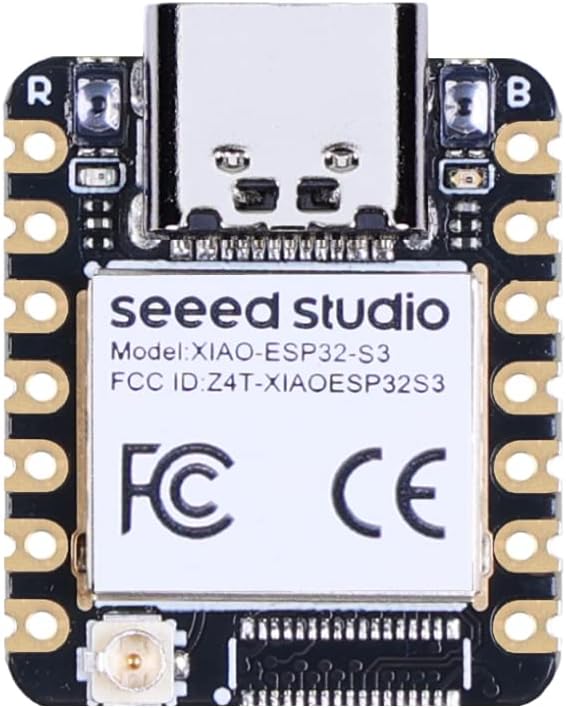
The Seeed Studio XIAO ESP32S3 is designed for projects where space and power efficiency are paramount. Its thumb-sized form factor makes it the perfect solution for wearables and portable IoT devices. With a 4.7 rating users praise its balance of compactness and full-featured ESP32-S3 performance. It supports Arduino and MicroPython ensuring compatibility with existing libraries and projects.
We may earn a commission when you buy through this link, at no additional cost to you.
This board features a specialized power design that includes lithium battery charging management. It offers deep sleep modes consuming as little as 14μA making it ideal for long-term battery-powered applications. The U.FL antenna port allows for external antenna attachment extending wireless range beyond the standard integrated antenna. Its surface-mount design ensures no components block the back enabling clean installation on custom boards.
The compact size means GPIO access is concentrated and requires careful planning for complex wiring. However, the rich interface options still provide sufficient connectivity for most sensors and displays. Developers building smart tags or health monitors will find this board offers the best physical footprint. It maintains full wireless capabilities despite its miniature dimensions.
We recommend the XIAO for wearable technology and battery-operated sensors. It is the top choice for projects where size constraints dictate the hardware selection. Its low power characteristics ensure longevity in untethered applications.
Deep sleep modes and battery charging management ensure long operation times for portable devices.
The U.FL port allows for external antenna connections improving range in challenging environments.
We may earn a commission when you buy through this link, at no additional cost to you.
The ESP32-P4-NANO is tailored for applications requiring significant image and voice processing power. It utilizes the ESP32-P4 chip with RISC-V dual-core processors delivering high performance for complex algorithms. This board stands out with hardware accelerators for JPEG codec and image signal processing making it suitable for camera-based IoT projects.
We may earn a commission when you buy through this link, at no additional cost to you.
It features rich human-machine interfaces including MIPI-CSI and DSI for direct connection to displays and cameras. The Ethernet port provides reliable wired networking options alongside Wi-Fi and Bluetooth. With 32MB PSRAM it can handle large data buffers required for media streaming and AI tasks. The secure boot features add a layer of protection for sensitive data transmission.
The focus on media processing means this board may consume more power than standard options. It is best suited for stationary devices where power efficiency is secondary to performance. Users developing video analytics or audio recognition systems will find this hardware indispensable. The extensive GPIO options ensure compatibility with various peripherals.
We recommend this board for advanced multimedia and computer vision applications. It offers capabilities that exceed typical microcontroller limits making it a powerful tool for specialized development. Its architecture supports future-proofing for more demanding AI tasks.
JPEG and H264 hardware support offloads processing from the CPU enabling smooth video operations.
MIPI interfaces allow direct connection to high-resolution screens without additional driver complexity.
We may earn a commission when you buy through this link, at no additional cost to you.
The Waveshare 3PCS ESP32-S3 Mini Development Board provides a cost-effective solution for projects requiring multiple nodes. Each board features the ESP32-S3FH4R2 chip with full dual-core performance and wireless capabilities. This kit is perfect for distributed sensor networks or classroom environments where several units are needed simultaneously. Users appreciate the balance of performance and affordability in this package.
We may earn a commission when you buy through this link, at no additional cost to you.
These modules feature castellated edges allowing direct soldering onto carrier boards for custom designs. They include onboard ceramic antennas ensuring reliable connectivity without external components. Independent clock supply settings allow for fine-tuning power consumption based on specific operational needs. The 2MB PSRAM offers sufficient buffer for general IoT tasks and data logging.
Pros users must solder the module themselves which may be a barrier for beginners. However, this enables integration into compact custom PCBs without bulky headers. The low power consumption modes are well implemented for battery projects. It is a robust choice for production prototypes where board integration is required.
We recommend this pack for developers planning multi-node systems or custom PCB designs. It offers flexibility and cost savings that individual boards cannot match. The quality of the modules is consistent and reliable for professional use.
Castellated pads enable direct mounting onto custom carrier boards for compact final designs.
A three-pack allows for rapid deployment of sensor nodes across a distributed area.
We may earn a commission when you buy through this link, at no additional cost to you.
The ELEGOO ESP-32 Super Starter Kit is an all-inclusive package designed for those new to microcontroller programming. It contains over 35 modules including sensors displays and motors providing everything needed to start building immediately. With a 4.3 rating users value the detailed tutorials that guide them through 30+ projects. It is an excellent resource for students and hobbyists entering the world of IoT.
We may earn a commission when you buy through this link, at no additional cost to you.
The kit centers around the powerful ESP-32 board with dual-core processing and Wi-Fi Bluetooth connectivity. Each component is selected for reliability and ease of use with clear labeling. The step-by-step instructions include circuit diagrams and code snippets ensuring a smooth learning curve. Users can progress from basic LED circuits to complex smart home applications.
The ESP-32 core is a legacy chip compared to newer S3 versions but remains fully capable for learning. It lacks some advanced features like USB-C and BLE 5.0 found in modern boards. However, for educational purposes the cost and component variety outweigh these limitations. It allows users to master fundamental concepts before upgrading.
We recommend this kit for beginners who want a structured learning path without sourcing parts separately. It provides a complete ecosystem for hands-on exploration. The included resources make it a self-contained introduction to embedded development.
Structured tutorials ensure a step-by-step progression from basic electronics to advanced IoT projects.
Over 35 modules allow for a wide range of experiments without needing additional purchases.
We may earn a commission when you buy through this link, at no additional cost to you.
The Arduino Nano 33 IoT is optimized for secure and connected applications requiring trusted data transmission. It features a built-in u-blox ATECC608A Secure Element that provides hardware-level encryption. This makes it ideal for projects handling sensitive information where software security is insufficient. With a 4.5 rating it is trusted for its reliability and official Arduino support.
We may earn a commission when you buy through this link, at no additional cost to you.
This board runs on a SAMD21 ARM Cortex-M0+ microcontroller which is efficient for low-power applications. It includes integrated Wi-Fi and Bluetooth connectivity via the u-blox NINA-W102 module. The 256KB flash memory offers ample space for cloud-based applications and configuration data. Pre-soldered headers simplify prototyping allowing for quick breadboard connections without manual soldering.
While it lacks the raw processing power of ESP32 chips it excels in security and ease of use. The secure element ensures that cloud communication is encrypted from the source protecting data privacy. Users should note that it may not support advanced edge AI tasks due to processor limitations. It remains a strong choice for secure sensors and controllers.
We recommend this board for projects where data integrity and security are primary concerns. It offers a robust platform for industrial and commercial IoT where trust is critical. The ease of integration with Arduino Cloud further simplifies deployment for secure systems.
The secure element ensures that all data communication is encrypted using hardware-backed keys.
The ARM Cortex-M0+ processor is optimized for low power consumption in sensor networks.
We may earn a commission when you buy through this link, at no additional cost to you.
The ESP-WROOM-32 ESP32 Board is a reliable and affordable option for creating multiple connected nodes. This 3-pack provides three fully functional boards ready for immediate integration into projects. With a 4.4 rating it is appreciated for its consistent performance and proven ESP32 chipset. It is widely used in commercial products due to its stability and extensive documentation.
We may earn a commission when you buy through this link, at no additional cost to you.
These boards feature integrated dual-mode Wi-Fi and Bluetooth capabilities supporting AP and STA modes. The onboard antenna and RF filter ensure stable connectivity without external hardware. They run on FreeRTOS and support Arduino IDE for simplified development workflows. Users can implement ultra-low power modes for battery efficiency in monitoring applications.
One drawback is the use of Micro-USB instead of the modern USB-C standard. This means older cables must be used which may be less durable than USB-C connectors. However, the low cost per unit offsets this inconvenience for large batches. It remains a workhorse for general ESP32 development tasks.
We recommend this pack for projects requiring multiple units or cost-effective prototyping. It offers a solid foundation for wireless connectivity tasks without breaking the bank. The reliability of the ESP32 chip ensures long-term stability in deployed systems.
Support for AP STA and combined modes allows versatile connectivity for different network needs.
The ESP32 chipset has been industry-proven for years ensuring stable operation in diverse environments.
We may earn a commission when you buy through this link, at no additional cost to you.
The ELEGOO 3PCS ESP-32 Dev Boards offer a modern update to the classic ESP32 design with USB-C integration. This three-pack delivers reliable connectivity with the convenience of reversible connectors. With a 4.7 rating users enjoy the improved physical interface and fast programming speeds. It is an ideal choice for developers who need modern connectivity without high costs.
We may earn a commission when you buy through this link, at no additional cost to you.
Each board features the CP2102 USB-to-UART bridge ensuring stable connections for power and data. Over-the-air update support allows firmware changes without physical access to the device. The dual-core performance handles sensor processing and automation logic efficiently. Bluetooth 4.2 provides sufficient range for most short-range device interactions.
While it lacks the newer Bluetooth 5.0 features the core functionality remains robust for general tasks. The USB-C standard ensures durability and easier cable management. This board is well-suited for projects where frequent reprogramming is necessary. The inclusion of OTA support adds flexibility for remote maintenance.
We recommend this set for projects requiring USB-C convenience and multiple nodes. It balances cost with modern interface standards effectively. It is a strong contender for general IoT development where upgradability is key.
USB-C provides reversible connection and faster data transfer for efficient programming.
OTA support enables updating devices over Wi-Fi removing the need for physical access.
We may earn a commission when you buy through this link, at no additional cost to you.
Selecting the right board involves evaluating processor power connectivity options and physical constraints to ensure your project succeeds.
The processor determines how well the board handles complex tasks like image processing or machine learning. Boards with ESP32-S3 or RISC-V cores offer higher performance compared to legacy ESP32 chips. Look for dual-core options if your project requires multitasking or heavy computational loads. Higher clock speeds generally translate to faster data handling capabilities.
Wi-Fi and Bluetooth standards vary between boards with some offering newer versions like BLE 5.0 or Wi-Fi 6. These newer standards provide better range and energy efficiency for battery-powered devices. Check if your project requires specific protocols like Matter or legacy Bluetooth. Ensure the antenna design matches your deployment environment for optimal signal strength.
Flash and SRAM sizes dictate how much code and data the board can store on the device. Larger memory is crucial for applications that store assets or require complex buffering. For basic sensor nodes standard memory is usually sufficient. Advanced media processing tasks benefit significantly from higher PSRAM availability.
Battery life depends on the board's ability to enter deep sleep modes efficiently. Boards designed for wearables often feature specialized power management ICs. Consider if your project needs to run on a coin cell or larger battery pack. Dynamic clock scaling helps reduce energy use when full performance is not required.
The size and pin layout of the board must fit your enclosure or carrier design. Compact boards like XIAO are better for space-constrained wearables. Standard Nano or UNO sizes offer easier breadboard compatibility for prototyping. Ensure that the mounting holes and connector placement match your mechanical requirements.
Check if the board supports your preferred programming language like C or Python. Official boards often have better library support and documentation for the Arduino IDE. Third-party boards might require specific drivers or community plugins to function correctly. Consider the availability of online resources for troubleshooting potential issues.
Evaluate the number and type of GPIO pins available for sensors and displays. Features like CAN bus or DACs are essential for industrial or analog projects. USB-C ports provide a more reliable connection than Micro-USB for data and power. Ensure that the board supports protocols like I2C and SPI for external device communication.
Pricing varies significantly between official boards and third-party clones or multi-packs. If you need multiple units a bulk pack might offer better value per board. Official boards may cost more but include better quality control and warranty options. Balance the initial cost against the long-term reliability needs of your project.
Begin by installing the latest Arduino IDE or compatible editor on your computer to ensure you have all necessary drivers. Connect your board using a high-quality USB-C or Micro-USB cable depending on the model you chose. Verify the connection by checking the IDE's port manager and selecting the correct COM port for communication.
Configure your development environment by selecting the appropriate board profile from the tools menu. For ESP32 boards ensure you install the necessary board support packages to unlock all features. Write your code and verify it before uploading to prevent any potential hardware issues during flashing. Use the serial monitor to debug output and check sensor readings in real time.
Protect your board from electrostatic discharge by handling it carefully during soldering or insertion. Avoid exposing it to moisture or extreme temperatures during operation or storage. If you use it for long-term projects consider adding a protective enclosure to prevent physical damage. Regularly update your firmware to benefit from security patches and performance improvements.
Yes the Arduino Nano ESP32 is fully compatible with the Arduino IDE which simplifies the development process. You can select the board from the Tools menu and upload sketches using standard C++ libraries. This compatibility ensures that you can leverage the vast ecosystem of existing Arduino projects and resources.
The ESP32-S3 offers enhanced features including better AI support and native USB OTG compared to the original ESP32. It also includes more GPIOs and improved Bluetooth 5.0 capabilities. These improvements make it a superior choice for modern IoT applications requiring advanced connectivity and processing power.
Most of the boards listed including the official Nano ESP32 support MicroPython. This allows developers to use Python for faster prototyping and simpler scripting tasks. However you must flash the appropriate MicroPython firmware to the board before using it.
No most boards in this list include integrated Wi-Fi and Bluetooth chips. This means you do not need external modules to connect to networks. The built-in wireless capabilities reduce the complexity and size of your final circuit design.
The Seeed Studio XIAO ESP32S3 is excellent for battery projects due to its low sleep current and charging management. It offers deep sleep modes that minimize power draw significantly. This makes it ideal for devices that must run for months on a single charge.
Many third-party boards offer high quality and are often used in production products. However official boards provide better long-term support and documentation. For hobby projects third-party options are reliable enough but consider official boards for critical commercial applications.
We have reviewed ten top choices ranging from the official Arduino Nano ESP32 to powerful alternatives like the UNO R4. Each option brings unique strengths suited for different project scales and budgets. Whether you prioritize compact size raw processing power or cost-efficiency there is a board for your needs.
When selecting your final choice consider your project's specific requirements for power and connectivity. Prioritize features that directly impact your application performance such as RAM size or Bluetooth versions. Always ensure that the board you choose has adequate support for future updates and maintenance.
Prices and availability fluctuate so please verify the latest details before finalizing your purchase. Choosing the right hardware early can save time and frustration during the development phase. With the right board your next IoT project will be off to a successful start.