
Procolored K13-Lite DTF Printer
3.7Editor score
One-touch ink pumping
Touchscreen interface
LiteHead Technology
Starting a custom apparel business requires reliable equipment that balances cost and performance. A Direct to Garment Printer for Beginners offers an accessible entry point into professional textile printing without the complexity of screen printing setups. These machines allow creators to produce vibrant, detailed designs directly on fabric with minimal training or experience.
We evaluated ten leading models based on print resolution, ink systems, maintenance requirements, and overall value. Each product was assessed for its suitability for new users, focusing on intuitive interfaces, support resources, and durability. Our goal is to highlight machines that reduce the learning curve while delivering consistent, high-quality results for small businesses and hobbyists.
Every pick in this guide showcases specific strengths like dual printing modes or advanced ink circulation. You will find detailed breakdowns of capabilities and potential trade-offs to inform your decision. Keep in mind that market availability and pricing can fluctuate, so always verify current details before purchasing your next printing solution.
3.7Editor score

4.3Editor score
5.0Editor score
As an Amazon Associate we earn from qualifying purchases.
This side-by-side comparison highlights the core specifications and unique selling points of each reviewed Direct to Garment Printer for Beginners. Use this overview to quickly identify which machine aligns with your specific production needs and technical comfort level.
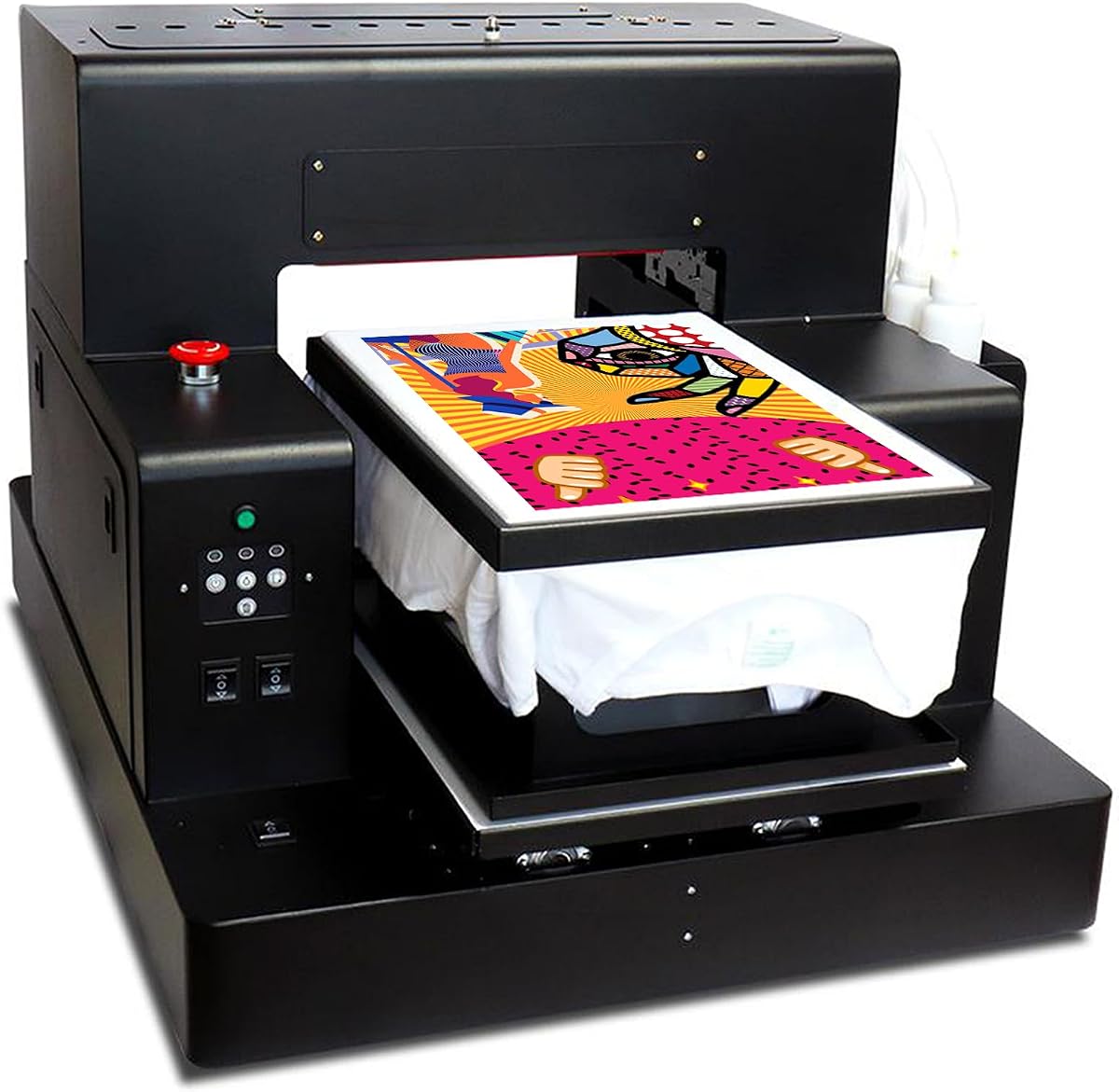


The DXZ A3 DTG Printer stands out as a top choice for beginners seeking high detail. With a resolution of 2800 x 1440 DPI it produces sharp text and vibrant colors on cotton apparel. Its water-based ink system ensures prints are soft and safe for sensitive skin.
We may earn a commission when you buy through this link, at no additional cost to you.
Key strengths include the included motorized sprayer and ink kit which streamline the setup process. The semi-automatic cleaning feature simplifies maintenance reducing downtime for small businesses. The printer handles custom apparel requests efficiently from t-shirts to tote bags.
While the setup is intuitive users must learn proper pretreatment techniques for best results. This requires time and practice which can be a hurdle for complete novices. However the quality gained justifies the initial investment in learning the workflow.
This machine is ideal for creators who prioritize print quality and environmental safety. It offers a professional result that rivals more expensive industrial systems. We recommend it for those ready to commit to the craft of garment printing.
The 2800 DPI resolution allows for fine text and complex graphics without pixelation.
Water-based inks are non-toxic and safe for children's clothing and sensitive skin.
We may earn a commission when you buy through this link, at no additional cost to you.
The Procolored K13-Lite offers an affordable entry into professional garment printing. It focuses on Direct to Film technology which is forgiving for beginners compared to direct ink application. The one-touch ink pumping and touchscreen make daily operations straightforward.
We may earn a commission when you buy through this link, at no additional cost to you.
Its LiteHead Technology reduces maintenance complexity keeping daily operation smooth for new users. The smart printhead protection system prevents unexpected interruptions during long runs. This model is perfect for Etsy sellers and home studios on a budget.
The main trade-off is that it produces transfers rather than direct prints on fabric. While versatile it may lack the soft hand feel of DTG prints. Users must manage powder application and curing separately adding steps to the process.
This printer is recommended for those prioritizing cost and ease of use. It delivers reliable results for small production runs without a steep learning curve. We see it as an excellent starting point for aspiring apparel entrepreneurs.
The intuitive touchscreen and one-touch pumping allow first-time users to start quickly.
Lower initial investment makes it accessible for startups and home-based businesses.
We may earn a commission when you buy through this link, at no additional cost to you.
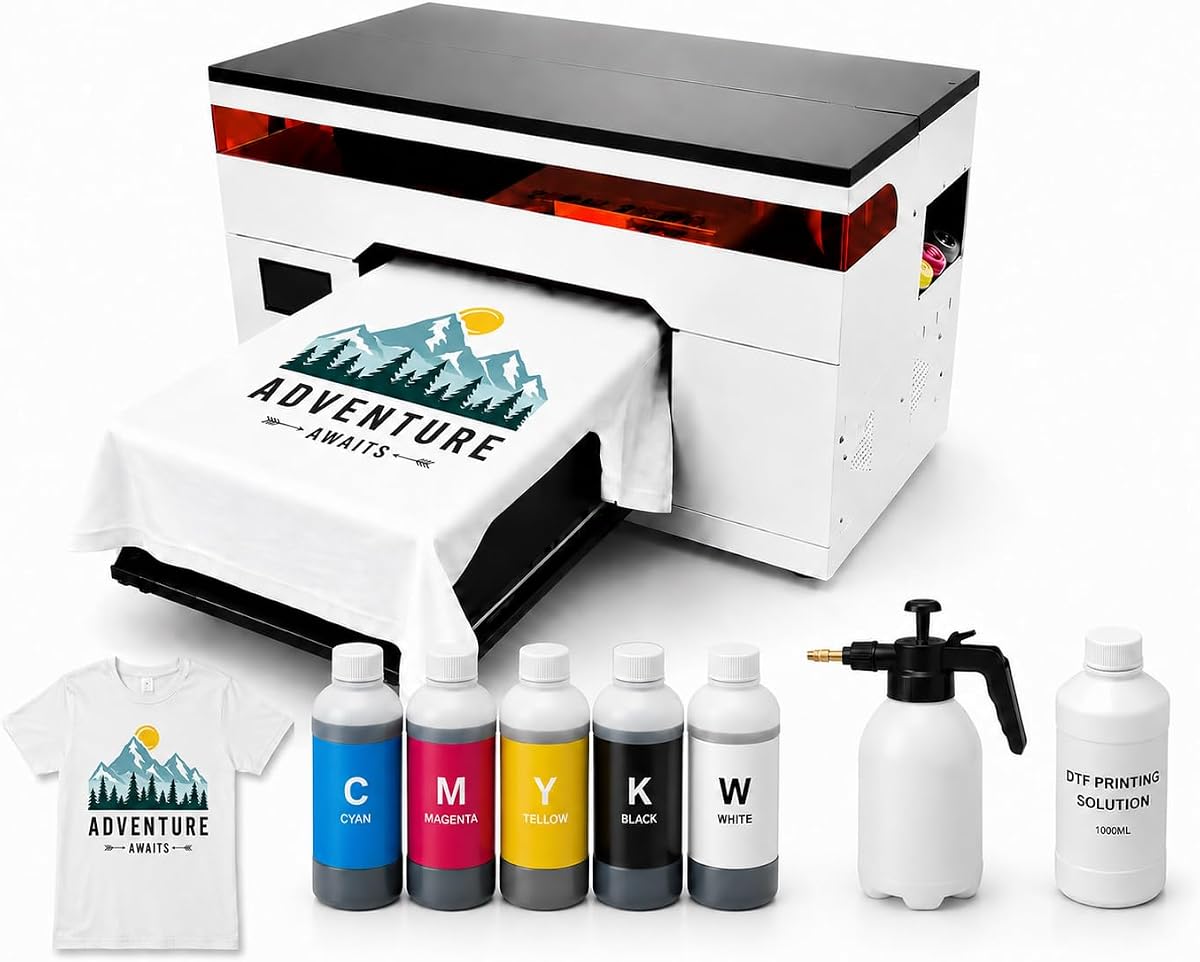
This A3 DTG Printer with Dual XP600 Printheads represents top-tier performance for serious beginners. The dual heads enable faster production speeds without sacrificing resolution. Its stable white ink system ensures consistency on dark garments which is often a pain point.
We may earn a commission when you buy through this link, at no additional cost to you.
The complete starter kit includes CMYKW inks and software to get users running immediately. The adjustable platform supports various garment thicknesses expanding production possibilities. Industrial printing performance is achieved with user-friendly controls.
The higher cost and physical footprint are significant considerations for small spaces. Buyers must allocate room for the machine and associated accessories. However the long-term reliability and quality offset these initial hurdles for growing businesses.
We recommend this for those ready to scale their custom apparel production. It offers a professional foundation that minimizes downtime and maximizes output. It is a worthy investment for creators prioritizing durability and speed.
Dual XP600 printheads deliver high-resolution output with smooth gradients and vibrant colors.
Adjustable platform accommodates different thicknesses from thin tees to thick hoodies.
We may earn a commission when you buy through this link, at no additional cost to you.
This bundle combines the K13-Lite with a smokeless oven for a complete home workflow. The curing unit reduces odors making it comfortable for indoor environments. Paired with expanded starter supplies it allows users to start printing immediately.
We may earn a commission when you buy through this link, at no additional cost to you.
The intelligent system detects particles and protects the printhead from damage. Stable white ink circulation maintains consistency during long sessions. This setup is ideal for small studios where ventilation is a concern.
While effective for transfers it adds another device to manage on the workbench. The oven requires additional space and power but simplifies the heat process. Users still need to handle film application carefully.
We recommend this bundle for creators seeking an all-in-one transfer solution. It reduces friction in the curing process and ensures consistent results. It is a practical choice for indoor production environments.
Smokeless oven reduces fumes making it ideal for home studios and small workshops.
Expanded supply package includes ink and powder to start production right away.
We may earn a commission when you buy through this link, at no additional cost to you.
This machine offers both DTG and DTF printing in one unit providing unmatched versatility. It prints directly on white clothes or transfers to any fabric. The large 16.5×11.7 inch area accommodates bigger designs comfortably.
We may earn a commission when you buy through this link, at no additional cost to you.
Vacuum suction keeps material in place ensuring precision during the run. The white ink circulation prevents nozzle clogs for consistent output. It supports canvas cotton and linen fabrics effectively.
Setup requires careful attention to switch between modes correctly. Since inks are not included users must source specific types for DTG versus DTF. This adds complexity to the initial acquisition process.
We recommend this for businesses needing flexibility for different orders. It reduces the need for multiple machines in small workshops. It is a robust choice for growing studios.
Switch between direct printing and transfer methods to handle diverse fabric needs.
Built-in vacuum suction prevents movement for accurate and reliable results.
We may earn a commission when you buy through this link, at no additional cost to you.
The DXZ A3 DTG Printer delivers exceptional detail with its 2800 DPI capability. It produces smooth gradients and vibrant full-color graphics on cotton apparel. The white ink mixing system ensures uniform prints on dark garments.
We may earn a commission when you buy through this link, at no additional cost to you.
Semi-automatic cleaning simplifies maintenance allowing users to focus on production. The electric sprayer included helps with pretreatment application. It is designed for straightforward garment printing without complicated steps.
Achieving perfect results still requires proper pretreatment and curing techniques. Beginners must invest time in learning these steps to avoid faded prints. However the included supplies make experimentation easier.
We recommend this for users who prioritize photographic quality. It balances high resolution with user-friendly operation effectively. It is a great tool for custom apparel businesses.
Ultra-high resolution produces sharp details and smooth gradients for professional results.
Semi-automatic cleaning keeps the printhead ready for daily printing tasks.
We may earn a commission when you buy through this link, at no additional cost to you.
This DSV model automates maintenance to keep the printer ready for days. The auto cleaning and moisturizing prevent clogs without manual intervention. A built-in cutter and heating plate streamline the finishing process.
We may earn a commission when you buy through this link, at no additional cost to you.
A two-year ink supply plan ensures users never miss a beat. The F1080 printhead is faster than standard models offering better throughput. It supports various fabrics including cotton polyester and leather.
While automation is high the transfer method adds a step to the workflow. Users still need to handle powder shaking and heat pressing separately. The ink cost may be higher over time but convenience is high.
We recommend this for busy small businesses needing reliability. It minimizes technical issues and maximizes uptime. It is a strong choice for high-volume production.
24/7 auto maintenance reduces manual cleaning and ensures readiness for daily use.
Two-year ink and supply plan prevents downtime and unexpected shipping costs.
We may earn a commission when you buy through this link, at no additional cost to you.
This multifunction printer supports both DTF and DTG modes for maximum flexibility. It prints patterns on film or directly on clothes depending on the fabric. The L1805 printhead delivers high resolution and vibrant colors.
We may earn a commission when you buy through this link, at no additional cost to you.
The upgraded white ink blending system prevents clogging and ensures flow. Vacuum suction platform secures materials for precise printing every time. It handles hats shoes and various textile items effectively.
Switching between modes requires adjustments and specific ink types. Users must understand the limitations of each mode to avoid errors. This complexity might be a hurdle for absolute beginners.
We recommend this for advanced users needing multi-faceted output. It offers a comprehensive solution for diverse garment types. It is ideal for expanding print businesses.
Supports both direct and transfer methods to work with almost any fabric.
Vacuum platform holds material firmly to prevent misalignment during printing.
We may earn a commission when you buy through this link, at no additional cost to you.
InkSonic pairs every printer with 24/7 one-on-one technical guidance and videos. This support network helps beginners build a smooth workflow without frustration. The printer features a wide 13-inch print width for larger designs.
We may earn a commission when you buy through this link, at no additional cost to you.
The 3-in-1 white ink protection system reduces pigment settling and clogging. Matched consumables ensure consistent color and less trial and error. It is compatible with various fabrics including blends and athletic mesh.
The transfer method adds a step for finishing which requires additional tools. While supported by the supplier the initial cost is notable for startups. However the included support reduces risks significantly.
We recommend this for those needing reliable ongoing assistance. It is designed for custom apparel businesses needing stability. It is a great choice for growing brands.
24/7 technical guidance and videos help beginners set up and use the machine easily.
Matched inks and film work together for better color consistency and detail.
We may earn a commission when you buy through this link, at no additional cost to you.
This automatic flatbed printer restores need to print picture effects excellently. It uses standard A3 format and eliminates pretreatment steps for some colors. The multi-purpose design handles T-shirts hats and shoes efficiently.
We may earn a commission when you buy through this link, at no additional cost to you.
Standard white ink stirring system with automatic timing reduces clogging risks. Board and printhead are easier to buy and replace making repairs affordable. This reduces failure rate compared to other models.
Users must manage chip resets and sensor issues on their own. This requires technical knowledge that may not be intuitive for all buyers. However the repairability offers long-term value.
We recommend this for users comfortable with DIY technical aspects. It balances cost and performance for versatile printing. It is a solid option for home studios.
Automatic stirring system reduces clogging risks for reliable daily operation.
Standard boards and printheads are easy to replace reducing long-term ownership costs.
We may earn a commission when you buy through this link, at no additional cost to you.
Selecting the right printer involves evaluating technical specs and operational needs. We break down the essential factors to help you find a machine that grows with your business.
DTG prints ink directly into fabric while DTF prints transfers on film. DTG feels softer on cotton and is better for detailed single pieces. DTF works on more materials like polyester and blends.
Choose DTG for natural fabrics and DTF for versatility across different garment types.
Resolution is measured in DPI or dots per inch. Higher DPI results in finer details and smoother gradients. Beginners should look for at least 1440 DPI to ensure professional results without pixelation.
Prioritize models with high DPI ratings to ensure your designs look sharp on fabric.
White ink is crucial for dark garments. Models with circulation systems prevent sedimentation and clogging which ensures consistent output. Water-based inks are safer and softer than other options.
Always choose a printer with an automatic white ink circulation system to avoid downtime.
Garment printers require regular cleaning to prevent printheads from drying out. Semi-automatic or automatic cleaning features reduce this burden. Look for models with protective features like printhead guards.
Select a machine with automated cleaning cycles to minimize daily manual tasks.
The printing platform determines the maximum size of your print. A3 size is standard for t-shirts. Ensure the platform fits your garment types and can adjust for different thicknesses.
Verify the platform size and adjustability to fit your specific garment inventory.
RIP software manages color and output settings. Some models come with dedicated software like Procolored Studio Lite. Ensure the software is compatible with your operating system.
Check software compatibility with your computer to ensure smooth workflow integration.
Beginner models often come with technical support and warranties. Look for brands offering phone assistance and clear manuals. Printhead warranties can save money on early failures.
Prioritize brands with strong support teams to help you resolve setup issues quickly.
Beyond the machine price consider ink and consumables costs. Some bundles include starter kits which save initial money. Factor in the cost of curing units for DTF printing.
Calculate the total cost of ownership including supplies to budget effectively.
Always preheat your printer before starting a job to ensure ink flows smoothly. Check the ink levels and run a nozzle test to confirm the printhead is clear. Load the garment flat on the platform and adjust the platen height to avoid jams.
After printing apply pretreatment to dark fabrics to help ink bond to fibers. Cure the prints using a heat press or dryer at the recommended temperature. Proper curing prevents fading and peeling over multiple washes.
Clean the printhead daily if you are not using the machine for long periods. Keep the machine in a dust-free environment to protect internal components. Regularly update the software to benefit from performance improvements.
DTG prints directly into fabric fibers for a soft feel suitable for cotton. DTF prints on a film that is transferred to the garment which allows printing on polyester. Both methods are viable for beginners depending on your product focus.
Use models with automatic white ink circulation to keep ink moving. Run nozzle checks regularly and clean the printhead when idle. Proper storage in a climate-controlled environment also helps prevent drying.
Yes you need RIP software to manage color profiles and output. Many manufacturers include this software. Ensure it runs on your operating system to avoid compatibility issues during setup.
DTG works best on cotton and natural fibers. DTF works on cotton polyester blends. Always check the ink manufacturer guidelines for compatibility. Pretreatment is essential for dark fabrics in both methods.
Beginner-friendly models reduce daily tasks but still need cleaning. Expect to run cleaning cycles and check ink levels daily. Weekly deep cleaning ensures the machine stays in good working condition.
Yes beginners can start small with these machines. They handle custom orders well without large batch requirements. Focus on quality and support to grow your customer base effectively.
Buy compatible ink from the manufacturer or approved suppliers. Using off-brand ink can void warranties and damage parts. Starter kits often include enough ink for initial testing and small jobs.
Most manufacturers offer one year on parts and six months on printheads. Check specific terms as they vary by model. Register your device to activate the full warranty coverage immediately.
We highlighted ten models ranging from budget transfer options to high-end direct printers. The DXZ and Dual XP600 models stand out for quality while the Procolored K13-Lite offers affordability. Each choice serves different business stages and technical skill levels.
Prioritize a printer with strong support and automation if you are new to printing. Features like ink circulation and automatic cleaning save time and reduce frustration. A machine that simplifies maintenance helps you focus on creativity and sales.
Always verify current availability and prices before finalizing your purchase. Specifications and supply bundles may change over time. Invest in a system that fits your space and workflow for long-term success.