
Ortizan C7 Powered Studio Monitors
4.6Editor score
Bluetooth 5.3 connectivity
Carbon fiber drivers
Balanced TRS inputs
Finding the right studio monitor is essential for any music producer or sound engineer aiming for professional results. Accuracy in frequency response ensures your mixes translate well across different playback systems. Clear imaging helps separate instruments and vocals effectively during the creative process.
We analyzed ten leading models based on technical specifications user feedback and industry reputation. Our comparison covers active speakers ranging from compact desktop units to powerful floor-standing options. Each entry highlights distinct strengths suited for various production environments and budget levels.
Each pick details key features like wattage driver materials and connectivity options available today. Prices fluctuate often so please verify current costs before making a purchase decision. We aim to provide transparent insights that empower you to select the best tools for your workflow.
4.6Editor score

4.8Editor score

4.5Editor score
As an Amazon Associate we earn from qualifying purchases.
This table provides a side-by-side overview of all ten selected monitors. It highlights core specifications such as driver size power output and input types to help you quickly identify the right fit for your studio setup.



The Yamaha HS5 stands out as a top choice for producers seeking uncompromised accuracy. Rated highly by users and professionals alike, it delivers a flat response that reveals every nuance in your mix. Its reputation for reliability makes it a staple in many home and professional studios.
We may earn a commission when you buy through this link, at no additional cost to you.
Its bi-amped design with 45W for the woofer and 25W for the tweeter ensures dynamic clarity. The 5-inch cone woofer paired with a 1-inch dome tweeter covers a range from 54 Hz to 30 kHz. This range is sufficient for most EDM production needs while maintaining transparency.
While the price is higher than entry-level options, the sonic purity justifies the investment. Some users might find the bass response limited for sub-heavy genres without a subwoofer. However, the accuracy provided allows for confident decisions during mastering.
This monitor is ideal for producers who prioritize truth in sound over added coloration. It suits those willing to invest in tools that ensure their tracks translate well. If you value long-term performance and accuracy, the HS5 is a strong recommendation.
The monitors emphasize sonic purity without any coloring or alternation of the original sound, ensuring you hear exactly what you recorded.
XLR and TRS phone jack inputs accept balanced or unbalanced signals, offering versatile integration with various audio interfaces and mixers.
We may earn a commission when you buy through this link, at no additional cost to you.
The PreSonus Eris E4.5 offers excellent entry-level performance for producers on a budget. It delivers accurate sound suitable for music production and multimedia reference. With 50 watts of power, it provides enough volume for small studio spaces without sacrificing tonal balance.
We may earn a commission when you buy through this link, at no additional cost to you.
Its woven-composite woofers deliver tight bass that is felt rather than just heard. The 1-inch silk-dome transducers ensure superior stereo imaging from various angles. Acoustic tuning controls let you customize output to your specific room acoustics.
While not as robust as larger models, it avoids excessive resonance common in cheaper speakers. Some bass response is naturally limited by the driver size. For the price, however, the clarity and features are hard to beat.
This monitor is perfect for beginners or secondary setups where budget is a concern. It balances performance and cost effectively. If you need reliable near-field monitoring without breaking the bank, the Eris E4.5 is a top choice.
High and low-frequency tuning controls allow you to customize your audio output for your ears, room size, and speaker orientation effectively.
Includes TRS balanced inputs, RCA inputs for consumer electronics, and a front-panel 1/8-inch aux input for convenient phone or tablet use.
We may earn a commission when you buy through this link, at no additional cost to you.
The Edifier MR5 delivers professional-grade sound with its 3-way active crossover system. Rated 4.5 stars, it combines a 5-inch woofer, 3.75-inch mid driver, and 1-inch silk dome tweeter for detailed reproduction. Its high power output ensures it can fill mid-sized rooms with clarity.
We may earn a commission when you buy through this link, at no additional cost to you.
Hi-Res Audio certification means it supports 24-bit/96kHz wired and wireless audio via LDAC. Physical knobs and the ConneX app allow for precise room acoustic tuning. This level of control helps tailor sound to your specific listening environment accurately.
It requires a stable surface due to its size and build quality. The higher price reflects its premium components and features. For those seeking top-tier fidelity, the MR5 justifies the investment with its versatility.
Ideal for serious producers who need detailed mids and smooth highs. It also works well for immersive music listening. If you demand the best resolution and power in this category, the MR5 is an excellent choice.
A dedicated mid-range driver handles frequencies between the woofer and tweeter, reducing distortion and improving vocal clarity significantly.
Supports LDAC Bluetooth for high-resolution wireless audio, ensuring your streaming sources match the fidelity of your studio monitors.
We may earn a commission when you buy through this link, at no additional cost to you.
The KALI AUDIO LP-6 V2 offers robust performance for its price point. It features a 6.5-inch driver paired with a 1-inch tweeter and 80 watts of bi-amped power. Users report accurate sound that reveals mix details without harshness or coloration.
We may earn a commission when you buy through this link, at no additional cost to you.
Its updated boundary EQ ensures consistent output regardless of placement against a wall or on a desk. The low-noise design minimizes hiss, which is critical for quiet passages in tracks. This makes it suitable for critical listening and mixing tasks.
Note that it is often sold as a single unit, requiring separate purchase of a pair. The cabinet is bulky, so ensure you have adequate desk space. However, the sound quality rivals models costing significantly more.
Recommended for producers needing deeper bass than 5-inch monitors offer. It bridges the gap between entry-level and professional tiers. If you want high fidelity without overspending, the LP-6 V2 is a compelling option.
Improved noise reduction and low distortion upgrades provide clear sounds even at low volumes, essential for critical monitoring sessions.
Boundary EQ allows high-quality audio output whether monitors are placed on stands against walls or on desks, adapting to any setup.
We may earn a commission when you buy through this link, at no additional cost to you.
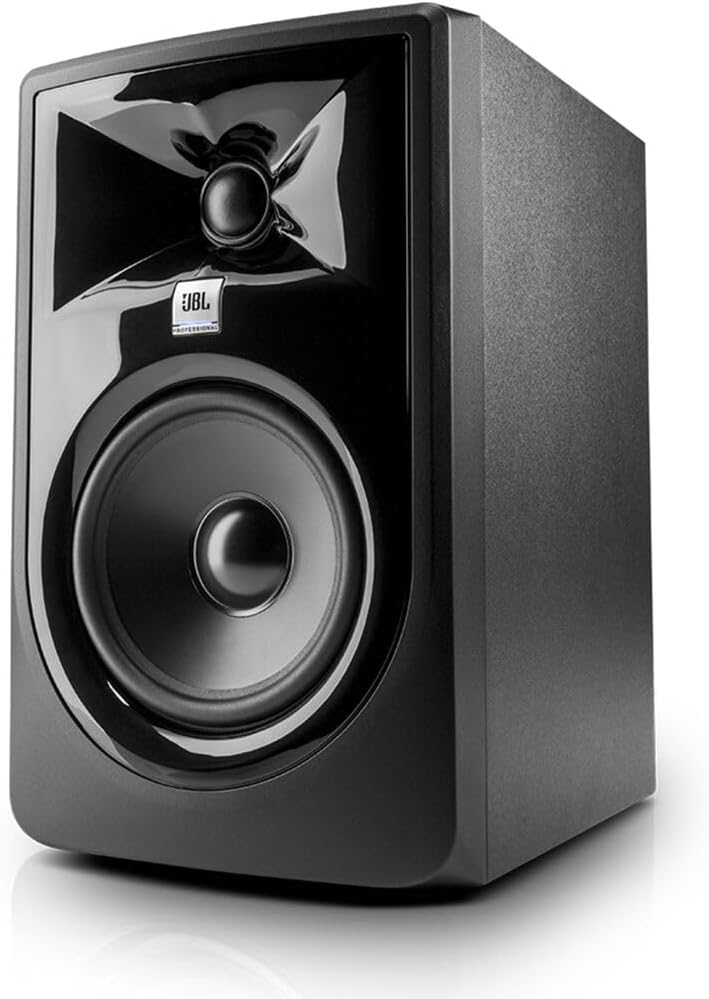
The JBL 305P MkII uses a patented Image Control Waveguide for precise imaging. With dual 41-Watt Class-D amplifiers, it delivers dynamic range and deep bass. The boundary EQ trim adjusts frequencies to suit your room for accurate mixes.
We may earn a commission when you buy through this link, at no additional cost to you.
Its wide sweet spot means you can hear balanced sound even if not sitting directly between speakers. The Slip Stream port enhances bass response. Users praise its ability to translate mixes accurately to other systems.
While the highs are detailed, some find them slightly sharp at high volumes without careful placement. The grill is plastic, though it protects the driver well. The sound profile remains reliable for various genres.
Ideal for podcasting and music production where stereo imaging is crucial. It offers professional features at a mid-range price. If you need a wide listening area without losing detail, the 305P MkII is a great pick.
The Image Control Waveguide delivers precise immersive sound with a wide sweet spot, ideal for music production and podcasting scenarios.
Boundary EQ and HF Trim adjust low and high frequencies to suit any room, ensuring accurate mixes for vloggers and producers alike.
We may earn a commission when you buy through this link, at no additional cost to you.
The Ortizan C7 offers surprising clarity for its low cost. It includes Bluetooth 5.3 for wireless playback alongside TRS, RCA, and AUX inputs. Built with carbon fiber drivers, it provides precise mid-low frequencies and smooth highs.
We may earn a commission when you buy through this link, at no additional cost to you.
A 24-bit DAC captures digital audio directly via USB to minimize loss. This ensures top audio performance even when wired. The design allows connection to professional gear like mixers for small production setups.
It lacks the low-end punch of larger 8-inch monitors due to 3.5-inch drivers. The cabinet is lightweight which may cause slight vibration at high volumes. For the price, the sound fidelity remains impressive.
Great for students or casual creators needing versatile connectivity. It handles both music production and casual listening well. If you want affordable speakers that support Bluetooth and balanced inputs, the C7 is ideal.
Built with RCA inputs ensuring a lossless connection for surround sound systems or professional audio gear without signal degradation.
Stable BT 5.3 technology lets you pair smartphones or tablets in seconds, enabling wireless music playback without dealing with messy wires.
We may earn a commission when you buy through this link, at no additional cost to you.
The PreSonus Eris E7 XT features a 6.5-inch woven composite low-frequency transducer. Its 1.25-inch silk-dome tweeter provides smooth highs with minimal distortion. Included software adds value for producers starting out.
We may earn a commission when you buy through this link, at no additional cost to you.
The EBM waveguide yields a wide sweet spot and solid imaging. Acoustic tuning controls let you tailor the monitor to your space, adjusting levels and trimming frequencies. This ensures accurate mixing regardless of room acoustics.
Note this is a pack of 1 so you need two for stereo. It requires a dedicated power outlet which adds cable management considerations. The sound quality and features exceed expectations at its price.
Excellent for producers needing more bass than 4 or 5-inch options. It fits well in home studios needing tunable sound. If you want deep lows and flexible controls, the E7 XT is a smart buy.
The 6.5-inch woven composite low-frequency transducer gives deep lows, essential for producers working with sub-heavy electronic genres.
Comes included with Studio One Prime and Studio Magic plug-in suite, offering over $1000 USD worth of music production software.
We may earn a commission when you buy through this link, at no additional cost to you.
The Mackie CR4.5BT combines studio-quality sound with tone control and Bluetooth. It connects to audio interfaces, gaming consoles, and smartphones easily. A tone knob shapes sound, boosting bass or sparkle for different use cases.
We may earn a commission when you buy through this link, at no additional cost to you.
Its silk dome tweeter and 4.5-inch woven woofer deliver clean, articulate sound with low end. A location switch optimizes audio for desktop or bookshelf placement. The built-in headphone output adds convenience for private monitoring.
While great for gaming and partying, the tone knob may color sound for critical work. Bass is present but not deep for heavy sub genres. However, it balances versatility with decent audio accuracy.
Perfect for creators who need one speaker for work and leisure. If you want flexibility without sacrificing clarity, the CR4.5BT is a strong contender. It suits those needing an adaptable audio solution.
Use the tone knob to shape the sound, starting with the transparent response you expect from studio monitors for custom sound.
Flip the location switch between desktop and bookshelf speaker modes to optimize the CR4.5BT for wherever you place them.
We may earn a commission when you buy through this link, at no additional cost to you.
The Edifier MR3 delivers Hi-Res Audio certification with a flat response from 52Hz to 40kHz. It offers 36 Watts RMS output with a peak SPL of 92.5dB. Balanced TRS, RCA, and AUX inputs provide rich connectivity.
We may earn a commission when you buy through this link, at no additional cost to you.
You can switch between Music, Monitor, and Custom modes via the ConneX app. This allows precise adjustments and personalized EQ control. The MDF cabinet reduces distortion for ideal audio production and video editing.
Due to its compact size, the bass response is limited. It won't fill large rooms but suits desk setups perfectly. The app support makes it a modern choice for those needing control.
Recommended for desktop users with limited space. If you need a small monitor that still supports Hi-Res audio, the MR3 works well. It balances performance and form factor effectively.
Experience superior sound with Hi-Res Audio certification, delivering a flat response across 52Hz to 40kHz for precise monitoring.
Fine-tune your sound precisely through the EDIFIER ConneX app, offering in-depth adjustments and personalized EQ control options.
We may earn a commission when you buy through this link, at no additional cost to you.
The Yamaha HS8 provides a deep frequency response from 38Hz to 30kHz. With 75W LF and 45W HF bi-amp system, it delivers high-performance 120W power. The 8-inch cone woofer handles demanding low frequencies with ease.
We may earn a commission when you buy through this link, at no additional cost to you.
Large magnets in an Advanced Magnetic Circuit design ensure stability and precision. It maintains the neutral sound typical of the HS series. This makes it a top choice for mastering and professional mixing environments.
It requires significant desk space and power. The size may not fit small home studios comfortably. However, for critical listening requiring extended bass, few match its capability.
Ideal for professional setups where space allows. If you need authoritative bass and clear mids, the HS8 is the definitive choice. It remains a gold standard for studio monitoring.
With a 38Hz to 30kHz frequency response, these monitors cover the full audio spectrum, including sub-bass frequencies often missed.
Large magnets in an Advanced Magnetic Circuit design ensure stability and precision for clean and detailed sound output.
We may earn a commission when you buy through this link, at no additional cost to you.
Selecting the right studio monitor requires understanding your room size, budget, and audio needs. This guide outlines key factors to consider before making a purchase.
Driver size determines bass response and volume capacity. Smaller drivers like 4 or 5 inches suit near-field desks, while 6.5 to 8 inches offer deeper low-end for larger rooms. Consider your space and genre requirements when choosing size.
Choose driver sizes based on room dimensions and required bass depth.
Power measured in watts affects loudness and headroom. Higher wattage ensures clean sound at high volumes. Look for bi-amped models where power is split between woofer and tweeter for better performance.
Opt for bi-amped systems with sufficient wattage to avoid distortion.
Inputs should match your audio interface. Balanced TRS and XLR reduce noise over long cables. Unbalanced RCA is acceptable for short consumer connections. Ensure the monitor supports your existing gear.
Select inputs that match your interface to maintain signal integrity.
Room size and placement impact sound quality. Monitors with acoustic tuning controls help adjust to wall proximity or desk placement. Proper positioning minimizes standing waves and reflection issues.
Prioritize models with room tuning options for better sound accuracy.
A flat frequency response ensures no part of the sound is exaggerated. Look for ranges covering 40Hz to 20kHz. This accuracy helps you mix tracks that sound good everywhere.
Check for flat response curves to ensure true sound reproduction.
Higher cost doesn't always mean better sound. Budget models offer solid entry points while premium ones add features. Balance features like Bluetooth or software bundles against your actual needs.
Compare features against price to find the best value for your use case.
Robust cabinets reduce resonance. MDF or composite materials are preferred over cheap plastics. Good build ensures long-term durability and consistent performance.
Look for sturdy construction materials like MDF for reduced resonance.
Features like Bluetooth, apps, or headphone jacks add convenience. These are useful for casual listening or quick checks. Focus on core audio performance first before secondary extras.
Evaluate secondary features based on your daily workflow needs.
Place monitors equidistant from your listening position and form an equilateral triangle. Tilt them slightly inward so the tweeters aim at your ears for optimal stereo imaging.
Use acoustic treatment like bass traps or panels to reduce room reflections. This ensures you hear direct sound rather than room coloration, leading to accurate mixes.
Dust regularly with a soft brush and avoid placing liquids near the speakers. Keep them away from direct sunlight to prevent fading or heat damage to internal components.
Studio monitors have a flat frequency response to avoid coloring sound, whereas regular speakers boost bass or highs for enjoyment. This makes monitors better for professional audio production where accuracy is key.
Balanced inputs like TRS or XLR reduce noise, especially with longer cables. While unbalanced works for short distances, balanced connections are safer for professional setups to ensure clean signal transmission.
Active monitors have built-in amplifiers, making them easier to set up without extra gear. Passive ones require external amps but offer flexibility. For most users, active monitors provide a more convenient solution.
Use acoustic tuning controls on the monitor to adjust for wall proximity. Position them away from corners to reduce bass buildup. Professional room correction software can also help if your monitor supports it.
For smaller home studios, 4 to 5-inch monitors are ideal. They fit well on desks without overwhelming the space. Larger rooms may require 6.5 to 8-inch models for sufficient bass extension.
Most laptops lack professional outputs, so use an audio interface. However, some monitors offer USB or Bluetooth for direct connection to smartphones or tablets for casual use.
Quality studio monitors can last many years with proper care. Factors like usage frequency and environmental conditions affect lifespan. High-quality drivers and amps are built to withstand daily professional use.
Many models sell as pairs for stereo setups, while others offer singles. Check product details carefully to ensure you get two units if stereo is required.
The Yamaha HS5 leads our list with its balance of accuracy and reliability. The PreSonus Eris E4.5 offers budget-friendly quality while the Edifier MR5 brings premium features.
Prioritize sound neutrality and room fit over extra features like Bluetooth. Your workflow benefits most from monitors that reveal mix details accurately. Invest in quality tools that will grow with your production skills.
Prices vary by retailer and stock so always check current offers before buying. Verify input compatibility and power requirements to ensure smooth integration into your studio setup.