
Sipeed Tang Nano 20K
4.5Editor score
Affordable entry level FPGA board
Supports open source Linux systems
Compact size for portable projects
Explore the top 10 FPGA retro consoles for 2026, comparing performance, emulation cores, and hardware features for authentic classic gaming experiences.
FPGA retro consoles offer enthusiasts a way to experience classic games with hardware-accurate timing and signal output. Unlike software emulation, these devices use field programmable gate arrays to replicate original hardware logic. This guide helps you find the best board for your needs.
We evaluated ten leading FPGA retro consoles based on their hardware specifications, emulation capabilities, and user feedback. Each entry includes details on connectivity, supported cores, and expansion options to help you make an informed decision for your gaming setup.
Every product section outlines key strengths and potential trade-offs to guide your purchase. Prices and availability can change frequently so verify current stock before ordering. Use this resource to select the right device for your retro gaming journey.
4.5Editor score

4.5Editor score

4.5Editor score
The following table provides a side by side comparison of all ten selected FPGA retro consoles. Review the core specifications and unique features to determine which device aligns best with your technical requirements and gaming preferences.

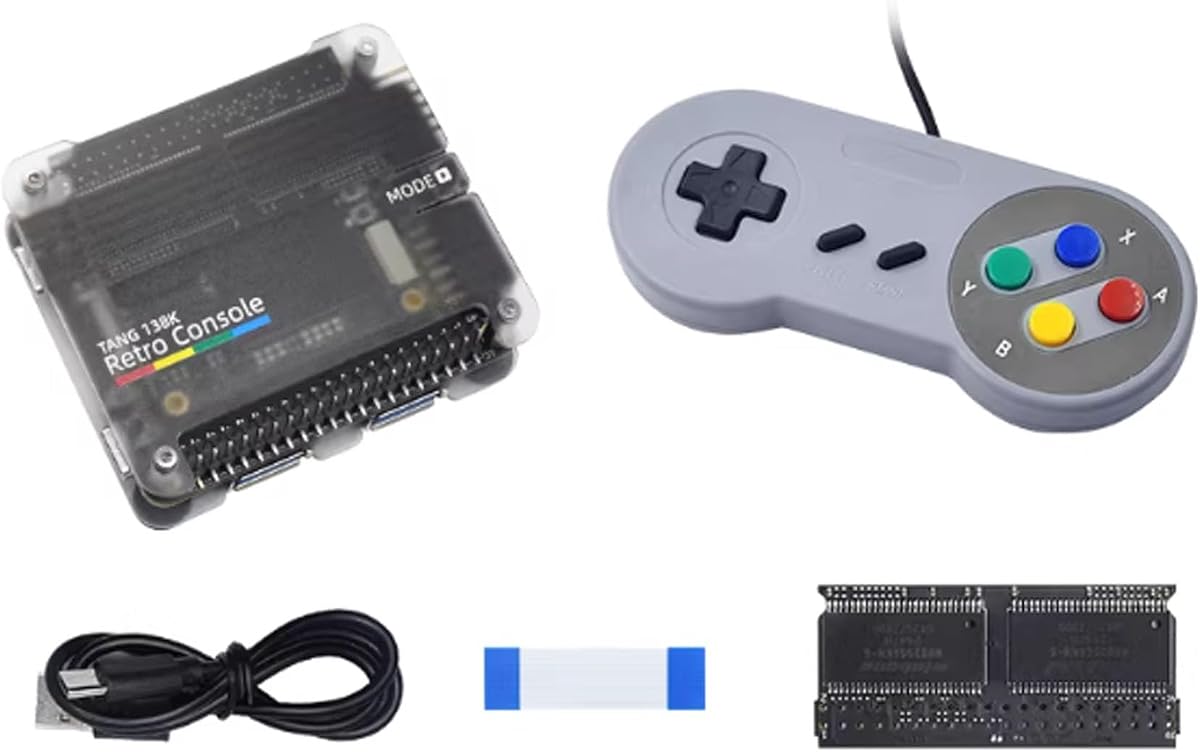


The Sipeed Tang Console 138K stands out as a top tier FPGA retro console designed for serious enthusiasts. It offers substantial logic capacity allowing for complex hardware emulation and custom projects. Users appreciate the ability to run multiple retro cores simultaneously with high performance.
We may earn a commission when you buy through this link, at no additional cost to you.
Its dual PMOD ports and PCIe connectivity make it highly versatile for expanding functionality beyond standard gaming. The HDMI output ensures compatibility with modern displays for crisp visuals. This board is particularly strong for developers who want to build custom FPGA designs.
While powerful, the device requires some technical know how to configure and use effectively. The premium pricing may not suit casual users looking for plug and play simplicity. However, those seeking maximum flexibility will find the investment worthwhile.
This console is ideal for hobbyists and developers who prioritize expandability and raw FPGA capacity. It serves well as both a gaming device and a learning platform. For the best balance of features and performance, this model comes highly recommended.
Dual PMOD ports and PCIe interfaces allow for diverse hardware expansion and custom peripherals.
138K LUT4 capacity supports complex emulation cores and simultaneous multi core execution.
We may earn a commission when you buy through this link, at no additional cost to you.
This variant of the Tang Console provides flexibility through selectable System on Modules. It targets developers who need robust hardware for both gaming and software development tasks. The inclusion of a BL616 MCU adds significant utility for debugging and control.
We may earn a commission when you buy through this link, at no additional cost to you.
Connectivity is a major strength with USB 3.0 and HDMI ensuring fast data transfer and high resolution video output. The board supports a wide range of Tang Core emulator cores for accurate retro gaming experiences. It functions well as a Linux dev board too.
New users might find the initial setup challenging without prior FPGA experience. Documentation and community support help but there is a learning curve. Price varies by SOM choice which can impact budget planning for specific projects.
For those wanting a versatile platform that bridges gaming and development, this console fits well. It offers enough power for advanced emulation and custom hardware projects. Consider your technical comfort level before committing to this option.
Choose between 60K or 138K SOMs to match project requirements and budget constraints.
Onboard BL616 MCU enables efficient FPGA debugging and UART communication support.
We may earn a commission when you buy through this link, at no additional cost to you.
The 138K Development Board variant emphasizes efficiency with fanless operation and low power draw. This makes it ideal for quiet environments where noise is a concern. The RISC-V hardcore provides additional processing capabilities beyond standard FPGA logic.
We may earn a commission when you buy through this link, at no additional cost to you.
Its compact size allows easy integration into portable setups or custom enclosures. HDMI output supports high resolution displays while USB 3.0 ensures fast peripheral communication. Developers benefit from the ability to run complex cores silently.
Passive cooling may limit sustained high load performance without proper airflow. Users should consider enclosure ventilation when planning long sessions. The technical requirements mean this is best suited for experienced hobbyists rather than novices.
This device is perfect for builds where silence and space efficiency are priorities. It delivers strong performance for retro emulation without active cooling noise. Prioritize ventilation and technical readiness when selecting this model.
Engineered for fanless operation ensuring quiet performance during extended gaming sessions.
800MHz RISC-V AE350 hardcore adds versatile processing power for diverse applications.
We may earn a commission when you buy through this link, at no additional cost to you.
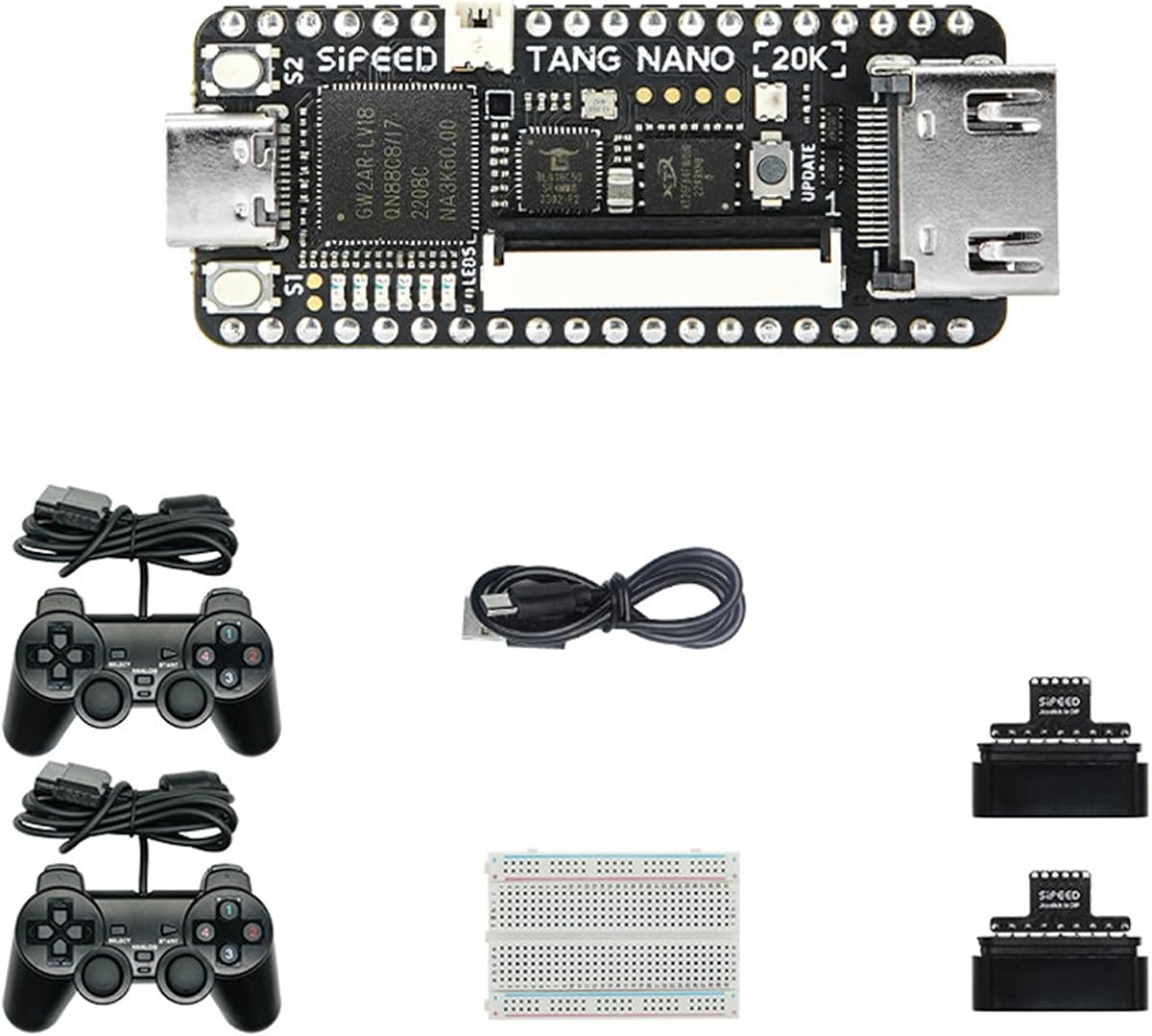
The Tang Nano 20K offers a budget friendly entry into FPGA based retro gaming and development. Its small size makes it easy to include in portable projects or tight spaces. The board supports Linux RISCV enabling software development alongside hardware emulation.
We may earn a commission when you buy through this link, at no additional cost to you.
With 64Mbits SDRAM it handles data buffering efficiently for basic to moderate emulation tasks. The GW2AR-18 chip provides sufficient logic cells for many classic console cores. JTAG and microSD ports allow for flexible configuration and storage.
Users seeking to emulate more complex systems may find the logic capacity limiting compared to higher end boards. It is best suited for learning FPGA concepts or simpler retro systems. Cost effectiveness remains its primary advantage for beginners.
Ideal for students or hobbyists starting with FPGA development. It balances performance and price well for foundational projects. Consider upgrading to a larger model if you need more advanced emulation capabilities later.
Affordable pricing makes this board accessible for new developers and students.
Enables full Linux OS usage alongside FPGA programming for versatile projects.
We may earn a commission when you buy through this link, at no additional cost to you.
This kit version of the Tang Nano 20K comes prepared for immediate development use. It includes the BL616 debugger which simplifies FPGA programming and testing workflows. Users can run a Linux system directly on the board for broader application support.
We may earn a commission when you buy through this link, at no additional cost to you.
HDMI and JTAG ports provide essential connectivity for video and programming. The open source nature encourages community collaboration and sharing of custom cores. It serves well for educational purposes and prototyping retro gaming hardware.
Assembly may be required depending on the specific kit contents which can add time before use. Some users might find the documentation sparse without community help. Verify the included components match your needs before purchasing.
A solid choice for those who want a complete starting package without sourcing extra parts. The debugging capabilities streamline development significantly. Ensure you have the necessary tools for assembly and setup.
Onboard BL616 chip simplifies FPGA downloading and USB serial communication.
Community driven development allows sharing of cores and custom software modifications.
We may earn a commission when you buy through this link, at no additional cost to you.
This single board computer variant highlights multi display capabilities for connected setups. It supports open source RISCV Linux allowing flexible software environments. The hardware is capable of running NES and similar retro cores smoothly.
We may earn a commission when you buy through this link, at no additional cost to you.
With 64Mbits SDRAM it ensures stable frame rates for lighter emulation tasks. The BL616 debugger aids in development and configuration tasks easily. It is suitable for projects requiring multiple video outputs without extra hardware.
Advanced users seeking complex cores might find the logic limits restrictive. It is best positioned for entry level projects focused on basic retro gaming. Price remains competitive for those needing display versatility.
Choose this if you need multiple video outputs on a budget. It balances simplicity with enough power for standard emulation. Verify display compatibility before integrating into your existing setup.
Supports driving multiple display devices simultaneously for expanded setups.
RISCV Linux enables custom software development and community core sharing.
We may earn a commission when you buy through this link, at no additional cost to you.
The Arduboy FX-C delivers immediate entertainment with over 300 classic games preloaded. It is exceptionally portable fitting easily into a wallet or pocket. The device supports multiplayer via USB-C and link cables for engaging sessions.
We may earn a commission when you buy through this link, at no additional cost to you.
Beyond gaming it serves as a STEM tool allowing users to code custom games with C++. The ATmega32u4 processor handles gameplay smoothly while maintaining low power draw. OLED display provides clear visuals despite its small form factor.
It is restricted to 8-bit style games which may limit appeal for fans of later systems. The small screen size can be challenging for users with vision difficulties. Battery life is impressive though game choices are fixed.
This device is ideal for casual gamers and educators seeking a portable coding tool. Its ready to play nature reduces setup time significantly. Prioritize mobility and coding potential when selecting this model.
USB-C and I2C link cables enable head-to-head multiplayer without online requirements.
Arduino IDE tutorials allow users to learn C++ and create custom games.
We may earn a commission when you buy through this link, at no additional cost to you.
The Trimui Brick Pro features a large 3.95 inch screen for immersive viewing. Its high resolution display delivers crisp graphics for classic and modern games. The device supports over 20 emulators allowing a broad library of playable titles.
We may earn a commission when you buy through this link, at no additional cost to you.
Hall effect joysticks provide precise control without drift issues over time. Battery capacity supports extended play sessions with fast charging via USB-C. The Allwinner chip ensures stable performance across various game systems.
Users must provide their own memory card which adds to initial setup effort. No games are included so sourcing ROMs is required before play. This suits users who prefer custom libraries over preloaded options.
Choose this console for screen size and control quality. It suits travel and long sessions well. Verify you have a suitable SD card before first use.
Dual Hall effect sensors ensure accurate analog input without physical wear.
1024×768 IPS screen offers vivid colors and wide viewing angles.
We may earn a commission when you buy through this link, at no additional cost to you.
This handheld runs a custom Linux system designed for stable retro gaming performance. It comes with a game library so users can start playing immediately. The device focuses on compatibility with classic consoles and user friendly navigation.
We may earn a commission when you buy through this link, at no additional cost to you.
Performance is tuned to avoid frame drops on supported systems. Build quality is durable for regular use in various settings. It balances portability with enough power for 8-bit and 16-bit systems well.
Advanced users may find customization options limited compared to open development boards. The design prioritizes function over flashy aesthetics which may appeal to practical users. Verify game list before purchase to ensure desired titles are present.
Ideal for those wanting a ready to use device without technical setup. It offers reliable performance for core retro gaming. Check supported systems to confirm compatibility with your favorite titles.
Pre-installed library allows immediate gaming without card or software configuration.
Custom Linux environment provides consistent performance for retro emulation.
We may earn a commission when you buy through this link, at no additional cost to you.
This handheld features a fully laminated display that reduces glare and improves contrast. It runs an open source Linux system allowing full control over installed emulators. Dual Hall joysticks provide accurate analog control for precise gameplay.
We may earn a commission when you buy through this link, at no additional cost to you.
Battery life supports hours of play with fast charging for quick top ups. Internal storage is expandable up to 1TB for extensive game libraries. RGB mood lighting adds aesthetic customization for the device.
No pre-installed games mean users must source and transfer ROMs themselves. This offers flexibility but requires initial setup time. Linux features are powerful but may need reading to configure fully.
Select this device for display quality and customization options. It suits users who want control over their gaming environment. Ensure you have files ready before first boot.
OCA lamination reduces glare and enhances visual clarity for better viewing.
TRIMUI OSD allows full control over emulator libraries and system settings.
We may earn a commission when you buy through this link, at no additional cost to you.
Selecting the right FPGA retro console involves balancing technical capabilities with practical needs. The following factors will help you prioritize features based on your intended usage.
FPGA capacity measured in LUT4s determines how complex emulation cores can be. Higher capacity boards support more recent systems or multiple simultaneous cores. Check the chip specs to ensure it matches your target console library.
Prioritize higher capacity if you plan to run advanced cores or custom FPGA designs.
Ports like HDMI USB and PMOD expand how you interact with the device. HDMI ensures modern display support while USB allows controller connections. PMOD ports enable external hardware integration for custom setups.
Verify port types match your existing peripherals to avoid additional adapters.
Linux based systems offer flexibility for custom software and open source cores. Some boards provide pre-installed OS images while others require manual setup. Consider your comfort level with Linux environments before purchasing.
Choose boards with active community support for better software availability.
Form factor impacts how you use the device at home or on the go. Compact boards fit easily in custom enclosures while larger ones suit stationary setups. Weight and dimensions matter for portable handheld configurations.
Select size based on whether you prioritize mobility or expandability.
Power draw and cooling methods affect noise and battery life. Fanless designs offer silent operation but may limit sustained performance. High power boards may need external cooling solutions.
Check thermal limits to ensure stable performance during long sessions.
Cost varies significantly by capability and included features. Budget models offer entry point access while premium boards provide advanced tools. Consider long term value beyond initial purchase price.
Balance your budget with required features to avoid overspending.
Active communities provide essential support for FPGA development and troubleshooting. Good documentation reduces learning curves for configuration and coding. Check forums and wikis before buying a niche device.
Ensure sufficient support resources exist for the board you choose.
Not all boards support every retro core due to hardware limits. Verify the device supports your target systems like NES SNES or GBA. Some boards offer verified core lists to simplify selection.
Review core compatibility tables to confirm support for your preferred games.
Begin by installing the provided software or flashing the core firmware to your device. Follow the manufacturer guide to set up HDMI and controller connections properly.
Use quality power sources to prevent voltage spikes that could damage components. Regularly update firmware and cores to maintain performance and compatibility with new systems.
Store devices in dry environments to protect electronics from moisture. Clean ports periodically with compressed air to ensure reliable peripheral connections.
FPGA retro consoles replicate original hardware logic using programmable circuits. This provides hardware accurate timing and video output that software emulation cannot match. Results are more authentic with minimal latency and input lag.
Basic models require little programming while advanced boards need some coding skills. Pre-built cores can be loaded without writing new code. Check if the device includes user friendly interfaces or needs manual configuration.
Most FPGA consoles include HDMI outputs for direct connection to modern displays. Some models also support USB for controller input. Verify resolution support to match your TV capabilities for best visuals.
Ownership rights depend on whether you possess original copies of the games. Downloading ROMs from the internet may violate copyright laws. Using FPGA devices for legally owned backups is generally acceptable in many jurisdictions.
Many models support microSD cards or USB storage for extra game libraries. Check the supported file systems and card size limits. Proper formatting ensures the device can read files without errors.
Dev boards offer broader functionality for coding and hardware testing while consoles focus on gaming. Dev boards require more setup but allow custom projects. Consoles simplify the experience for immediate play.
Most support USB controllers for multiplayer on the same screen. Some models feature network or link cables for separate systems. Check specific connectivity options to confirm multiplayer capabilities.
FPGA devices are built for longevity with no moving parts to wear out. Lifespan depends on power management and physical care. Proper storage and updates keep performance consistent over years of use.
The top picks highlight devices that balance performance versatility and ease of use. Sipeed options lead for developer flexibility while handhelds like Trimui and Arduboy suit portable gaming.
Prioritize FPGA capacity if you need advanced cores or choose handhelds for travel. Match connectivity needs to your existing controllers and display setup.
Prices and availability vary by market conditions. Verify current specs and stock before finalizing your purchase to ensure the best fit for your setup.