
LONELY BINARY Logic Analyzer Kit
4.2Editor score
24MHz sampling rate across 8 channels
Includes breakout boards for easy connection
Comprehensive accessory kit included
Discover the top logic analyzers for electronics projects. This guide compares features, channels, and speeds to help you debug circuits efficiently.
Choosing the right logic analyzer is crucial for anyone working on electronics projects. Whether you are debugging microcontrollers or analyzing communication protocols, the right tool can save hours of frustration. A good analyzer captures digital signals accurately and decodes complex data streams for easy interpretation.
We evaluated ten top-rated logic analyzers based on channel count, sampling rate, software compatibility, and ease of use. Our comparison includes budget-friendly options for students and high-performance units for professional engineers. Each product was assessed for its ability to handle common protocols like I2C, SPI, and UART effectively.
This guide provides detailed reviews and specifications to help you find the best fit for your needs. You will see real-world performance insights and key trade-offs for each model. Please note that prices and availability change frequently, so check current listings before purchasing.
4.2Editor score

4.5Editor score
4.8Editor score
The following table offers a side-by-side comparison of all ten selected logic analyzers. It highlights key specifications such as channel count, sampling rates, and memory depth to help you make an informed decision quickly.


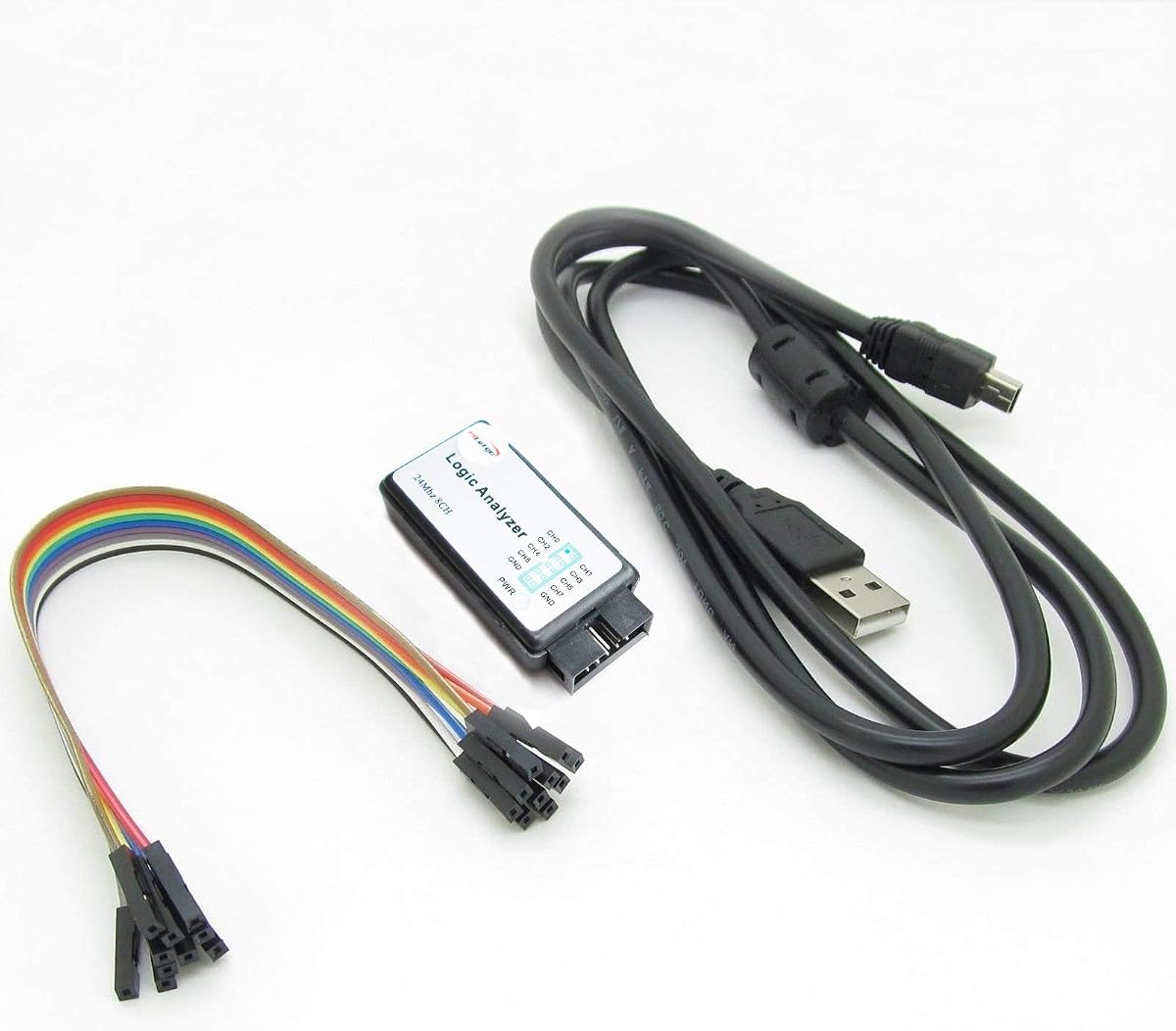


The LONELY BINARY Logic Analyzer Kit stands out as a highly accessible entry point for hobbyists and students. With a rating of 4.2 stars, it offers a solid balance of performance and affordability. Its standout quality lies in the comprehensive accessory kit that includes breakout boards and alligator clips, making setup immediate.
We may earn a commission when you buy through this link, at no additional cost to you.
This analyzer captures digital signals at up to 24MHz across 8 channels, which is sufficient for many common protocols like I2C, SPI, and UART. The base module and breakout board simplify connections to breadboards and microcontrollers, reducing the need for extra adapters. It comes with both USB-A and Type-C cables, ensuring compatibility with older PCs and modern laptops alike.
While the 24MHz sampling rate is lower than high-end models, it is ample for debugging Arduino projects or simple embedded systems. The portable storage case keeps components organized and safe, which is a thoughtful addition for on-the-go work. Users should be aware that software capabilities might be more basic compared to premium brands.
This kit is ideal for beginners or those working on STEM projects where budget is a constraint. It provides everything needed for immediate use without hidden costs. For anyone starting out in electronics debugging, this analyzer offers a reliable foundation to learn protocol analysis effectively.
The included accessory kit ensures you can start testing right out of the box without buying extra parts.
Dual USB cables support both legacy and modern computers, enhancing flexibility for diverse workstations.
We may earn a commission when you buy through this link, at no additional cost to you.
The LA1010 USB Logic Analyzer is a versatile tool designed for serious embedded system development. Rated at 4.5 stars, it provides 16 input channels with a 100MHz sampling rate per channel. Its standout quality is the included KingstVIS PC software which offers real-time signal visualization and extensive protocol decoding.
We may earn a commission when you buy through this link, at no additional cost to you.
This analyzer allows simultaneous capture of 16 digital signals, converting them into clear waveforms instantly on your PC screen. It decodes over 30 standard protocols including CAN and UART which accelerates debugging significantly. The design is portable and handles long-term signal monitoring with low power consumption making it suitable for field work.
Cross-platform compatibility is a major strength as it supports Windows 10 and 11 along with macOS and Linux. Drivers auto-install with no configuration needed which simplifies the setup process. However users should note that it focuses solely on digital signals and does not offer analog input capabilities like some mixed-signal tools.
This device is ideal for developers working on ARM or FPGA systems where protocol analysis is critical. Its balance of performance and price makes it a top recommendation for professionals seeking reliability. For those needing robust digital debugging without breaking the bank this analyzer delivers excellent value.
Decoding over 30 protocols helps you understand complex communication streams without manual interpretation.
Auto-installing drivers on Windows Mac and Linux remove friction from your workflow environment.
We may earn a commission when you buy through this link, at no additional cost to you.
The Saleae Logic Pro 16 represents the pinnacle of logic analysis technology available today. With a rating of 4.8 stars it offers 16 digital and analog inputs in a compact package. Its standout quality is the ability to decode 23+ protocols while capturing up to 500 MS/s digital sample rates.
We may earn a commission when you buy through this link, at no additional cost to you.
This analyzer uses PC memory over USB 3.0 to store over 10 billion digital samples which allows for extensive long-term monitoring. The analog sample rate reaches 50 MS/s providing detailed insight into signal integrity alongside digital data. It is designed to save time and frustration with intuitive software controls.
While the price is significantly higher than budget options the performance justifies the investment for professional engineers. The cross-platform support ensures it works seamlessly on Mac Windows and Linux systems. Some users might find it overkill for simple hobbyist projects but for complex debugging it is unmatched.
This device is best suited for professional teams working on high-speed embedded systems or mixed-signal designs. The superior software interface simplifies complex tasks making analysis more efficient. If you require top-tier accuracy and speed this logic analyzer is the definitive choice.
Combining digital and analog inputs lets you correlate logic states with voltage levels directly.
Billions of samples allow you to trace intermittent issues that occur over long periods of time.
We may earn a commission when you buy through this link, at no additional cost to you.
The Logic Pro 8 by Saleae offers a slightly more compact alternative to the Pro 16 while retaining top-tier performance. With an 4.8 rating it features 8 digital and analog inputs ideal for projects needing fewer channels. Its standout quality is the 500 MS/s digital sample rate which matches the higher-end model.
We may earn a commission when you buy through this link, at no additional cost to you.
This analyzer provides up to 10 billion digital samples and 500 million analog samples using USB 3.0 bandwidth. It supports decoding for SPI I2C and 23+ more protocols ensuring versatility across many device types. The ultra-portable design saves time and frustration during testing sessions.
The software experience is consistent with other Saleae products known for reliability and ease of use across platforms. While it has fewer channels than the 16 channel version it is often sufficient for many embedded development tasks. The price remains high but reflects the premium build and software quality.
This unit is perfect for professionals who do not need the full 16 channels but still demand high speed. It bridges the gap between basic hobbyist tools and heavy industrial gear. For reliable debugging with analog capabilities this analyzer is a strong contender in the premium category.
Reducing channel count slightly maintains high performance while making the device smaller and lighter.
Saleae software simplifies complex logic analysis with intuitive tools and automatic protocol recognition.
We may earn a commission when you buy through this link, at no additional cost to you.
This USB Logic Analyzer is specifically designed to be compatible with popular open source software like Saleae Logic and PulseView. Rated at 4.5 stars it provides 8 digital channels with a sampling rate up to 24MHz. Its standout quality is the ability to run on standard software without proprietary drivers.
We may earn a commission when you buy through this link, at no additional cost to you.
The logic sampling rate per channel can be adjusted down to 250KHz which allows for capturing slower protocols effectively. It operates with a voltage range of 0V to 5.5V making it safe for most standard microcontroller signals. Automatic protocol analysis for UART and IIC helps users understand data quickly.
While the 24MHz limit is lower than professional tools it is sufficient for many common Arduino and FPGA debugging tasks. The hardware is basic but functional for general applications around 10MHz. Users should expect a straightforward experience without advanced features like deep storage buffers.
This tool is ideal for hobbyists who prefer open-source software environments and flexible configurations. It provides a cost-effective way to monitor communication protocols without spending much. For casual debugging of standard digital logic this analyzer offers good functionality for the price.
Working with community software gives you access to frequent updates and custom protocol additions.
Multiple sampling rate options allow you to optimize capture depth based on your signal speed.
We may earn a commission when you buy through this link, at no additional cost to you.
The DSLogic Plus offers a unique dual-mode design that balances speed and memory effectively. Rated at 4.6 stars it supports 16 digital channels with a high 400MHz sampling rate in buffer mode. Its standout quality is the 256Mbits on-board SDRAM which captures fast signals independently of PC transfer speeds.
We may earn a commission when you buy through this link, at no additional cost to you.
In stream mode data transfers to PC memory in real time allowing for long sample durations. It supports various stream modes up to 100MHz on fewer channels which provides flexibility for different projects. The shielded fly wires and aluminum case help ensure cleaner waveforms by reducing interference.
The DSView software is open source and compatible with Windows macOS and Linux which is a significant benefit for users. However adjusting thresholds to 0.1 steps can require some tuning for optimal results. Users should note that stream bandwidth is lower than buffer speed so very long captures may be slower.
This device is ideal for engineers who need to capture high-speed edges without needing the highest streaming data rates. It offers a strong middle ground between budget and premium units. For those needing 16 channels with high sample rates this analyzer is a robust choice.
Switching between buffer and stream modes lets you prioritize speed or duration as needed.
Aluminum shielding and better wires reduce electrical noise for more accurate signal analysis.
We may earn a commission when you buy through this link, at no additional cost to you.
The HiLetgo USB Logic Analyzer is designed for simplicity and low-cost debugging needs. Rated at 4.5 stars it offers 8 channels with a sampling rate of 24MHz per channel. Its standout quality is the inclusion of an EMI ferrite ring on the USB cable which helps reduce electrical noise.
We may earn a commission when you buy through this link, at no additional cost to you.
The input voltage range supports standard logic levels up to 5.25V making it safe for many microcontroller projects. The sampling rate can be adjusted down to 25KHz which allows capturing slower signals efficiently. It supports standard communication protocols like UART and SPI out of the box.
While the hardware is basic it performs reliably for general applications around 10MHz. The impedance is typical for logic tools which ensures minimal loading on your circuits. Users should be aware that advanced features are limited compared to more expensive units.
This analyzer is perfect for hobbyists who need a reliable tool for basic protocol checking without breaking the bank. It serves as a great secondary tool for quick checks. For simple digital signal analysis this device offers excellent value and functionality.
The EMI ferrite ring on the cable helps ensure cleaner data by reducing external interference.
Compatible with standard logic voltage levels so you can connect safely to most boards.
We may earn a commission when you buy through this link, at no additional cost to you.
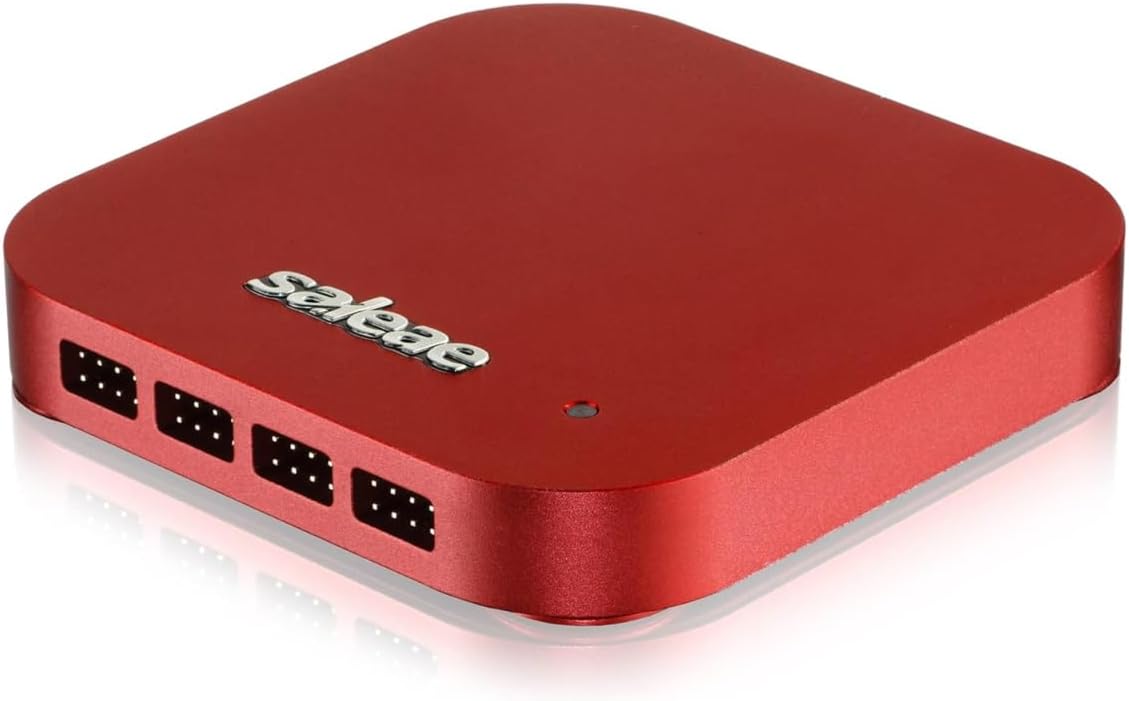
The Logic 8 by Saleae serves as an entry point into the premium analyzer ecosystem. With a rating of 4.5 stars it provides 8 digital and analog inputs in an ultra-portable design. Its standout quality is the compatibility with the same software used by more expensive models.
We may earn a commission when you buy through this link, at no additional cost to you.
It supports decoding for SPI I2C and 23+ more analyzers to help you understand common protocols. The digital sample rate reaches up to 100 MS/s while analog rates go up to 10 MS/s. It can capture billions of samples using PC memory over USB 2.0.
While it lacks the high speed of the Pro series it is sufficient for most embedded development needs. The user-friendly interface makes it easy for new users to get started quickly. The build quality is robust ensuring durability for professional work environments.
This device is ideal for professionals who need reliability but do not require extreme sampling speeds. It bridges the gap between hobbyist tools and high-end analyzers. For solid basic analysis with brand support this logic analyzer is a practical choice.
Sharing the same interface as top models reduces training time and increases workflow efficiency.
Digital and analog channels allow you to inspect voltage states alongside digital logic levels.
We may earn a commission when you buy through this link, at no additional cost to you.
This version of the DSLogic Plus highlights open source power for advanced users. Rated at 4.7 stars it supports 16 channels with a 400MHz sampling rate and deep memory. Its standout quality is the open source DSView software which allows for community-driven enhancements.
We may earn a commission when you buy through this link, at no additional cost to you.
Stream mode transfers data to PC memory for long sample durations while buffer mode captures high rates locally. It includes adjustable thresholds and shielded wires to ensure cleaner waveform analysis. Compatibility extends across many Windows versions as well as macOS and Linux systems.
The open-source nature means features evolve quickly though it may require more technical knowledge to configure. Users can find the software on GitHub and adapt it to specific needs. The hardware supports nearly 100 protocol decoders which is a significant advantage.
This analyzer is best for engineers who value open standards and need high speed without proprietary costs. It offers a powerful alternative to commercial tools. For those comfortable with community software this device provides excellent performance.
Open source code allows you to customize features and fix issues independently.
Choosing between stream and buffer lets you optimize for signal speed or duration freely.
We may earn a commission when you buy through this link, at no additional cost to you.
The Analog Discovery 3 combines multiple instruments into one USB device for versatile lab work. Rated at 4.5 stars it includes a logic analyzer alongside oscilloscope and power supply features. Its standout quality is the integration of multiple tools which reduces the need for separate devices.
We may earn a commission when you buy through this link, at no additional cost to you.
The logic analyzer provides 16 digital I/O channels at up to 125 MS/s which supports SPI I2C and custom protocols. It also includes programmable power supplies which allows you to power and test circuits simultaneously. The SDK supports C and Python scripting for advanced hardware control.
While it is not a dedicated logic analyzer it covers a wide range of debugging needs effectively. The software interface is flexible but may require time to learn compared to simpler tools. Users get significant value by having three tools in one compact package.
This device is ideal for students and engineers who want a complete lab bench in a USB stick. It saves space and cost compared to buying individual instruments. For comprehensive testing where mixed signals matter this analyzer is a versatile choice.
Integrating oscilloscope and power supply makes it a comprehensive solution for electronics labs.
SDK access lets you automate tests and integrate with your existing development workflows easily.
We may earn a commission when you buy through this link, at no additional cost to you.
Choosing the right logic analyzer involves evaluating several technical specifications that align with your project needs. This section outlines key factors to consider before making a purchase to ensure you get the best value and performance.
The number of channels determines how many signals you can observe simultaneously. Most basic analyzers offer 8 channels which is sufficient for microcontrollers and simple buses. Advanced users working on complex processors may require 16 or more channels to monitor data and control lines at once.
Always count the total signals you need to probe at one time and add a few extra for future projects.
Sampling rate defines the speed at which the analyzer captures signal changes. For standard protocols like UART I2C a 24MHz rate is often enough. High-speed interfaces or fast SPI protocols may require 100MHz or higher to avoid missing data edges.
Ensure the sample rate exceeds your highest signal frequency by at least five times for accurate capture.
Memory depth affects how long you can capture data without running out of storage. Limited memory may force you to capture shorter time windows. Deep memory allows you to record longer sequences which is useful for debugging intermittent issues that happen over time.
Look for devices with ample on-board memory or efficient PC memory usage for long duration recording.
Built-in protocol decoding saves time by converting raw binary into readable text data. Most tools support common protocols like SPI and UART but check for specific ones like CAN or JTAG if needed. Open-source software often offers broader decoders through community plugins.
Choose an analyzer that supports the specific protocols you use most often in your development work.
The quality of the software interface is just as important as the hardware. Ensure the software runs on your operating system whether it is Windows macOS or Linux. User-friendly tools with clear visualization can significantly speed up your analysis workflow.
Check for cross-platform support and ease of use to avoid friction during daily debugging tasks.
Connectivity options determine how the analyzer connects to your computer and test points. USB Type-C is becoming standard but ensure you have the right cables. Some devices include breakout boards which simplify connecting to breadboards and headers.
Opt for universal connectivity options that fit your current workstation setup without extra adapters.
Some logic analyzers also offer analog inputs allowing mixed-signal analysis. This is useful if you need to see voltage levels alongside digital states. Standard logic analyzers focus only on high and low states so verify your needs before buying.
Consider if you need voltage measurement capabilities to decide between pure logic or mixed signal tools.
Prices range from affordable hobbyist tools to expensive professional units. Determine your budget early to narrow down choices effectively. Entry-level options often suffice for learning while professionals may justify higher costs for reliability and speed.
Balance your performance needs with your available budget to select a sustainable option for your projects.
To begin using a logic analyzer connect it to your computer via USB and install the provided software. Launch the application and configure the settings to match your project signals such as voltage thresholds and sampling rate.
Attach the test probes to the circuit nodes you wish to monitor. Ensure the ground lead is connected to the circuit ground to avoid floating signals and noise issues. Use the software to start capturing data and visualize waveforms.
After use store the device and probes in a dry safe place to protect them from damage. Avoid bending the wires sharply which can break internal conductors over time. Regularly update your software to access new features and protocol decoders.
A logic analyzer captures digital signals representing high and low states while an oscilloscope measures analog voltage waveforms. Logic analyzers are better for debugging communication protocols and digital timing. Oscilloscopes provide detailed voltage amplitude information which is useful for power analysis.
While not strictly necessary a logic analyzer can save significant time debugging communication issues. It helps you see data exchange between components visually. For simple projects it might be optional but for complex IoT systems it is very helpful.
Most hobbyists find 8 channels sufficient for common microcontroller debugging. If you work on parallel buses or large FPGAs 16 channels is recommended. Choose more channels if you anticipate growing project complexity in the future.
Most logic analyzers require PC software to visualize and decode data. Some handheld models have built-in screens but software on a computer provides more detailed analysis. Ensure you have a compatible computer system before purchasing.
A sampling rate of 24MHz is generally sufficient for beginners learning standard protocols. It captures most common communication speeds accurately without being overwhelming. Higher rates are beneficial but often unnecessary for initial learning stages.
Open source logic analyzers can be very reliable if you are comfortable with technical setups. They often support community developed protocols and are cost effective. Check user reviews for stability before relying on them for critical professional work.
This guide has reviewed ten top logic analyzers suitable for various project needs and budgets. From the affordable LONELY BINARY kit to the professional Saleae Logic Pro 16 there is an option for every level of expertise.
Prioritize channel count and protocol support based on your specific debugging requirements to ensure long term value. A device that grows with your skills will serve you better than one that limits your projects quickly.
Remember to check current prices and availability before buying as these factors change frequently. Choosing the right tool can transform your debugging experience from frustrating to efficient and educational.