
Intel Core Ultra 9 285K
4.6Editor score
24 cores 24 threads
Up to 5.7GHz boost
Intel integrated graphics
Hybrid architecture design
Explore the top Cpus for Workstations ranked by performance and reliability. This guide compares leading models to help you select the right processor for your
Choosing the right CPU for your workstation is critical for professional productivity. Whether you edit video, render 3D models, or analyze complex data, the processor dictates system speed and efficiency.
We evaluated ten leading processors based on core count, thread performance, and real-world workstation reliability. Our analysis considers architectural advancements and platform compatibility for modern professional workflows.
Each entry below highlights key strengths and target use cases. Prices fluctuate frequently so verify current listings before purchasing. This guide helps you match hardware capabilities to your specific professional demands.
4.6Editor score

4.8Editor score

4.0Editor score
This table provides a side-by-side view of core counts, threading, and key architectural features across the top ten workstation processors. Use this to compare raw power and platform compatibility before deciding.


The AMD Ryzen Threadripper PRO 5955WX stands out as a top choice for professional workstations. With a 4.8 rating it delivers consistent power for heavy tasks.
We may earn a commission when you buy through this link, at no additional cost to you.
Its 16 cores and 32 threads handle rendering and simulation workloads efficiently. The up to 4GHz frequency ensures single-threaded tasks remain responsive during complex workflows.
DDR4 3200 memory support provides a cost-effective upgrade path. However the desktop processor design may require careful thermal planning for sustained loads.
Ideal for engineers and creators needing reliable throughput. Its balance of core count and frequency makes it a strong recommendation for mid-range to high-end builds.
Built-in data protection and manageability ensure secure operation over extended periods.
The 32 threads allow simultaneous background processing without stalling active projects.
We may earn a commission when you buy through this link, at no additional cost to you.
This processor offers an impressive 32 cores and 64 threads for demanding workloads. It targets users requiring maximum parallel processing power.
We may earn a commission when you buy through this link, at no additional cost to you.
The up to 4.2 GHz frequency boost ensures responsiveness. A massive 144MB cache supports heavy data sets without bottlenecks.
Eight-channel DDR4 and 128 PCIe 4.0 lanes offer unmatched I/O bandwidth. However the 280W TDP requires robust cooling solutions.
Recommended for high-end rendering farms or data analysis. Its longevity features provide confidence for mission-critical environments.
The 128 PCIe lanes enable multiple high-speed GPUs and storage arrays.
Built-in data protection ensures sensitive workstation data remains secure.
We may earn a commission when you buy through this link, at no additional cost to you.
This processor leverages Zen5 technology for significant performance gains. Its 96MB L3 cache improves throughput for latency-sensitive tasks.
We may earn a commission when you buy through this link, at no additional cost to you.
Delivering ~16% IPC uplift it provides smooth execution. The up to 5.2GHz max boost ensures peak performance for critical workflows.
Drop-in ready for Socket AM5 simplifies upgrades. However limited core count may restrict massive parallel processing.
Best for workloads favoring high clock speeds. The thermal performance allows stable operation under sustained loads.
96MB L3 cache reduces memory latency for complex calculations.
Zen5 architecture optimizes performance per watt for lower thermal output.
We may earn a commission when you buy through this link, at no additional cost to you.
As a 9000 series threadripper it aims to modernize workstation performance. It targets desktop workstations needing high capability.
We may earn a commission when you buy through this link, at no additional cost to you.
The 5.0 rating suggests strong initial reception. It promises battle-tested performance for artists and engineers.
Details remain scarce but the branding indicates professional focus. It likely supports latest PCIe and memory standards.
Recommended for early adopters of new workstation hardware. Its focus on getting more done in less time aligns with professional needs.
The 9000 series brings updated features to the Threadripper lineup.
Built for artists and engineers needing capability and reliability.
We may earn a commission when you buy through this link, at no additional cost to you.
This processor improves efficiency by combining P-cores and E-cores. It targets users needing performance without excessive power draw.
We may earn a commission when you buy through this link, at no additional cost to you.
Delivering up to 5.7 GHz unlocked boost it handles demanding tasks. The 24 cores (8 P-cores and 16 E-cores) allow flexible load distribution.
40MB Cache supports data storage for rapid access. Intel Optane Memory support adds flexibility for storage configurations.
Best for creators balancing budget and power. Its cooler runs quietly and quickly suitable for office environments.
Performance Hybrid Architecture prioritizes and distributes workloads to optimize efficiency.
Integrated Intel Graphics included reduces need for dedicated GPU in basic tasks.
We may earn a commission when you buy through this link, at no additional cost to you.
This processor offers smooth 100+ FPS performance for lighter workstation tasks. It is based on AMD Zen 5 architecture.
We may earn a commission when you buy through this link, at no additional cost to you.
Delivering up to 5.4 GHz Max Boost it handles rapid responsiveness. The 6 Cores and 12 processing threads provide multitasking capability.
Support for DDR5-5600 ensures memory speed matches core potential. It supports PCIe 5.0 on select motherboards for future proofing.
Ideal for users needing reliable office computing. Its unlocked status allows tuning for specific workload optimization.
Pure gaming performance with smooth 100+ FPS in popular games.
State-of-the-art Socket AM5 platform ensures modern connectivity.
We may earn a commission when you buy through this link, at no additional cost to you.
This processor provides dependable and fast execution of tasks with maximum efficiency. It targets better usability for increased productivity.
We may earn a commission when you buy through this link, at no additional cost to you.
The 5nm process technology ensures reliable performance. Its 8 MB L2 plus 96 MB L3 cache provides excellent hit rates.
Operating at 4.20 GHz clock speed it ensures fast instruction execution. Radeon Graphics controller supports amazing output capabilities.
Best for users needing a balance of speed and stability. The reliability makes it suitable for long duration rendering.
96 MB L3 cache memory provides excellent hit rate for short access times.
5 nm process technology ensures reliable performance with maximum productivity.
We may earn a commission when you buy through this link, at no additional cost to you.
This processor delivers leading max clock speed of up to 6.0 GHz. It enables smoother game play and higher frame rates.
We may earn a commission when you buy through this link, at no additional cost to you.
It includes 24 cores and 32 threads for heavy multitasking. Integrated Intel UHD Graphics 770 ensures basic video support.
Compatible with 600-series or 700-series chipsets. DDR4 and DDR5 platform support cuts load times for productivity.
Best for users prioritizing raw clock speed. Its high responsiveness suits time-sensitive professional tasks.
Leading max clock speed of up to 6.0 GHz gives you smoother game play.
DDR4 and DDR5 platform support cuts your load times for better efficiency.
We may earn a commission when you buy through this link, at no additional cost to you.
This processor delivers battle-tested performance and capability for artists and engineers. It belongs to the Ryzen Threadripper PRO 9000 WX-Series.
We may earn a commission when you buy through this link, at no additional cost to you.
The Shimada Peak 16-Core design supports getting more done in less time. It focuses on enabling professionals to complete complex projects.
Reliability is a key trait for this series. It targets desktop workstations requiring stable long-term operation.
Ideal for architects needing robust compute power. Its professional focus ensures it meets high industry standards.
Engineers and architects benefit from the ability to get more done in less time.
The PRO series provides unique reliability and manageability for secure work.
We may earn a commission when you buy through this link, at no additional cost to you.
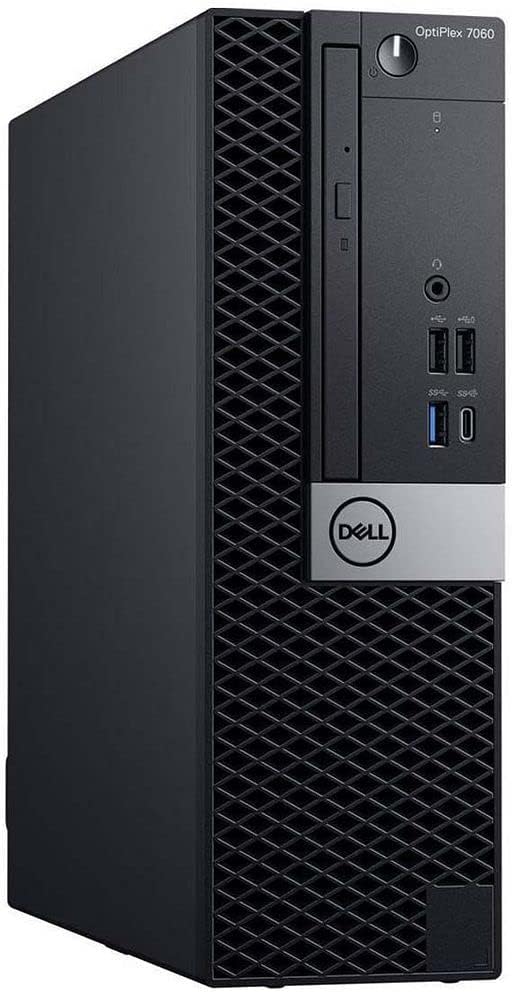
This desktop computer includes an Intel 6-core 8th Generation i7-8700 processor. It reaches up to 4.60 Ghz for efficient multitasking.
We may earn a commission when you buy through this link, at no additional cost to you.
Microsoft Windows 11 Pro redefines productivity alongside you. It is a reliable workstation for both home and business computing.
A blazing-fast new 512GB M.2 NVMe solid-state drive ensures high data transfer rates. The tower case allows for future expansion.
Best for users needing a complete office PC setup. Its ports support dual-monitor connections for better productivity.
Supports faster boot speeds and higher data transfer rates with NVMe SSD.
Suitable for both home and business computing with reliable multitasking.
We may earn a commission when you buy through this link, at no additional cost to you.
Selecting a workstation CPU requires balancing core counts, clock speeds, and platform costs. This guide details the factors that matter most for professional computing.
Higher core counts allow more parallel threads which benefit rendering and simulation. Look for at least 16 cores for serious creative work.
Prioritize higher core counts when your software supports multi-threaded processing.
Thread count determines how many tasks the CPU handles simultaneously. 32 threads offer significant multitasking advantages.
Ensure your workstation OS fully utilizes the available threads.
Base and boost clocks dictate how fast instructions execute. 4GHz+ is standard for workstation efficiency.
Prioritize high boost speeds for applications that rely on single-core performance.
L3 cache reduces memory latency for complex data sets. Workstations need at least 32MB for smooth operation.
Prioritize larger cache sizes for large file processing.
TDP indicates power and heat output. Professional builds need robust cooling for high TDP models.
Factor in cooling costs when selecting high TDP processors.
DDR5 offers bandwidth advantages over DDR4 for large datasets. Ensure motherboard compatibility before purchase.
Prioritize DDR5 support for future-proof workstation builds.
PCIe lanes connect GPUs and storage. 128 lanes support multi-GPU setups.
Prioritize PCIe 5.0 support for maximum expansion potential.
AM5 and LGA1700 offer different lifespans. Check motherboard support for future upgrades.
Prioritize platforms with long-term upgrade paths for cost efficiency.
Install your processor using static-free grounding and align the corner triangle to the socket. Apply thermal paste evenly and secure the cooler firmly.
Enable XMP profiles in BIOS to maximize memory speed. Ensure your cooling solution matches the TDP to prevent thermal throttling.
Regularly clean dust from heatsinks to maintain airflow. Monitor temperatures during rendering sessions to ensure stability.
High core count CPUs like the AMD Threadripper PRO series are ideal. They support parallel rendering pipelines better than consumer chips.
Only if your software uses multiple cores. If you edit video or simulate physics, a Threadripper or high-end Core i9 helps.
More cores allow more tasks at once. A 16-core processor handles background rendering while you work.
ECC prevents data errors in long simulations. It is essential for scientific computing but optional for general design.
Look for VRM cooling and PCIe lanes. A solid VRM ensures stable boost clocks under load.
Most high-end workstations ship without a cooler. Budget for a robust liquid cooling solution to manage heat.
The AMD Ryzen Threadripper PRO 5955WX leads our list with balanced power and reliability. It offers a strong foundation for professional rendering and simulation.
Prioritize core counts that match your software needs. If budget is a concern, the Intel Core Ultra 9 provides excellent hybrid efficiency.
Always verify current prices before purchasing as hardware costs change frequently. Matching the right CPU to your workflow ensures long-term value.