
Thrustmaster TFRP Precision Flight Sim Rudder Pedals
4.4Editor score
S.M.A.R.T rail system
Self-centering rudder axis
PS5 Xbox and PC support
Discover the top 10 Flight SIM Rudder Pedals for realistic control. We compare features, compatibility, and build quality to help you choose the perfect pedals
Flight simulation enthusiasts know that accurate control is key to immersion. High quality rudder pedals provide the foot input needed for coordinated turns and precise taxiing in modern flight games.
We evaluated ten leading models based on sensor technology, build materials, and software compatibility. Our analysis focuses on how each unit performs in realistic scenarios and its ease of integration with popular simulators.
Each pick highlights specific strengths and potential limitations for different user needs. Prices and availability change frequently, so verify current details before making your final purchase decision for your cockpit.
4.4Editor score

4.7Editor score

5.0Editor score
This side-by-side comparison outlines the core specifications and unique features of each model to help you quickly identify which unit matches your simulation requirements and budget constraints.




The Thrustmaster TFRP offers an accessible entry point into realistic flight simulation control with a strong 4.4 star rating. Its standout quality is the S.M.A.R.T sliding rail system which ensures smooth motion without friction during turns.
We may earn a commission when you buy through this link, at no additional cost to you.
Pedal design prioritizes comfort with a balanced rudder axis that returns to center reliably. The sturdy construction maintains stability even during aggressive maneuvers in Microsoft Flight Simulator or X-Plane.
Some users may find the toe brake resistance less refined than premium models. However this trade-off is acceptable given the affordable price point and reliable performance for general aviation simulation.
Beginners or those on a budget should buy this model for its ease of use. It delivers authentic aviation control without requiring complex setup or heavy investment in your home cockpit.
The aluminum rails provide consistent movement that reduces jerky inputs during critical landing phases or taxiing.
Compatibility extends beyond PC to include next generation consoles for a unified simulation experience across devices.
We may earn a commission when you buy through this link, at no additional cost to you.
The Logitech G Pro Flight Rudder Pedals earn a 4.5 rating for their adaptability to different aircraft types. Key strengths include the adjustable tension dial which allows pilots to tailor the resistance to light or heavy jets.
We may earn a commission when you buy through this link, at no additional cost to you.
Differential toe brakes offer full control during runway stand operations. The 9-bit axis resolution ensures precise inputs that translate well into simulated yaw movements in popular flight games.
One limitation is the reliance on older USB 2.0 standards and software dependency for full features. These trade-offs are minor considering the reliable performance and broad Windows compatibility offered by this model.
Intermediate pilots seeking customizable control should choose this unit. It balances precision with flexibility making it a solid addition to a dedicated flight simulation workspace.
Twist the tension dial to match the feel of a Cessna or a heavy commercial airliner instantly.
Independent brake pedals give you nuanced control over taxi speed and directional adjustments on the ground.
We may earn a commission when you buy through this link, at no additional cost to you.
The Honeycomb Charlie Rudder Pedals receive a 4.3 rating for their innovative belt drive system and Hall Effect sensors. These features deliver high coordination precision that minimizes in-flight corrections.
We may earn a commission when you buy through this link, at no additional cost to you.
Construction focuses on durability with an aluminum frame designed to withstand long-term use. The high-friction strips and deployable spikes prevent slipping ensuring your feet stay secure during intense simulation sessions.
Users need to purchase an Xbox hub for console compatibility which adds to the cost. This requirement may deter some buyers but the PC performance and build quality justify the investment for serious enthusiasts.
Pilots prioritizing accuracy and build quality should buy this model. It provides a refined control experience that aligns well with professional flight training standards in virtual environments.
This system reduces mechanical wear over time while maintaining consistent input response for smoother flight control.
Anti-slip surfaces ensure your feet stay in place even during aggressive maneuvers or turbulent flight scenarios.
We may earn a commission when you buy through this link, at no additional cost to you.
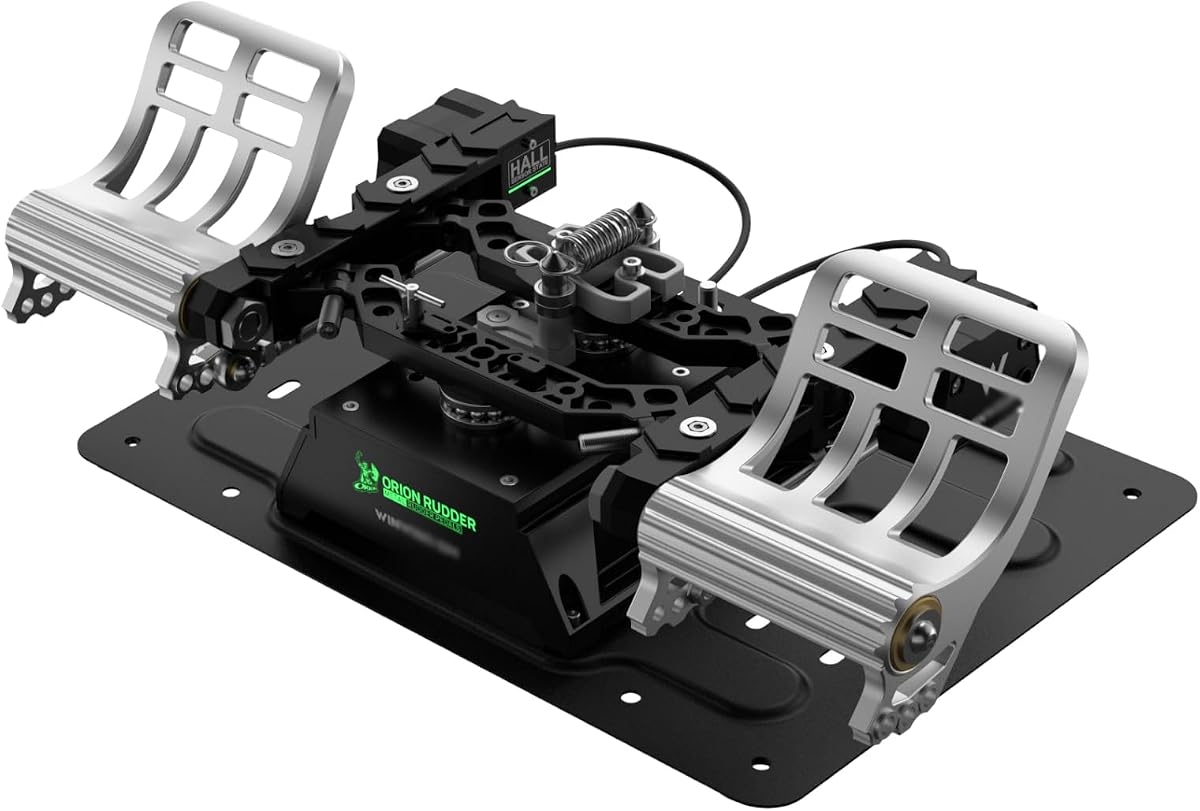
The WINCTRL Orion Standard Metal Rudder Pedals stand out with an all-metal frame and Hall sensors for accurate control. The die-cast aviation-grade aluminum ensures durability and a premium feel underfoot.
We may earn a commission when you buy through this link, at no additional cost to you.
Quick-disconnecting springs allow rapid switching between control modes for fixed wing or ground vehicle simulation. This flexibility makes the unit adaptable to different flight scenarios without needing extra tools.
Lack of visible rating data means new buyers must rely on technical specs alone. However the non-linear rocker rebound structure promises a unique stepping experience that enhances immersion during long flights.
Technical pilots wanting metal construction should consider this model. The robust build and tool-free adjustments offer a high level of customization for a dedicated cockpit setup.
Switch between fixed wing and rotor modes in seconds using the quick-swap spring mechanism.
Aviation-grade aluminum ensures the pedals withstand years of use without bending or warping.
We may earn a commission when you buy through this link, at no additional cost to you.
The WINCTRL Orion Damper achieves a perfect 5.0 rating due to its unique damper design and all-metal frame. This model offers high flexibility with custom dampers that meet distinct requirements for fixed wing and rotor modes.
We may earn a commission when you buy through this link, at no additional cost to you.
Hall sensors ensure precise control while the non-linear rocker rebound provides an unprecedented stepping experience. The oversized anti-slip pads guarantee stable footing on various floor types during intense simulation sessions.
Cost and weight may be prohibitive for casual users. However these trade-offs are acceptable for those seeking the highest fidelity control and durability available in current market options.
Serious pilots prioritizing realism should buy this model. It delivers a personalized flight experience that mimics real aircraft behavior better than most competitors.
Tailor the resistance to match specific aircraft requirements for a truly authentic feel in every maneuver.
Die-cast foot support allows flexible placement ensuring comfort even during extended cross-country virtual flights.
We may earn a commission when you buy through this link, at no additional cost to you.
The Thrustmaster TPR earns an Editor's Choice award for its Pendular technology that replicates real aircraft pedal motion. A 4.7 rating reflects the exceptionally smooth and realistic control it provides.
We may earn a commission when you buy through this link, at no additional cost to you.
H.E.A.R.T magnetic sensors ensure accuracy over time without mechanical wear. The adjustable spring system allows fine-tuning to match combat or commercial aviation styles seamlessly.
Limited to PC use and a high price point are notable trade-offs. However these constraints are acceptable for serious simmers needing professional-grade performance for detailed flight scenarios.
Experts seeking fluid motion should buy this model. It sets the benchmark for natural rudder control in home simulators.
The suspended mechanism mimics real aircraft pedals providing fluid motion that feels organic and responsive.
Magnetic sensors eliminate wear ensuring your input precision remains consistent over years of use.
We may earn a commission when you buy through this link, at no additional cost to you.
The Honeycomb Charlie Rudder Pedals maintain a 4.5 rating with their durable aluminum build and innovative belt drive system. These features deliver a realistic and immersive flight experience for PC users.
We may earn a commission when you buy through this link, at no additional cost to you.
Latest generation Hall Effect sensors ensure precise coordination and minimize flight corrections. The high-friction strips and deployable spikes prevent slipping adding stability to your simulation setup.
Console users require an Xbox hub which adds complexity to the setup. Despite this trade-off the PC performance and adjustability make it a strong choice for dedicated pilots.
Pilots prioritizing durability should buy this model. It offers a refined control interface that supports long and immersive flight sessions comfortably.
The belt system reduces mechanical wear while maintaining high input accuracy for smoother flight control.
Deployable spikes and high-friction strips ensure your feet remain secure even during aggressive maneuvers.
We may earn a commission when you buy through this link, at no additional cost to you.
The Thrustmaster T-Flight Full Kit earns a 4.3 rating by combining a HOTAS system with S.M.A.R.T pedals. This complete package transforms casual gaming into an immersive flight simulation experience.
We may earn a commission when you buy through this link, at no additional cost to you.
Official Xbox integration allows seamless menu navigation during sessions. The full foot ergonomic design reduces fatigue enabling comfort during long combat or civil aviation scenarios.
Complex setup and limited customization may deter advanced users. However for those wanting an all-in-one solution with console support this kit offers significant value and immersion.
Newcomers wanting a complete package should buy this model. It simplifies entry into flight simulation by providing all necessary controls in one box.
Receive throttle, joystick, and pedals together for a complete cockpit ready to fly out of the box.
Official Xbox integration means you can control menus and switch games without leaving your cockpit.
We may earn a commission when you buy through this link, at no additional cost to you.
The Thrustmaster TFRP and T16000M combo secures a 4.6 rating for its Hall Effect technology and S.M.A.R.T slide rails. This combination delivers high precision inputs across all flight sim genres seamlessly.
We may earn a commission when you buy through this link, at no additional cost to you.
Ergonomic full foot design supports entire feet for relaxed pressure. The 16 action buttons with braille identification improve usability during intense combat or space adventure scenarios.
Cable management can be challenging with multiple USB devices. Despite this trade-off the performance and ergonomic features justify the setup effort for serious PC simmers.
PC enthusiasts wanting precision should buy this combo. It balances performance and comfort effectively for a wide range of flight simulation activities.
Magnetic sensors on the joystick ensure no mechanical wear and precise control during complex maneuvers.
Removable heel rests allow you to tailor pedal comfort to your preferred foot position for long sessions.
We may earn a commission when you buy through this link, at no additional cost to you.
The Logitech G RS Sim Racing Pedals earn a 4.8 rating for their 75 kg Load Cell Brake. While designed for racing this unit offers precise registered brake force adaptable to certain flight needs.
We may earn a commission when you buy through this link, at no additional cost to you.
Hall Effect sensors minimize abrasion ensuring enhanced durability. The steel frame and anti-tip design provide stability on hard floors or carpets in your simulation area.
This model is not a true rudder pedal but may work for specific brake axis needs. Its robust build and adjustability are valuable for those with multi-sim setups.
Multi-genre simmers should consider this unit if they already have rudder axes. It provides a stable and adjustable brake alternative for specific flight configurations.
The 75 kg force cell ensures consistent pressure application which improves control in high fidelity setups.
Reposition pedals on the frame to match your personal stance and cockpit layout for optimal comfort.
We may earn a commission when you buy through this link, at no additional cost to you.
Selecting the right rudder pedals involves evaluating several key factors to ensure they meet your simulation goals and comfort needs.
Hall Effect sensors use magnetic technology to provide frictionless and consistent inputs without wear. This ensures long-term reliability and smooth control during long simulation sessions.
Look for Hall Effect or magnetic sensors to maintain precision over time without mechanical degradation.
Materials like aluminum and steel provide stability and durability. Heavier materials reduce vibration and improve the realistic feel of the pedals.
Choose metal frames for better durability and a more authentic physical response during flight.
Ensure the pedals work with your specific system whether PC or console. Some models require hubs or specific software drivers to function correctly.
Check system requirements before buying to avoid compatibility issues with your simulator software.
Differential toe brakes allow independent pressure on each side for precise taxiing and turning. This feature is critical for ground control accuracy.
Opt for independent toe brakes for better control during runway operations and taxiing maneuvers.
Pedal size and foot support should accommodate your shoe size comfortably. Removable heel rests can help adjust the pedal surface to fit your needs.
Prioritize ergonomic designs that support your full foot to reduce fatigue during long flights.
Adjustable resistance or springs allow you to mimic different aircraft types. A simple twist dial or quick-swap mechanism changes the feel easily.
Select pedals with adjustable tension to match light or heavy aircraft characteristics accurately.
Pedals should stay in place during use without shifting. Anti-slip pads or mounting hardware ensure stability on various floor types.
Look for anti-slip features or adjustable frames to keep pedals secure in your cockpit.
Balance cost with features. Higher prices often reflect better materials or more precise sensors. Entry-level units may suffice for casual users.
Determine your budget and prioritize features that matter most to your specific simulation style.
Install the pedals on a stable surface and connect them via USB or the required interface. Ensure the cables are secured to prevent accidental disconnection during use.
Adjust the tension or resistance to match your preferred flight style using the provided dials or springs. Calibrate the pedals in your simulation software for optimal response.
Clean the surfaces regularly with a dry cloth to remove dust and prevent slippage. Inspect moving parts periodically to ensure smooth operation and adjust anti-slip pads as needed.
While not strictly necessary, rudder pedals significantly improve realism and control. They allow for coordinated turns and accurate ground handling which enhances the overall immersion of the simulation.
It depends on the model. Some units support Xbox or PS5 directly while others are PC-only. Always check compatibility details before purchasing to ensure console support.
Most pedals can be calibrated through the simulation software settings. Follow the on-screen instructions to map the axis and adjust dead zones for smooth input response.
Mechanical parts like springs may wear but Hall Effect sensors generally last longer. Proper care and minimal excessive force can extend the lifespan of the pedals significantly.
Self-centering pedals return to neutral when released which suits fixed-wing aircraft. Non-centering pedals stay where you set them which is ideal for helicopters or ground vehicles.
Yes rudder pedals work alongside joysticks and throttles. They provide independent foot control while hands manage other axes for a complete flight simulation experience.
The Thrustmaster TFRP offers a great budget entry while the Thrustmaster TPR sets a high standard for realism. The WINCTRL Orion Damper leads in premium features and build quality for serious pilots.
Prioritize sensor technology and platform compatibility to ensure smooth integration with your existing setup. Choose a model that supports your preferred aircraft types and provides lasting durability.
Prices and availability change frequently so verify current details before making your final purchase decision for your home simulation cockpit setup.