
Zopsc 2 Pack DO Dissolved Oxygen Tester for Smartphones
Wireless smartphone pairing
Sealed floating design
Extended battery life
This guide compares the top Dissolved Oxygen Sensors 2 for 2026, evaluating accuracy, durability, ease of calibration, and suitability for aquariums, aquacultur
Selecting the right Dissolved Oxygen Sensors 2 is critical for maintaining water quality in aquaculture, aquariums, and industrial processes. High precision sensors ensure aquatic health and process efficiency by providing reliable real-time data without frequent recalibration or manual intervention.
We evaluated ten leading models based on response time, sensor type, ease of use, and compatibility with various setups. Our analysis covers galvanic, optical, and polarographic technologies to help you identify the ideal fit for your specific monitoring requirements and operational environment.
Each pick highlights key strengths such as calibration methods, cable length, and durability. While we focus on features and performance, keep in mind that market availability and pricing can shift quickly, so verify current stock and details before making your final decision today.

4.8Editor score

4.5Editor score
This side-by-side comparison highlights the core specifications and unique capabilities of each selected sensor, helping you quickly identify which model aligns with your budget and technical requirements.
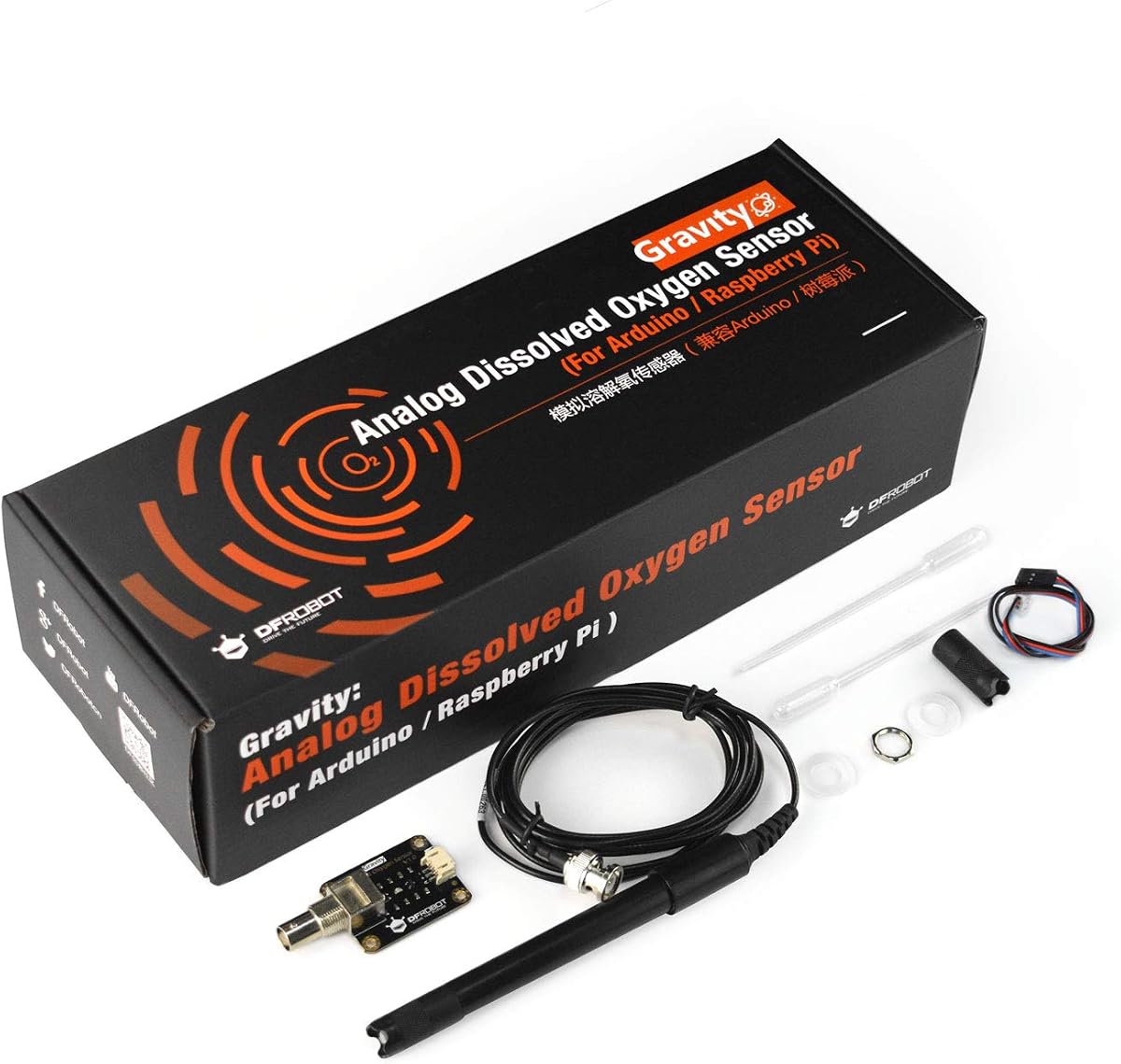

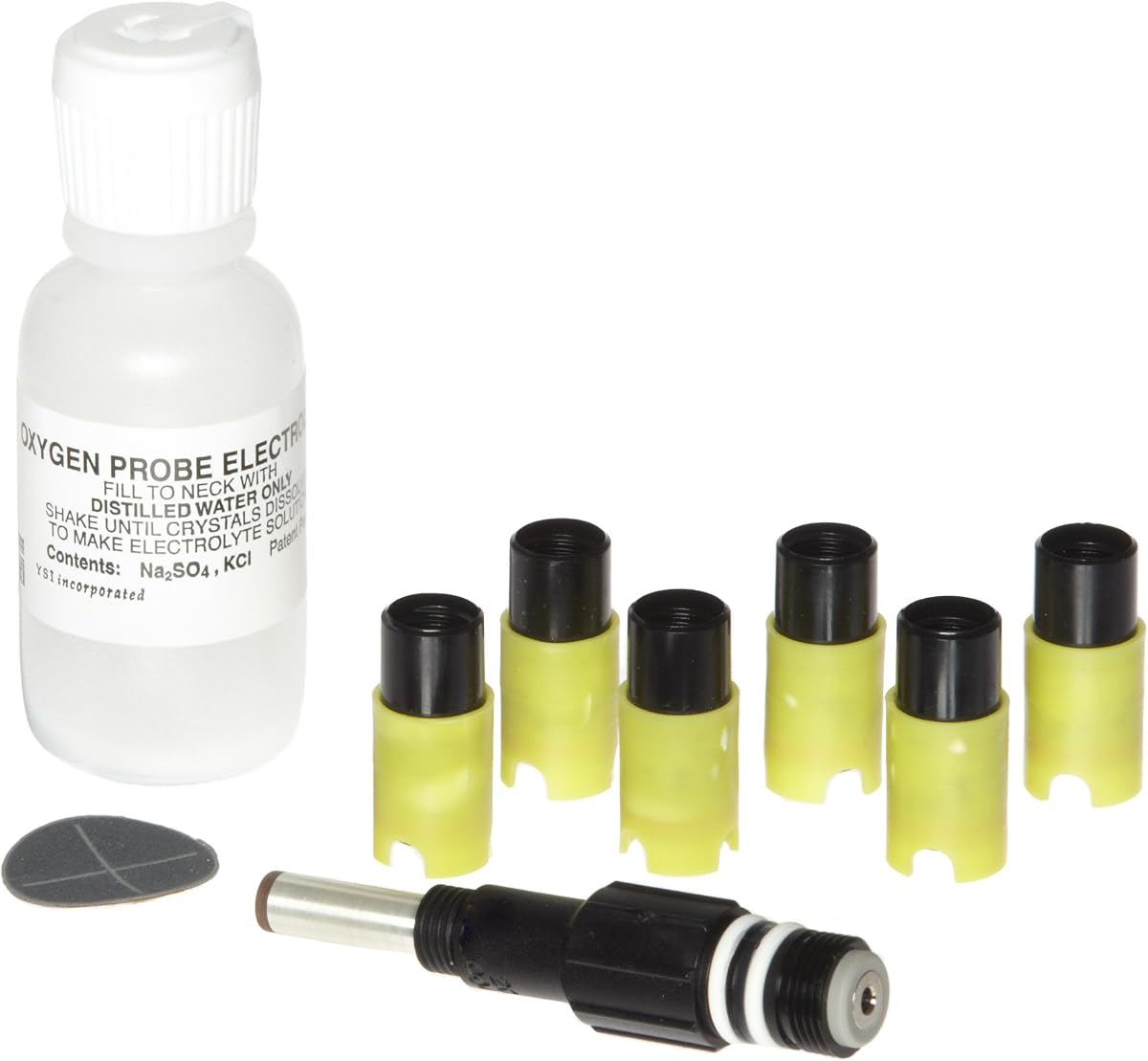


The Gravity Analog Dissolved Oxygen Sensor Kit stands out for hobbyists and professionals seeking an easy-to-integrate solution for water quality monitoring. With a 4.4 rating, it is praised for its galvanic probe that eliminates the need for pre-heating or polarization, allowing instant readings at any time.
We may earn a commission when you buy through this link, at no additional cost to you.
Its signal converter board features integrated hardware filtering, delivering smooth analog voltage without heavy software processing. This makes it ideal for Arduino, ESP32, and Raspberry Pi projects. The kit includes a spare membrane cap, reducing long-term maintenance costs for hydroponics or lab setups.
However, note that the required NaOH filling solution is not included due to shipping restrictions. Users must prepare this locally. Also, an ADC module is needed for compatibility with microcontrollers. These minor hurdles are acceptable given the sensor's robust features and open-source support.
This kit is perfect for those building intelligent aquaculture or IoT water monitoring systems. Its quick calibration and tutorial support ensure smooth deployment. For anyone needing a cost-effective, high-performance DO sensor for electronics projects, this is a strong recommendation.
The galvanic probe design allows users to take measurements immediately without waiting for warm-up, which is essential for intermittent power supplies and portable testing.
Comprehensive documentation and open-source algorithms support single or two-point calibration, ensuring high-precision temperature compensation and reliable data accuracy across varying conditions.
We may earn a commission when you buy through this link, at no additional cost to you.
This LDO Dissolved Oxygen Sensor is designed for dependable water analysis in industrial and laboratory settings. It delivers accurate and consistent results, ensuring that water quality checks are reliable every time. The built-in materials focus on long-term durability and reliability.
We may earn a commission when you buy through this link, at no additional cost to you.
The user-friendly design simplifies setup and reduces maintenance costs, making it suitable for environments where efficiency is key. It improves workflow by providing quick and stable performance during use. Its versatile nature makes it a good choice for environmental applications too.
While specific technical specs like response time are not detailed in the summary, the emphasis on efficiency and stability suggests a robust tool for routine testing. The lack of extensive public reviews makes it slightly harder to validate long-term performance.
If you need a sensor for industrial or lab use where reliability is paramount, this model offers a solid foundation. Its design prioritizes ease of use and stable outputs. We recommend it for operations requiring consistent monitoring with minimal downtime.
Constructed with materials built for extended reliability, this sensor withstands frequent use in demanding industrial or environmental conditions without compromising performance.
Suitable for industrial, laboratory, and environmental tasks, this sensor adapts to different water analysis needs, making it a flexible choice for diverse operational requirements.
We may earn a commission when you buy through this link, at no additional cost to you.
The YSI-605203 Pro Series Polarographic Dissolved Oxygen Sensor is a professional lab supply designed for precise measurements. With a 4.6 rating, it is trusted for its quality and reliability in controlled environments. Its packaging is compact and lightweight, ensuring safe transport.
We may earn a commission when you buy through this link, at no additional cost to you.
This sensor fits into existing lab setups without taking up much space. The polarographic technology ensures accurate readings for water quality assessment. It is ideal for researchers or technicians who need a single, high-quality sensor for specific testing routines.
However, detailed performance specs like response time are not provided in the product summary. You may need to pair it with a compatible meter for full functionality. Despite this, the brand reputation and rating suggest consistent performance.
For laboratory users seeking a trusted, compact DO sensor, this model is a safe bet. It simplifies procurement with its single-unit packaging. If you value brand reliability and professional-grade tools, this sensor is worth considering for your lab inventory.
Designed specifically for laboratory supply, this sensor meets professional standards for accuracy and reliability in controlled water analysis environments.
Its small package size and low weight make it easy to ship and store, reducing logistical hassle for labs ordering single units or replacement sensors.
We may earn a commission when you buy through this link, at no additional cost to you.
This Dissolved Oxygen Meter offers high-precision measurements with a large LCD display showing DO, temperature, and pressure. It features auto temperature compensation, 99-data memory, and a hold function, making it suitable for aquaculture and educational use.
We may earn a commission when you buy through this link, at no additional cost to you.
The durable and portable design ensures it operates well in environments up to 50°C. It measures salinity and pressure too, providing a wide range of testing options. The kit includes batteries, membranes, and a carrying case for immediate use.
While it supports auto power-off, battery status relies on a simple indicator. Manual salt input is required instead of automatic detection. These trade-offs are acceptable given its comprehensive feature set and ease of use.
For aquarium owners or educators needing a versatile, ready-to-go DO tester, this model is excellent. Its compact size and professional kit contents make deployment simple. We recommend it for general testing and monitoring tasks.
Beyond dissolved oxygen, this meter measures temperature, salinity, and barometric pressure, offering a comprehensive view of water quality in a single device.
Includes meter, probe, batteries, membranes, electrolyte bottles, and a carrying case, so you can start testing immediately without purchasing extra accessories.
We may earn a commission when you buy through this link, at no additional cost to you.
The YSI-605202 Pro Series Galvanic Dissolved Oxygen Sensor holds a 4.8 rating, marking it as one of the best options in our lineup. It features an easy user-replaceable sensor that allows for quick replacements without any tools, ensuring minimal downtime.
We may earn a commission when you buy through this link, at no additional cost to you.
Its convenient screw-on cap membranes make changing consumables simple. The package includes six membrane caps and a bottle of solution, extending the sensor's life and reducing frequent purchases. This design emphasizes user convenience and cost efficiency.
You will need a compatible YSI meter to use this sensor. If you already have one, it integrates seamlessly. For new setups, factor in the meter cost. This is a minor consideration given the sensor's reliability and ease of maintenance.
This sensor is perfect for labs or facilities needing reliable, low-maintenance monitoring. Its tool-free replacement and included consumables make it a top pick. We highly recommend it for consistent performance and long-term value.
Replacement of the sensor requires no tools, allowing users to swap out components quickly and maintain continuous monitoring operations without service delays.
Comes with six membrane caps and a solution bottle, providing immediate maintenance supplies to keep the sensor running efficiently over an extended period.
We may earn a commission when you buy through this link, at no additional cost to you.
The Zopsc 2 Pack DO Tester pairs wirelessly with mobile devices for real-time data transmission. Its weather-shielded ABS housing floats on the surface, protecting internal circuits. The app interface supports eight languages, making it accessible globally.
We may earn a commission when you buy through this link, at no additional cost to you.
A 500mAh battery provides up to five days of continuous operation. The smart power management dims the display and disconnects to save energy. Data can be exported via email at hourly, daily, weekly, or monthly intervals for reporting.
While it lacks a public rating, its features are compelling for field research. Reliance on a smartphone app may limit use without a device. Overall, it offers great value and flexibility for monitoring tasks.
For budget-conscious users needing wireless testing, this two-pack is ideal. Its floating design and long battery life simplify on-site checks. We recommend it for hydroponics, aquariums, or field research where convenience is key.
Pairs wirelessly with mobile devices within 10 meters, enabling effortless data transmission and analysis directly on your smartphone or tablet screen.
The dedicated app supports English, French, German, Spanish, Japanese, Korean, Russian, and Traditional Chinese, making it accessible for international users in diverse regions.
We may earn a commission when you buy through this link, at no additional cost to you.
The YSI DO200 Kit is a portable, professional-grade solution with a 4.5 rating. It features automatic temperature compensation and manual input for salinity and pressure. Its 2 percent accuracy and 0.01 ppm resolution ensure precise measurements.
We may earn a commission when you buy through this link, at no additional cost to you.
Easily replace screw-on cap membranes simplify maintenance. The kit includes a 9V battery, making it ready to use. This model is ideal for fieldwork or labs needing reliable, portable testing with minimal setup.
While it is pricier than basic testers, its reliability and features justify the investment. Manual salinity input requires user attention. This is acceptable for professional environments where accuracy outweighs automation.
For operations needing a robust, portable DO meter, this kit is excellent. Its design balances performance and usability. We recommend it for professional aquaculture, water treatment, or educational programs requiring dependable results.
The meter handles temperature variations automatically, ensuring that dissolved oxygen readings remain accurate and consistent regardless of water temperature changes.
Its portable form factor allows for easy transport to different testing sites, while including all necessary components for immediate deployment and accurate field measurements.
We may earn a commission when you buy through this link, at no additional cost to you.
This YSI 6900 ProDSS ODO Optical Dissolved Oxygen Sensor is designed for industrial water monitoring. Optical technology offers long-term stability and accuracy. The ProDSS platform ensures compatibility with advanced data logging and measurement systems.
We may earn a commission when you buy through this link, at no additional cost to you.
Its high reliability design makes it suitable for demanding environments. While specific details like response time are not listed, the model's reputation suggests robust performance. You will need a compatible ProDSS meter for operation.
For large-scale or industrial applications where consistent monitoring is critical, this sensor fits well. The lack of detailed specs in the summary limits precise comparisons. Verify compatibility with your existing equipment before purchase.
This sensor is ideal for facilities prioritizing reliability and advanced tech. If your setup supports the ProDSS platform, it delivers trusted performance. We recommend it for professional industrial water quality monitoring tasks.
Uses optical principles to measure dissolved oxygen, which often provides greater stability and lower maintenance compared to traditional electrochemical sensor types.
Designed for use with YSI ProDSS systems, this sensor integrates seamlessly with advanced multi-parameter monitoring platforms for comprehensive water quality analysis.
We may earn a commission when you buy through this link, at no additional cost to you.
The DAN&DRE Portable DO Meter features 0% and 100% automatic calibration buttons, simplifying setup. It uses intelligent temperature compensation to adjust readings based on actual solution temperature, ensuring consistency across varying conditions.
We may earn a commission when you buy through this link, at no additional cost to you.
Its modular design allows easy removal and replacement of the thin film electrode, extending device life. With a response time under 15 seconds, it provides real-time data. It is suitable for aquaculture, water treatment, and pet care.
Lacking public ratings, it relies on its technical features for value. The modular design is a key benefit for long-term use. If you need reliable, fast testing without complex setups, this is a strong contender.
For home or small-scale professional users, this meter offers ease of use and adaptability. Its fast response and modular electrode reduce downtime. We recommend it for aquariums, aquaculture, and general water quality management.
0% and 100% auto calibration buttons ensure quick and accurate setup, saving time and guaranteeing reliable readings for every water quality check.
The instrument separates into sensor and electronic units, allowing easy electrode replacement to extend the meter's life and reduce long-term operating costs.
We may earn a commission when you buy through this link, at no additional cost to you.
This Dissolved Oxygen Meter with ATC measures 0-40 mg/L and 0-300% with a built-in temperature sensor. It uses advanced chips for faster readings. The package includes filling fluid, calibration powder, and three free LR44 batteries.
We may earn a commission when you buy through this link, at no additional cost to you.
Its two-point automatic calibration at 0% and 100% simplifies setup. The large LCD and 1.1m polarographic probe ensure accurate, convenient testing. With up to 2000 hours of use, battery life is well-preserved.
The inclusion of extra membrane caps and accessories adds significant value. While lacking public ratings, its features suggest a complete solution for general monitoring. Verify battery availability as needed.
For aquariums, fish tanks, brewing, and educational use, this meter offers a complete kit. Its ATC and calibration features make maintenance easy. We recommend it for anyone needing a ready-to-use DO testing solution.
Includes 6 spare membrane caps, electrolyte, calibration powder, and extra batteries, ensuring you have everything needed for maintenance and immediate testing upon arrival.
Built-in temperature sensor and ATC ensure accurate readings regardless of water temperature variations, eliminating guesswork for consistent and reliable data.
We may earn a commission when you buy through this link, at no additional cost to you.
Selecting the right Dissolved Oxygen Sensors 2 involves evaluating technical specs, intended use, and ease of maintenance.
Dissolved oxygen sensors generally fall into polarographic, galvanic, or optical categories. Polarographic sensors require an external power source and polarization time. Galvanic sensors work without power and polarize quickly. Optical sensors use fluorescence and need no membranes, offering lower maintenance.
Choose galvanic or optical for IoT or low-power setups, and polarographic for lab precision.
Ensure the sensor covers your required range. Most aquarium and fish tank needs fall between 0 and 20mg/L. Industrial applications may demand higher ranges or percentages. Check if units are in ppm, mg/L, or percent saturation.
Match the range to your water body and application to avoid inaccurate readings.
Calibration frequency and ease vary. Some models offer two-point auto calibration, simplifying setup. Others require manual preparation of zero and 100% solutions. Look for quick calibration features to reduce downtime.
Select a model that balances accuracy with calibration convenience.
Response time is the duration to reach 98% of the final reading. Faster times are crucial for dynamic systems. Many sensors achieve this in under 2 minutes. Check product descriptions for specific response data.
Prioritize fast response times for real-time monitoring needs.
Waterproof and floating designs protect internal circuits. ABS housings withstand wet environments. For field work, consider ruggedized, sealed models. Floating designs simplify surface testing and protect against accidental submersion.
Invest in durable housing to extend sensor life in wet or rough conditions.
Some sensors pair wirelessly with smartphones for real-time data. Others offer data logging or export via email or cables. Look for apps with language support and export options. These features simplify reporting and long-term tracking.
Choose connectivity that fits your workflow and reporting requirements.
Check consumable availability. Membrane caps and filling solutions may need frequent replacement. Kits that include spares reduce downtime. Modular designs allow electrode replacement instead of full unit swaps.
Opt for models with easy-to-find, replaceable parts.
Ensure the sensor works with your meter or controller. Arduino, ESP32, and Raspberry Pi users need compatible interfaces. Industrial sensors may need specific platforms. Check voltage requirements and pinouts before buying.
Confirm interface and voltage compatibility to avoid setup issues.
Before initial use, prepare any required filling solutions or calibration powders according to the manufacturer's instructions. For galvanic probes, ensure membranes are properly seated and tensioned.
Calibrate the sensor using zero and 100% saturation standards. Follow the manual's steps for auto or manual calibration to ensure accurate baseline readings.
Rinse the probe with distilled water between tests to prevent contamination. Store in moist environments or calibration solution to maintain sensor integrity.
Calibration frequency depends on usage and environment. Daily use or critical applications typically require daily calibration. Less frequent use may only need weekly checks. Follow manufacturer guidelines for best results.
Galvanic sensors require no external power and polarize quickly. Polarographic sensors need a polarizing voltage and take longer to stabilize. Both provide accurate readings; choose based on power availability and response needs.
Yes, zero and 100% saturation solutions are required for accurate calibration. Some kits include them, but others may require preparation. Ensure solutions are fresh and temperature-controlled for best performance.
Rinse with distilled water between tests. For stubborn deposits, use a soft brush or manufacturer-recommended cleaning solution. Avoid harsh chemicals that could damage the membrane or electrodes.
Many sensors support saltwater measurements. Adjust salinity or barometric pressure settings on the meter for accuracy. Check product specs to confirm compatibility with your specific water conditions.
Temperature, salinity, and pressure all influence oxygen levels. Ensure your sensor compensates for these factors. Use ATC (automatic temperature compensation) for accurate data across varying conditions.
Lifespan varies by type and care. With proper maintenance and membrane replacement, sensors can last years. Avoid exposing them to extreme temperatures or chemicals to extend longevity.
We reviewed ten Dissolved Oxygen Sensors 2, highlighting top picks like the YSI-605202 for reliability and the Zopsc for wireless budget options. Each offers unique benefits suited to different monitoring needs.
Prioritize features like calibration ease, durability, and connectivity. Match the sensor type to your power and control requirements. Consider long-term maintenance costs when selecting membranes or consumables.
Always check current prices and availability before purchasing. Water quality monitoring is essential for aquaculture, labs, and hobbyists. Choose wisely to ensure accurate, reliable data for your water systems.