
G650-04686-01 Coral M.2 Accelerator
5.0Editor score
4 TOPS Peak Performance
Debian Linux Compatible
TensorFlow Lite Support
This guide compares the top M2 accelerator cards for AI and edge computing, evaluating performance, compatibility, and power efficiency for developers.
M2 accelerator cards are essential for modern computing tasks requiring fast machine learning inference at the edge. They provide dedicated hardware to offload AI workloads from main CPUs, enabling smoother performance in smart devices and industrial applications.
We evaluated ten leading options based on processing power, form factor compatibility, and software support. Each product was analyzed for its ability to handle complex vision models while maintaining energy efficiency and system stability under continuous operation.
Each pick highlights key strengths and ideal use cases for different project needs. Prices and availability may fluctuate frequently, so verify current details on the retailer page before purchasing to ensure you get the latest version and best deal.
5.0Editor score

4.3Editor score

4.6Editor score
The following table provides a side-by-side comparison of all ten products evaluated in this guide. It highlights core specifications and key capabilities to help you quickly identify which card aligns best with your specific hardware and software requirements.


The MX3 M.2 AI Accelerator stands out as a top choice for developers needing robust machine learning capabilities in compact form factors. Its high-performance processing ensures that demanding computer vision tasks run smoothly without overwhelming the host system resources. With a strong 4.3 rating from users, it proves reliable for continuous operation in industrial or research environments.
We may earn a commission when you buy through this link, at no additional cost to you.
What makes the MX3 particularly valuable is its flexible integration capabilities. It utilizes the standard M.2 M-key 2280 specification, allowing it to slot into many existing systems that support this form factor. The accompanying SDK is a major advantage, offering tools that streamline the development process and make it easier to optimize models for deployment. This reduces the time developers spend on integration and focuses more on refining their applications.
However, the card does have specific constraints. It is designed primarily for Linux operating systems, which might exclude users working in Windows-centric environments unless they use virtualization. Additionally, accessing the software and documentation requires visiting the MemryX developer website, which could be a slight hurdle for those expecting all resources to be bundled locally or on the retailer page.
For teams prioritizing performance and software support in a compact card, the MX3 is an excellent investment. It is ideal for embedded systems where power efficiency matters and where Linux is the standard OS. We recommend this card for robotics, smart cameras, or edge devices where reliable AI inference is critical for daily operations.
The MX3 delivers exceptional performance for computer vision workloads, ensuring smooth operations even under heavy load conditions.
Its M-key 2280 form factor allows for easy installation into various systems, including Raspberry Pi 5 with a compatible HAT.
We may earn a commission when you buy through this link, at no additional cost to you.
This accelerator card features two Google Edge TPU chips, effectively doubling the machine learning inference capabilities compared to single-chip solutions. It targets users who need higher throughput for multiple simultaneous AI tasks. The 8 TOPS peak performance ensures that complex models can run at impressive speeds, making it suitable for applications requiring real-time analytics or multi-stream video processing.
We may earn a commission when you buy through this link, at no additional cost to you.
The design focuses on efficiency, delivering 2 TOPS per watt. This is crucial for battery-powered or thermally constrained environments where power budget is a limiting factor. The M.2 2230 E-key form factor is compact, allowing it to fit into smaller devices like laptops or embedded boards that support this specific slot type. The dual interface supports independent operations for each TPU, maximizing throughput.
One consideration is the E-key slot requirement. Not all M.2 slots are compatible, as many consumer boards use M-key for storage. Users must verify their motherboard specifications before purchasing to ensure physical fit. Additionally, running two TPUs simultaneously may generate heat, so adequate airflow or cooling is recommended to maintain peak performance without throttling.
This card is ideal for developers building devices that need to process multiple data streams at once. It works well for security cameras that analyze different angles or for industrial machines monitoring several parameters. If your system supports the E-key interface and you need high-density inference, this dual TPU accelerator offers a compelling balance of power and efficiency.
Equipped with two Edge TPUs, this card handles simultaneous workloads effectively for high-throughput AI applications.
Delivering 2 TOPS per watt, it ensures minimal power usage while maintaining high computational output for edge tasks.
We may earn a commission when you buy through this link, at no additional cost to you.
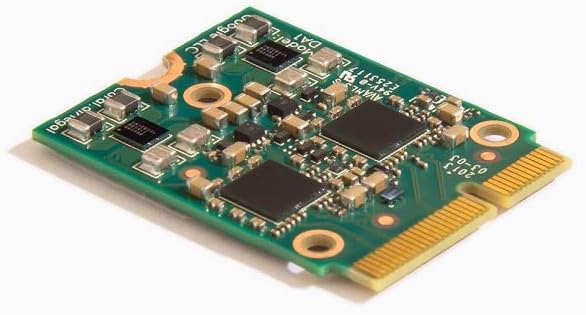
The G650-04686-01 Coral M.2 Accelerator is a standout option for developers seeking reliable machine learning capabilities on a budget. With a perfect 5.0 rating, it clearly meets user expectations for performance and ease of use. It integrates an Edge TPU coprocessor capable of 4 trillion operations per second, making it a powerhouse for inference tasks relative to its size and cost.
We may earn a commission when you buy through this link, at no additional cost to you.
Its compatibility with Debian-based Linux systems makes it a natural fit for many edge computing projects, especially those using Raspberry Pi or similar hardware. The support for TensorFlow Lite models means you do not need to retrain models from scratch; you can compile existing ones to run efficiently on this hardware. This significantly lowers the barrier to entry for prototyping and deployment.
While performance is strong, the card relies on Linux environments, specifically Debian variants. Users working primarily in Windows will need to adjust their workflow or use compatible subsystems. The B+M key design offers some flexibility but may still require checking slot compatibility on specific boards. However, for those already in the Linux ecosystem, this is rarely an issue.
This accelerator is perfect for hobbyists and professionals alike who need accurate image classification or detection. It excels in applications like smart doorbells or retail analytics where power consumption must remain low. If you need a proven, energy-efficient solution that integrates well with open-source tools, this Coral accelerator delivers exceptional value and performance.
Works seamlessly with any Debian-based Linux system, simplifying setup for common embedded platforms like Raspberry Pi.
Allows you to compile existing TensorFlow Lite models, saving time and effort in model deployment pipelines.
We may earn a commission when you buy through this link, at no additional cost to you.
The QNAP QM2-2P10G1TB is a specialized expansion card designed to enhance storage and networking capabilities in QNAP NAS devices. It features two PCIe Gen3 x4 NVMe slots for high-performance caching or storage, along with a 10GbE port for faster data transfer. This makes it ideal for users needing to boost system responsiveness without replacing the entire unit.
We may earn a commission when you buy through this link, at no additional cost to you.
Its compatibility with QNAP's QTS and Linux operating systems ensures seamless integration into existing network setups. The included low-profile bracket allows it to fit neatly into various chassis configurations. While it is not an AI accelerator, its ability to handle high-speed data streams supports applications where rapid read/write speeds are crucial for overall system performance.
Prospective buyers should note that this card is tailored for QNAP environments. It will not function as a standalone AI module but rather as a system expansion tool. If you are not using a QNAP NAS, this card may not be suitable for your needs. However, within its intended ecosystem, it offers significant value for improving data throughput and storage flexibility.
This card is best suited for media professionals or businesses managing large datasets on NAS hardware. It provides a straightforward way to upgrade storage bandwidth and network speed simultaneously. If you are looking to expand the utility of your QNAP system for high-performance tasks, this expansion card offers reliable functionality and straightforward installation.
Two NVMe slots enable rapid caching, improving read/write speeds for applications that demand frequent data access.
The 10GbE port connects to high-speed network devices, reducing bottlenecks in data transfer workflows.
We may earn a commission when you buy through this link, at no additional cost to you.
The Rocket 1604L is designed for high-performance computing tasks requiring massive storage bandwidth. It utilizes the PCIe 5.0 x16 interface to provide four dedicated M.2 ports, each with x4 lanes. This architecture ensures maximum throughput for NVMe drives, making it suitable for workstations handling large datasets or video rendering tasks that demand fast read and write speeds.
We may earn a commission when you buy through this link, at no additional cost to you.
Its design supports a variety of M.2 sizes including 2242, 2260, and 2280, offering flexibility for different drive configurations. The card is natively supported by mainstream operating systems, which simplifies setup and management. Additionally, it supports both x86 Intel/AMD and ARM platforms, broadening its appeal across different hardware ecosystems for server or desktop deployments.
One significant consideration is that PCIe 5.0 support requires a compatible motherboard and CPU. Older systems may not utilize the full potential of this card. Furthermore, it currently lacks user ratings, which means performance in real-world scenarios is less documented compared to established products. Potential buyers should ensure their system meets the interface requirements before purchasing.
This card is best for professionals and enthusiasts who need future-proof storage solutions. It is ideal for content creators or data scientists who work with terabytes of information. If your system supports PCIe 5.0 and you need multiple high-speed drives, this card provides a robust foundation for expanding your storage capabilities without compromising speed.
Utilizes the latest PCIe 5.0 standard to deliver superior bandwidth for the fastest available NVMe drives.
Compatible with both x86 and ARM platforms, making it versatile for different server and workstation builds.
We may earn a commission when you buy through this link, at no additional cost to you.
This adapter transforms a standard system into a dual-TPU machine learning workstation by splitting PCIe Gen3 x4 into two Gen2 x1 lanes. It is designed to hold two Coral M.2 Accelerator Cards simultaneously, doubling AI inference capacity without needing multiple physical PCIe slots. This space-efficient design is particularly useful for compact desktops or servers where slot availability is limited.
We may earn a commission when you buy through this link, at no additional cost to you.
The inclusion of a heatsink ensures that the cards remain cool during operation, maintaining performance under continuous loads. It is developer-friendly, supporting TensorFlow Lite models and computer vision applications that require robust edge computing power. By maximizing existing hardware investments, it offers a cost-effective way to scale AI capabilities without buying a new system entirely.
However, successful use depends on the host system's ability to support PCIe lane splitting in BIOS settings. Not all motherboards allow this configuration, which may limit compatibility. Users should check their motherboard documentation before relying on this adapter. Additionally, the lack of reviews suggests it is a niche solution requiring careful setup to function correctly.
For developers needing dual Coral TPU performance in a single slot, this adapter is an ideal solution. It is suitable for home labs or professional environments where budget and space are constraints. If your system supports PCIe splitting and you need to scale AI workloads efficiently, this card provides the necessary hardware to achieve significant performance gains with minimal footprint.
Splitting lanes allows two accelerator cards to operate simultaneously, increasing total TOPS for complex inference tasks.
A built-in heatsink helps regulate temperature, ensuring stable performance during long-running AI processing sessions.
We may earn a commission when you buy through this link, at no additional cost to you.
The ASUS Hyper M.2 x16 Gen5 card adapts server-grade engineering for desktop or workstation use, supporting up to four PCIe 5.0/4.0 M.2 drives. It delivers up to 512 Gbps bandwidth for exceptionally smooth data transfers. This makes it perfect for high-end builds where massive storage speed and RAID array capabilities are critical for performance.
We may earn a commission when you buy through this link, at no additional cost to you.
Its thermal management system includes a large heatsink with a top and bottom thermal pad plus an active fan. This design ensures M.2 SSD temperatures stay low, preventing thermal throttling and enhancing reliability. The inclusion of a 6-pin PCIe power connector ensures stable power delivery even under full load. It also supports RAID functions to create bootable arrays.
While powerful, the physical size of this card may restrict its use in compact cases. Additionally, the active fan requires a connection to a motherboard fan header, which some boards may not have available. Users should verify their case clearance and motherboard capabilities before installing this card. Proper airflow is essential for it to perform as intended.
This card is a strong choice for workstation users requiring top-tier storage speed. It is ideal for video editing suites or data servers where RAID arrays provide redundancy and speed. If your system can accommodate its size and power needs, this card offers robust capabilities for managing multiple high-speed NVMe drives with advanced features.
Active cooling and large heatsinks maintain optimal temperatures for unthrottled data transfer speeds.
Create bootable RAID arrays across platforms, increasing storage efficiency and data protection for professional use.
We may earn a commission when you buy through this link, at no additional cost to you.
The waveshare Hailo-8 M.2 AI Accelerator Module stands out with its powerful 26 Tera-Operations Per Second processor. This capacity enables simultaneous processing of multiple streams and models, making it a premium choice for complex edge tasks. Its support for both Linux and Windows broadens deployment options for diverse software environments and developer preferences.
We may earn a commission when you buy through this link, at no additional cost to you.
It enables real-time low-latency inference suitable for demanding applications like autonomous vehicles or advanced robotics. The module supports frameworks like TensorFlow, Pytorch, and ONNX, giving developers flexibility in model creation. Its operating temperature range from -40°C to 85°C ensures reliability even in harsh industrial or outdoor environments where temperature stability is crucial.
One notable consideration is that this module is sold without a dedicated power supply, so users must ensure they have adequate external power. Additionally, its premium price reflects its high-end specs, which may be overkill for simple classification tasks. However, for professionals needing maximum throughput and framework versatility, these trade-offs are often acceptable.
This accelerator is ideal for high-demand scenarios where speed and flexibility are paramount. It works well with Raspberry Pi 5 for accessible power or standalone systems for production. If you need a versatile, powerful card that handles complex AI workloads reliably, this module offers exceptional value and performance for advanced edge computing applications.
Powered by a 26 TOPS Hailo-8 processor for high-efficiency AI inferencing on edge devices.
Supports TensorFlow, ONNX, and Pytorch allowing you to use existing models without major retraining efforts.
We may earn a commission when you buy through this link, at no additional cost to you.
This Coral M.2 Accelerator integrates the Edge TPU for delivering 4 TOPS of peak performance. It is designed for machine learning inference tasks that need efficiency and power in a compact form. The A+E key interface supports easy integration into many existing systems, making it a versatile choice for embedded development projects and smart device prototyping.
We may earn a commission when you buy through this link, at no additional cost to you.
Its low-power design is particularly suitable for energy-sensitive applications like battery-operated devices. It supports both Linux and Windows 10 64-bit systems, broadening its utility across different environments. The industrial-grade reliability ensures it can operate in challenging conditions with a temperature range from -20°C to +85°C, which is critical for outdoor or factory deployments.
While compatible with many boards, the A+E key requirement is specific and may not fit all standard slots. Windows support is limited to 64-bit versions, which excludes older 32-bit systems. Users should verify system compatibility before purchase. However, for those needing a robust embedded solution, these constraints are minor compared to its performance benefits.
This accelerator is perfect for developers working on smart home or industrial sensors. It provides the power needed for real-time detection without drawing excessive energy. If your project demands reliable ML inference in varied environments, this card offers the compatibility and performance required to succeed in complex edge computing scenarios.
Operating temperatures from -20°C to +85°C ensure consistent performance in demanding or extreme environments.
Compatible with Debian Linux and Windows 10, offering flexibility for various development workflows.
We may earn a commission when you buy through this link, at no additional cost to you.
This adapter board is specifically engineered to maximize AI inference performance when using Coral M.2 Accelerator modules. It fits standard M.2 2280 B+M key slots and provides bidirectional Gen2 bandwidth for reliable data transfer. The included stainless steel mounting screw ensures vibration-resistant PCB fixation, which is critical for devices subjected to movement or industrial vibration.
We may earn a commission when you buy through this link, at no additional cost to you.
It is compatible with PCIe x1 Gen2 interfaces, ensuring stable connection for edge computing tasks. While it does not offer AI processing itself, it acts as a critical bridge between standard PCIe slots and the Coral modules. This allows developers to use their existing hardware investments effectively without requiring complex custom circuits or additional enclosures.
Note that it is explicitly incompatible with Raspberry Pi CM4 or USB enclosures, preventing potential buyer errors. Users must ensure they are adapting for a PCIe host environment. This specificity ensures stability but limits versatility. If you are using a standard PCIe board, this adapter is a reliable choice to integrate Coral modules securely into your design.
This accessory is essential for anyone building robust systems with Coral accelerators. It ensures physical security and consistent power to the modules. For industrial applications or portable devices where vibration is a concern, this adapter provides the necessary stability. If you need to fit a Coral module into a standard 2280 PCIe slot, this board is the ideal solution.
Includes a stainless steel mounting screw to ensure the PCB remains secure in dynamic or vibrating environments.
Designed exclusively to maximize performance and compatibility for Coral M.2 Accelerator modules.
We may earn a commission when you buy through this link, at no additional cost to you.
Choosing the right M2 accelerator card requires understanding your specific compute needs and system constraints. This section breaks down the most critical factors to help you make an informed decision.
Look for the TOPS (Tera Operations Per Second) rating to gauge raw AI capability. Higher TOPS allows for more complex models and higher frame rates in video processing tasks.
Check whether your system supports M-key, B+M key, or E-key slots. The physical dimensions like 2280 or 2230 must match your available slot space.
Many accelerators are optimized for Linux or Debian systems. Ensure the card supports your primary OS or offers tools like Windows compatibility.
Consider the energy efficiency measured in TOPS per watt. For battery-powered projects, a low-power design is crucial to maximize run time.
Verify that the card supports your preferred ML frameworks like TensorFlow Lite or ONNX. Good documentation and SDK availability simplify development significantly.
Ensure the card includes adequate heatsinks or fans. Overheating can lead to throttling, reducing performance in sustained workloads.
Check the PCIe generation and lane speed. PCIe Gen3 or Gen5 ensures the card can communicate with the CPU fast enough to utilize full potential.
Determine if you need a standalone AI card or an adapter. Some cards serve as bridges for existing modules, while others are complete accelerators.
Regularly monitor system temperatures and airflow. Clean dust from heatsinks and fans periodically to prevent overheating, which can degrade performance over time.
While both use the M.2 form factor, standard SSDs are designed for storage and data retrieval, whereas AI accelerators are specialized hardware optimized for machine learning inference. AI cards offload complex mathematical calculations from the CPU to improve speed and efficiency.
Many cards support Linux primarily, but some offer Windows compatibility or drivers. Check the product specifications for specific OS support before purchasing to ensure it works with your current setup.
Yes, many M2 accelerators generate significant heat during sustained operation. Using a heatsink or fan is essential to prevent thermal throttling and maintain consistent performance levels.
Some accelerators like the Coral and MX3 are compatible with Raspberry Pi models via M-key HATs. Ensure your specific Pi model supports the required interface and power delivery before connecting.
TOPS stands for Tera Operations Per Second, measuring the computational power of the card. Higher TOPS values indicate the ability to handle more complex or multiple AI tasks simultaneously.
Many accelerators support compiling existing models via TensorFlow Lite or similar tools. You typically do not need to retrain from scratch, but conversion is required for hardware compatibility.
The MX3 M.2 AI Accelerator leads as our top pick for its balanced performance and comprehensive software support. It serves a wide range of use cases from robotics to smart imaging with reliable efficiency.
For budget-conscious developers, the G650-04686-01 Coral offers incredible value with strong community backing. If you need high-end power, the waveshare Hailo-8 module provides premium capabilities for complex tasks.
Remember that hardware availability and pricing fluctuate regularly. Always verify current specs and compatibility details on the product page before making your final purchase decision to ensure it meets your needs.