
Korg Volca Drum Digital Percussion Synthesizer w/ 16-step Sequencer and Active Step
4.4Editor score
Compact portable design with built-in speaker
16-step sequencer for intuitive music programming
Six-part DSP synth engine for wide sound range
This guide compares the top ten digital drum machines for 2026, evaluating sound quality, features, and workflow for producers and live performers seeking
Digital drum machines have revolutionized music production by offering portable, programmable rhythm tools that fit into any workflow. Whether you are a home producer or a touring musician, choosing the right device ensures you can craft precise beats without relying on external software or bulky gear setups.
We have evaluated ten standout models based on sound engines, sequencing capabilities, connectivity options, and overall build quality. Each product was analyzed for its unique strengths in handling complex patterns, integrating with other gear, and delivering professional audio results in both studio and live environments.
This list highlights the best options across different price points and use cases, from budget-friendly units to high-end performers. Keep in mind that prices fluctuate regularly, so check current listings before purchasing to ensure you get the best value for your specific production needs and budget constraints.
4.4Editor score

4.8Editor score

4.4Editor score
The following table provides a side-by-side overview of the top ten digital drum machines available in 2026. We have selected key specifications to help you quickly compare sound engines, connectivity options, and unique features across each model to find the best fit for your setup.
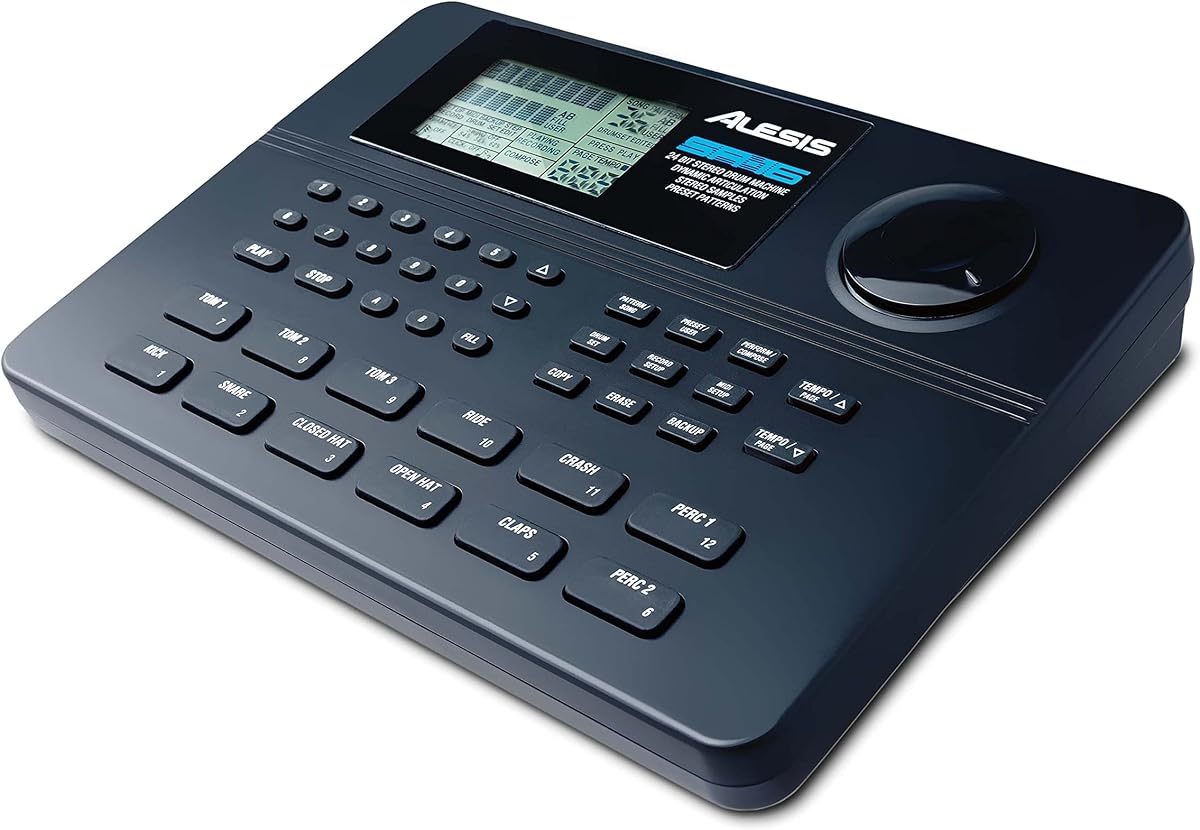


The Alesis SR-16 is a legendary classic drum machine that continues to serve songwriters, live performers, and remix engineers with its reliable performance. It holds a strong rating for its sound quality and build, offering a timeless feel that many producers appreciate for its distinct character and simplicity.
We may earn a commission when you buy through this link, at no additional cost to you.
Its standout quality lies in the 233 professional sounds included, powered by Alesis exclusive Dynamic Articulation to add realism to your beats. The 12 velocity sensitive pads allow for expressive playing, while the seamless MIDI connectivity ensures it integrates perfectly with keyboards, computers, and electronic drum kits for expanded workflows.
While it lacks modern features like sample importing, the trade-off is a focused tool that excels at its core function without unnecessary complexity. The 4 stereo pair outputs provide ample routing options for mixing, and the built-in digital effects enhance the overall sonic palette for professional-ready tracks.
This model is ideal for musicians who value proven reliability and classic tones over cutting-edge technology. It is a solid recommendation for anyone seeking a straightforward, production-ready drum machine that delivers consistent results in both studio recording and live performance scenarios.
Dynamic Articulation technology ensures that each hit sounds natural and dynamic, mimicking the nuances of acoustic percussion in a digital format.
With 4 stereo pair outputs and full MIDI support, you can route individual drums to external effects or trigger the SR-16 from your DAW effortlessly.
We may earn a commission when you buy through this link, at no additional cost to you.
The Roland TR-8S is a top-rated rhythm performer that combines the best of Roland heritage with modern production techniques and professional sound design. It receives high marks for its ability to deliver authentic drum sounds while allowing extensive customization through samples and effects for unique sonic identities.
We may earn a commission when you buy through this link, at no additional cost to you.
Its key strength is the inclusion of every sound from the most sought-after TR drum machines like the 808 and 909, complete with detailed circuit models. You can design kits using these authentic sounds alongside imported mono or stereo sounds from the SD card slot, giving you unparalleled flexibility in sound design.
While it is an investment, the trade-offs are acceptable given the depth of control it offers over decay, tuning, and sample points. The extensive effects processing, including delay and overdrive on specific instruments, ensures your tracks stand out in a mix without needing external plugins or processors.
This drum machine is perfect for producers who want to honor classic rhythms while pushing into new genres with custom samples. It is highly recommended for anyone looking for a performance-ready tool that offers deep editing capabilities and comprehensive workflow software to enhance creativity.
The TR-8S models the circuitry of legendary units like the 707 and 727, ensuring you get the exact warmth and punch that defined electronic music history.
Alter sample start points, speed, and direction on the fly, allowing you to create glitchy textures or stretched pads from standard drum hits.
We may earn a commission when you buy through this link, at no additional cost to you.
The Korg Volca Drum is a highly rated compact digital percussion synthesizer designed for intuitive and flexible music programming on a budget. It is praised for its portable design and built-in speaker, making it an ideal choice for sketching ideas anywhere without needing a laptop or external interface.
We may earn a commission when you buy through this link, at no additional cost to you.
Its standout quality is the six-part DSP synth engine equipped with a waveguide resonator that adds rich resonances to drum sounds. The 16-step sequencer includes an Active Step function that lets you replace steps for each part, adding variety to your patterns without complex programming or manual entry.
The trade-off is the small size, which might feel cramped during live performance, but the slice function and randomize tools compensate by offering deep editing in a tiny package. The accent function allows for 16 levels of dynamic performance, ensuring your beats have punch and movement despite the compact footprint.
This unit is perfect for electronic music enthusiasts who need a portable and affordable tool for studio and live settings. It is recommended for those who want high-quality digital percussion with unique synthesis features that can be used to explore new sounds and ideas efficiently.
The waveguide resonator brings acoustic qualities to digital drums, creating tones that feel organic and resonant rather than purely synthetic.
Active Step allows you to introduce fills and changes within a single pattern, keeping loops interesting without needing multiple track arrangements.
We may earn a commission when you buy through this link, at no additional cost to you.
The Yamaha DTX Multi Pad is a well-regarded drum pad designed for performers who need quick access to a vast range of sounds and triggers. It holds a solid rating for its reliability and extensive sound library, making it a favorite for adding percussion layers to live sets or studio recordings seamlessly.
We may earn a commission when you buy through this link, at no additional cost to you.
Its key strength is the inclusion of 1,061 drum and percussion effects sounds, alongside 216 keyboard sounds for expanded versatility. The Mute/Layer function allows you to stack sounds or isolate them quickly, while the sequencer and preset loops provide a foundation for building tracks without external tools.
While it offers 64MB Flash-ROM for user samples, this limit might be tight for high-fidelity audio, but it is sufficient for short samples and loops. The design prioritizes performance and trigger response over deep editing, which is a reasonable trade-off for a device meant to be played live with speed and accuracy.
This device is ideal for drummers and producers who need a dedicated trigger surface to trigger samples or sounds during a show. It is highly recommended for anyone looking for a robust, performance-oriented pad that offers a massive library of sounds at their fingertips.
With over a thousand drum sounds and hundreds of keyboard tones, you can switch between genres or layers instantly without loading new kits.
The mute and layer functions let you combine a snare with a clap or silence a specific layer on demand for dynamic performance control.
We may earn a commission when you buy through this link, at no additional cost to you.
The Akai Professional MPC Sample is a highly rated portable sampler that delivers the iconic MPC workflow in a simple, modern format suitable for all skill levels. It stands out for its complete standalone operation, allowing you to record, edit, and playback anywhere using its internal microphone and rechargeable battery.
We may earn a commission when you buy through this link, at no additional cost to you.
Its key strength lies in the intuitive creative controls, featuring 16 responsive MPC pads and a 2.4-inch full-color display for fast sampling and beatmaking. The Instant Sample Chop Mode and real-time timestretch capabilities make it easy to turn raw sounds into finished grooves quickly without needing a computer or DAW.
While the screen is small compared to larger units, the hands-on workflow compensates with dedicated knobs and intuitive menus. The four internal FX processors provide 60 effect types including Flex Beat and tape emulations, giving you enough tools to polish tracks on the device without external plugins.
This unit is perfect for beatmakers and singer-songwriters who need a portable hub to explore new sounds and ideas independently. It is recommended for anyone looking to enter the MPC ecosystem without a high price tag while maintaining professional-grade production capabilities.
The MPC Sample integrates with the broader MPC OS, allowing you to move projects between devices easily while keeping your creative flow uninterrupted.
Use the internal microphone or line-in to capture sounds around you, enabling a fast, fluid journey from raw sound to a finished track.
We may earn a commission when you buy through this link, at no additional cost to you.
The teenage engineering EP–133 K.O. II is a powerful sampler and drum machine that doubles the memory of its predecessor for even more creative freedom. It is highly rated for its ability to get you from idea to track faster than ever, thanks to a fully reworked sequencer and punch-in effects.
We may earn a commission when you buy through this link, at no additional cost to you.
Its standout quality is the intuitive sequencer engine that uses 4 groups x 99 patterns, allowing you to swap patterns per group instantly like a DAW. The commit button helps you freeze a point in time and move on to a verse or break in real time, enhancing the flow of your creative process.
While it is powered by 4x AAA batteries, this trade-off offers true portability for everyday carry and short trips without needing a heavy power source. The multifunctional fader controls stereo effects and punch-in effects, enabling live performance tweaks to filter, pitch, and timing without deep menu diving.
This unit is ideal for experimental producers and electronic artists who value unique workflows and sound manipulation over traditional drum programming. It is recommended for anyone looking for a portable, battery-powered tool to record sounds around you and transform them into polished tracks quickly.
The sequencer is designed for quick pattern swapping and real-time arrangement, making it easier to build complex songs without stopping to edit.
Control stereo effects and punch-in effects with one fader, giving you dynamic control over the mix and texture during live playback.
We may earn a commission when you buy through this link, at no additional cost to you.
The KORG drumlogue is a unique hybrid drum machine that combines analog, digital, and multi-engine sounds in a single unit. It offers a powerful threefold engine that supports open-source user oscillators, giving you access to noise, VPM, and custom effects that other devices cannot provide.
We may earn a commission when you buy through this link, at no additional cost to you.
Its key strength lies in the front panel knobs that let you instantly control tuning and attenuation for common instruments like bass drums and snares. The 11 parts and 64 steps sequencer supports complex arrangements, while dedicated volume knobs for each part allow for precise live mixing without digital menus.
The trade-off is the complexity of managing three different sound engines, which may be overwhelming for those new to synthesis. However, the customizable effects including per-part reverb and delay ensure you can shape your tone deeply, making it a versatile choice for advanced users and sound designers.
This machine is perfect for producers who want both the warmth of analog and the flexibility of digital in a single workflow. It is recommended for anyone seeking a customizable drum hub that supports external controllers and audio sync for seamless connectivity with other gear.
The multi-engine section supports open-source user oscillators, allowing you to load or create custom synth voices for unique percussion textures.
Dedicated volume knobs for each part mean you can balance your drum kit in real time during performance without pausing to adjust settings.
We may earn a commission when you buy through this link, at no additional cost to you.
The Behringer LM DRUM is a classic hybrid sampling drum machine that comes bundled with headphones and a cable for immediate setup and creative exploration. It receives high praise for its superior sound quality and robust build, ensuring consistent performance in various environments from studio sessions to live shows.
We may earn a commission when you buy through this link, at no additional cost to you.
Its key strength is the 16 voices of sampling architecture delivering rich and dynamic drum sounds for professional-grade productions. The 64-step drum sequencer supports poly-meter, step-repeat, and autofill, allowing you to streamline your creative workflow without needing external controllers or complex menus.
While it offers 16 independent analog outputs for external processing, the sampling engine may not match the fidelity of higher-end units. However, the integrated FX bus with Wave Designer and dual-mode Analog Filter provides enough sound shaping to create unique tracks that stand out in a mix.
This unit is ideal for producers on a budget who need a reliable sampling drum machine with extensive connectivity. It is recommended for anyone looking for an immediate setup that includes essential accessories and offers robust modular capabilities for external routing.
Getting headphones and a cable in the box means you can start using the drum machine right away without purchasing extra accessories separately.
16 independent analog outputs let you send individual drum sounds to external mixers or effects for full control over your rhythm mix.
We may earn a commission when you buy through this link, at no additional cost to you.
The Elektron Digitakt II is a powerful 16-track drum computer and sampler built for producers who want precise control over every aspect of their sounds. It is highly rated for its 128-step sequencer and comprehensive sound manipulation features, allowing you to create full compositions with ease on a single unit.
We may earn a commission when you buy through this link, at no additional cost to you.
Its standout quality is the 16 audio tracks, all ready for stereo or mono samples or MIDI, offering immense flexibility for multi-layered tracks. The swappable filters, including a Base-width and multi-mode options, let you tailor the tone of each track, while the 3 assignable LFOs per track add motion and modulation.
While it requires time to learn due to its dense feature set, the Euclidean sequence generator and Song Mode make it a powerhouse for complex rhythms. The trade-off is a lack of internal battery, meaning you are tied to a power source, but this ensures stable performance during long sessions without interruptions.
This device is perfect for advanced producers and sound designers who need a dedicated hardware sampler with deep sequencing capabilities. It is recommended for anyone looking to build professional tracks with complex modulation and precise timing control.
The 128-step sequencer allows for complex rhythmic patterns, while Song Mode lets you arrange full tracks without needing a computer interface.
Swappable filters include legacy LP and HP models giving you vintage tonal control over your samples to shape the frequency content.
We may earn a commission when you buy through this link, at no additional cost to you.
The Singular Sound BeatBuddy is a unique drum machine pedal that allows musicians to control beats live and in real time with physical foot controls. It is highly rated for its hands-free operation and massive sound library, making it perfect for solo performers and guitarists who need a reliable backing drummer.
We may earn a commission when you buy through this link, at no additional cost to you.
Its key strength is the inclusion of 200+ songs across 24 genres and 10 ultra-realistic drum kits, with storage for 3.2 million songs and 300 drum sets. The visual metronome on the LCD screen helps improve rhythm and master complex time signatures effortlessly without needing to guess the timing or click counts.
While it is designed for foot control and is less suitable for detailed editing than tabletop units, this trade-off ensures ease of use during live performances. The award-winning sound quality mimics a real drummer, giving your set a professional feel without the need for a complex interface or software setup.
This unit is ideal for live musicians who need a portable, durable, and easy-to-use solution for backing tracks. It is recommended for anyone looking for a compact pedal that integrates seamlessly into a guitar rig or looping setup for better timing control.
Control beats live in real time with two foot switches allowing you to start stop and fill seamlessly during a live performance.
The visual metronome on the LCD screen helps improve rhythm and master complex time signatures effortlessly without needing to guess counts.
We may earn a commission when you buy through this link, at no additional cost to you.
Choosing the right digital drum machine depends on your workflow, sound preferences, and budget. This guide breaks down the key factors to consider to ensure you invest in a tool that fits your production needs.
The sound engine determines the realism and character of your beats. Look for units with detailed samples or analog modeling if you need authentic acoustic tones. Digital synthesizers allow for unique textures and experimental sounds that stand out in modern mixes.
Prioritize a sound engine that matches your genre and performance requirements.
Sequencing complexity varies from 16-step loops to 128-step multi-part arrangements. Consider how intricate your patterns need to be and whether you need song mode for full track creation. Advanced units offer step editing and randomization for spontaneous ideas.
Ensure the sequencer supports your intended style of composition and performance.
Portability is key for on-the-go creation and live sets. Check if the device runs on batteries or requires an external power source. Built-in speakers are useful for quick ideas but may lack fidelity for professional monitoring.
Select a model that fits your mobility needs and power availability.
Modern production requires extensive connectivity for external gear. Look for MIDI, USB, and audio outputs to integrate with other hardware. Stereo outputs allow for better mixing and separation of sounds in your tracks.
Choose a drum machine that supports your existing gear ecosystem.
The ability to import samples gives you creative freedom beyond built-in sounds. SD card slots or internal memory allow for custom kits and user samples. Ensure storage is sufficient for your needs without excessive management.
Opt for a model with ample sample storage if customization is a priority.
An intuitive interface speeds up your creative process. Physical knobs and pads are often preferred over menus for live tweaking. Consider the display size and layout to ensure you can navigate settings easily.
Choose a workflow that matches your preferred working style and speed.
Durability ensures reliability for regular studio and live use. Look for robust construction and high-quality materials that withstand frequent handling. Check reviews for feedback on long-term reliability and wear.
Invest in a durable unit to protect your long-term investment.
Software support can enhance your workflow with editors and updates. Check if the brand offers companion apps for sound management and pattern editing. Good customer service is essential for resolving technical issues quickly.
Ensure there is adequate software support for your chosen model.
To get started, familiarize yourself with the user manual and basic interface layout. Connect the device to your preferred output or DAW using the appropriate cables. Set up the tempo and choose a drum kit to begin programming simple patterns.
Experiment with the different sequencing modes and effects to expand your sounds. Use features like active steps or randomization to add complexity and variation. Save your custom kits and patterns regularly to avoid data loss.
Maintain your device by keeping it clean and avoiding extreme temperatures. Store it in a protective case when not in use to prevent physical damage. Update firmware regularly to access new features and performance improvements.
A digital drum machine provides tactile control and a standalone workflow that eliminates the need for a computer. This independence allows for seamless live performance and creative focus without distractions from other software tasks.
No, most units offer intuitive sequencing and preset kits for beginners. You can start with simple loops and learn advanced MIDI routing as you become comfortable with the hardware functions and controls.
Many modern drum machines allow sample import via SD card or USB. Check the specific model's storage limits to ensure you can add custom audio files that match your production needs.
A built-in speaker is useful for quick sketches and travel but not required for professional work. Most units have line outputs that connect to studio monitors for accurate audio reproduction and mixing.
Use a USB cable or MIDI interface to link the drum machine to your laptop. Configure the input in your DAW to receive signals from the device for recording and sync.
A 16-step sequencer is ideal for simple loops and basic beats. A 128-step sequencer allows for complex, full-length patterns and song structures without needing external arrangement tools.
This guide has covered ten top digital drum machines that cater to different styles and budgets. From the classic Alesis SR-16 to the experimental teenage engineering EP–133 K.O. II, each option offers unique strengths for rhythm production.
When choosing a model, consider your primary use case and workflow needs. Prioritize sound quality, sequencing flexibility, and connectivity to ensure the device supports your creative goals effectively in the long term.
Remember that prices and availability fluctuate so check current listings before making a purchase. We hope this guide helps you find the perfect digital drum machine for your setup.